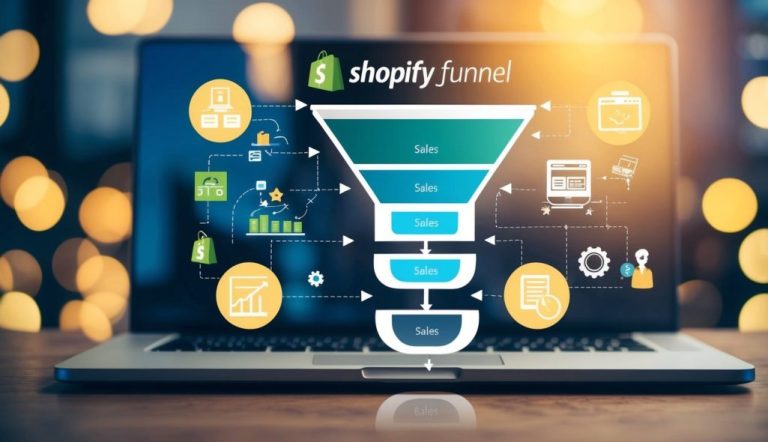
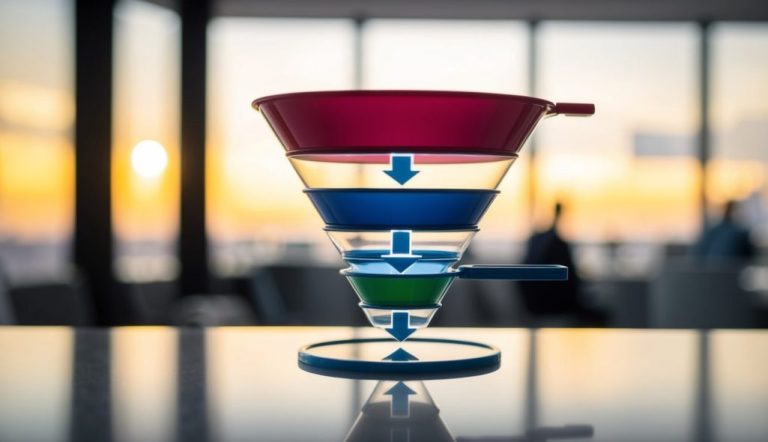
Creating a sales funnel is essential for guiding your customers through the buying journey. A sales funnel helps you convert leads into paying customers, boosting your revenue. By visualizing every step, you ensure each customer receives the attention they need, which can result in higher conversion rates.

To build a sales funnel template that’s effective, start by understanding the stages your customers go through. Each stage should be crafted to engage them and move them closer to a purchase.
Customizing your template can make a significant difference in tailoring your sales process to fit the unique needs of your business.
Incorporating advanced tactics and a solid content strategy can enhance your sales funnel’s performance. As you measure results and make improvements, you’ll see how a well-structured funnel can transform your sales approach.
Resources like free templates from HubSpot and Salesflare provide a great starting point for customizing your funnel.
Key Takeaways
- A sales funnel turns leads into customers, increasing revenue.
- Customize your template to fit your unique sales process.
- Implement advanced tactics and strategies to improve performance.
Understanding Sales Funnels
Sales funnels are crucial for guiding potential customers through the buying process. They help you understand customer behavior and optimize each stage to increase conversions. By using a structured approach, you can address customer needs effectively at every stage.
Defining the Sales Funnel
A sales funnel is a process that potential buyers go through, from first learning about your product to making a purchase. It includes four main stages: Awareness, Interest, Decision, and Action. At the top, the funnel is broad, capturing a wide audience at the awareness stage. As customers move down, the focus narrows, aiming to convert interest into sales.
This journey aligns with building customer relationships. At each step, you engage differently, from informative content during awareness to personalized offers at the decision phase.

Importance of a Structured Funnel
Having a structured sales funnel is vital. It allows you to address customer needs and concerns effectively. By mapping out each stage, you can tailor your marketing strategies to guide prospects smoothly from one phase to the next. This approach boosts engagement and conversion rates by targeting specific actions and responses.
A well-organized funnel helps you identify weak spots where customers drop off and refine your approach to improve overall efficiency.
Components of a Sales Funnel
The components of a sales funnel often include different types of content and engagement tactics aimed at moving customers through the phases. For instance, email sequences, blog posts, and webinars are useful in the interest stage, while personalized demos and special offers work well in the decision stage.
Understanding each component means more than just knowing what they are; it involves knowing when and how to apply them for maximum effect. This nuanced approach is essential to refining the sales funnel process.
Building Your Sales Funnel Template
Creating an effective sales funnel template involves several key steps. Each part plays a crucial role in turning potential leads into loyal customers. You need to know who you’re targeting, how to guide them, and ways to improve conversions.
Identifying Your Target Audience
Before building a sales funnel template, you must identify your target audience. Know their needs, preferences, and behaviors. This step is crucial for crafting messages that resonate.
Consider creating customer personas. These profiles represent different segments of your audience. Use data from surveys and market research to paint a clear picture. Understanding your audience helps tailor each stage of the funnel effectively, increasing the likelihood of conversion. Focused targeting ensures your sales team spends time and resources on prospects most likely to convert.
Mapping the Buyer’s Journey
Mapping the buyer’s journey involves outlining the process your customers go through before purchasing. This journey usually includes awareness, consideration, and decision stages.
Start by defining each funnel stage. Determine what content and touchpoints are needed at each phase.
It’s essential to align your sales funnel template with this journey to meet customer needs at every point. By understanding this path, you can anticipate questions and resolve objections. This guidance ensures a smoother transition from one stage to the next, increasing the chances of a sale.
Landing Pages and Lead Capture
A well-designed landing page is crucial for converting visitors into leads. Your landing page should be clear and focused on a single call to action.
Use an opt-in form or contact form to capture essential information. Keep forms simple to encourage more sign-ups.
Include compelling headlines and concise information to keep visitors engaged. A/B testing different designs can help you see what resonates most with your audience.
Effective landing pages are pivotal to capturing and nurturing leads efficiently and feeding them into your sales funnel template.
Nurturing Leads Through the Funnel
Once leads are captured, nurturing them through the sales funnel template is key. This involves engaging prospects with personalized content and consistent follow-ups.
Use a mix of email marketing, social media interactions, and direct contact.
Keep content relevant to each lead’s position in the funnel stages. Tailored strategies can help maintain interest and move them toward conversion.
Your goal is to build relationships and trust over time. This process helps convert leads into customers while fostering brand loyalty.
Conversion Rate Optimization
Improving your conversion rate is all about fine-tuning. Analyze data to identify where prospects drop off within your sales funnel template.
Test elements like calls to action, form lengths, and page designs to find what works best.
Conversion rate optimization involves small changes that can lead to significant improvements. Encourage your sales team to provide feedback on lead responses.
Implementing strategies based on thorough analysis ensures a more efficient funnel. Whether it’s changing a headline or adjusting images, optimizing these aspects can increase your success rates significantly.
Advanced Sales Funnel Tactics
Implementing advanced sales funnel tactics can significantly enhance your funnel’s performance. By using strategies like A/B testing and CRM tools, you can improve conversion rates and lead management.
A/B Testing for Funnel Optimization
A/B testing allows you to compare two versions of a particular element in your sales funnel to determine which one performs better. Whether it’s headlines, call-to-action buttons, or email subject lines, testing helps you optimize your funnel with data-driven decisions.
Begin by selecting one variable to test at a time to prevent confusing results. Use tools like Google Optimize or Optimizely to track your metrics efficiently.
Regularly review your data and make adjustments to lead to continuous improvement. The goal is to increase engagement and conversion rates by making informed tweaks to your funnel.
Lead Scoring and Prioritization
Lead scoring helps you rank prospects based on their interaction with your brand, helping prioritize efforts effectively.
Assign scores to various actions like email clicks, website visits, and downloading resources. This involves setting up a points-based system in your CRM to automatically assess the quality of leads.
Consider both demographic information and engagement metrics to ensure accuracy.
With lead scoring, focus your resources on leads closer to conversion, ultimately saving time and boosting sales efficiency. This system also helps in tailoring your communication and follow-ups to match the prospect’s interest level.
Sales and Marketing Alignment
Aligning sales and marketing ensures consistent strategies and messaging, enhancing the overall efficiency of your funnel. Both teams should agree on shared goals and definitions, such as what constitutes a qualified lead.
Regular meetings and utilizing common tools can bridge any gaps in collaboration. Automation tools can sync data and updates between teams, improving lead management.
Clearly defined roles and responsibilities help ensure no potential sale is overlooked. This alignment increases the effectiveness of both email marketing and broader engagement strategies, ultimately leading to improved conversion rates and streamlined workflows.
Leveraging CRM and Automation Tools
CRM and automation tools play a crucial role in managing and improving your sales funnel.
These tools help track customer interactions and automate repetitive tasks.
Integrating platforms like Salesforce or HubSpot can streamline your lead generation and follow-up processes.
Use automation for tasks like scheduling follow-up emails and managing contact lists. A robust CRM system gathers valuable data, providing insights into client behavior and preferences.
This information aids in crafting personalized engagement strategies that can nurture leads efficiently, facilitating smoother transitions through the funnel stages.
Content Strategy for Sales Funnels
An effective content strategy involves creating targeted content to engage your audience at each stage of the sales funnel. This approach utilizes various types of content marketing to build brand awareness, generate interest, and nurture leads towards conversion.
Creating Content for Different Funnel Stages
Each stage of the sales funnel requires different types of content to move prospects closer to making a purchase.
Top of the Funnel (TOFU): Focus on generating brand awareness and attracting a wide audience. Use blogs and social media posts to provide valuable information that addresses common questions and pain points.
Middle of the Funnel (MOFU): Engage the audience by showing how your product or service can solve their specific problems. Consider using case studies, webinars, or in-depth articles.
Bottom of the Funnel (BOFU): Provide detailed content that supports decision-making. Testimonials, product comparisons, and free trials can help push undecided prospects towards a purchase.
Using Content to Drive Awareness and Interest
At the top of the funnel, you aim to capture attention and interest. Utilize engaging and shareable content to extend your reach.
Brand Awareness: Utilize social media platforms and sponsored posts to reach a broader audience. Short, informative videos or catchy infographics can quickly communicate key points.
Generating Interest: Encourage potential customers to engage with your content by offering quizzes or interactive tools on your blog. These can help identify specific interests or needs, enabling further targeted communication.
Using platforms like ClickFunnels can provide structured templates to streamline this process.
Content Marketing and Lead Nurturing
To nurture leads effectively, focus on personalized, informative content that keeps your brand top of mind as prospects move through the funnel.
Middle of the Funnel: Use educational content like whitepapers or guides that provide in-depth insight related to your industry. This builds trust and positions your brand as an authority.
Bottom of the Funnel: Send targeted emails or newsletters highlighting new offers or case studies. Personalize these messages based on past interactions to enhance relevance and appeal.
By leveraging automated tools, like Dashly.io’s templates, you can optimize your content strategy for increased conversions.
Sales Funnel Templates and Resources
Sales funnel templates can simplify your sales process and help track customer journeys effectively. Whether you use Excel, Google Sheets, or specialized tools like HubSpot, these templates can be tailored to fit your business needs.
Available Sales Funnel Templates
You can find various sales funnel templates that cater to different platforms. Many businesses prefer using free options like Excel and Google Sheets for manual tracking. These spreadsheets allow you to manage leads, record conversion rates, and update metrics automatically.
For those seeking a more integrated approach, tools like HubSpot offer built-in templates that eliminate tedious data entry. This can make managing sales processes smoother and more efficient.
Customizing Templates for Your Business
Customizing templates is essential to meet your specific business requirements.
Tools like HubSpot enable you to automate tasks and integrate with your existing system, ensuring seamless workflow.
You can customize sales funnel stages to align with your business model. This includes altering fields, stages, and metrics to capture necessary data.
Such customization ensures that your team can better empathize with leads and address specific sales tactics, improving overall customer engagement.
Integrating with Web and Marketing Tools
Integrating your sales funnel templates with web and marketing tools can vastly enhance your productivity.
Many platforms, like HubSpot, allow you to connect templates to other marketing and CRM systems. This leads to synchronized data flows, saving you time and effort.
By linking your sales funnel with these tools, you can track customer interactions across channels, ensuring a comprehensive view of your customer journey.
This integration helps maintain data accuracy and supports more effective marketing strategies based on real-time information.
Measuring and Improving Sales Funnel Performance
To optimize your sales funnel, you need to track key metrics, analyze data, and apply strategies for improvement. Focus on understanding conversion rates and how each stage of the funnel contributes to your overall goals.
Key Metrics to Track
When measuring your sales pipeline, make sure to monitor specific metrics. Conversion rates are at the forefront, showing how effectively you move prospects from one stage to another. Track these rates at every funnel stage, from leads to closing sales.
Additionally, assess the average time leads spend in each funnel stage. This helps identify bottlenecks. It’s also vital to track your sales forecasting accuracy. Accurate forecasts enable better planning and resource allocation.
Lead drop-off rates reveal which part of your funnel might require more attention or improvements. Regularly reviewing these metrics provides valuable insights into your funnel’s effectiveness and highlights areas for potential growth.
Analyzing Sales Funnel Data
Once you’ve collected data, it’s time to delve into analysis. Start by comparing your current conversion rates to industry benchmarks. This will help you identify if your rates align with averages or if improvements are necessary.
Look for trends or patterns in your data. For example, if a high number of leads drop off at a particular stage, it might indicate the need for better follow-up or clearer communication. By drilling down into specific stages, you can uncover areas that need attention.
Understanding data from automated tools can simplify this process. With dashboards, you can visualize key metrics, making it easier to identify issues and trends. This helps in making informed decisions about where to focus improvements.
Strategies for Improvement
Improving your sales funnel often involves strategic adjustments. Begin with optimizing your follow-up processes. Ensuring timely, personalized communication can increase engagement and push leads further down the funnel.
Consider revising your funnel’s content. High-value, relevant content can address objections and motivate potential customers to advance in the sales pipeline. This is particularly effective at stages where leads tend to hesitate.
Lastly, test different approaches and measure their impact. A/B testing different messages or offers can reveal which strategies resonate best with your audience. Continuous testing and adaptation ensure your funnel evolves with changing market dynamics.
Scaling and Managing Sales Teams
To effectively scale and manage sales teams, you need to develop skilled sales reps and foster strong communication within the team. Utilizing the right tools for productivity can significantly enhance team performance and efficiency.
Developing Effective Sales Reps
Building a successful sales team starts with developing your sales reps. You should focus on both soft skills and technical knowledge. Sales reps need strong communication skills, empathy, and adaptability to handle diverse client needs. Equip your team with ongoing training about products and sales techniques.
Implement mentorship programs where experienced reps can guide new team members. Encourage a culture of continuous learning through workshops and online courses. Set clear goals and provide feedback regularly to help reps improve and stay motivated.
Team Collaboration and Communication
For a sales team to thrive, collaboration and communication are essential. Establish regular team meetings to discuss goals, challenges, and progress. Use these meetings to align team members with the company’s objectives and refine strategies as needed.
Implement tools like Slack or Microsoft Teams for real-time communication. Use shared platforms for document collaboration, ensuring everyone has access to sales materials and client information. Encourage an open environment where team members feel comfortable sharing ideas and asking for help.
Tools for Enhancing Team Productivity
Choosing the right tools can significantly boost your team’s productivity. CRM software is vital for managing customer relationships and tracking interactions. Tools like Salesforce or HubSpot provide insights that help reps tailor their approach to clients.
Automate routine tasks with software to free up time for your sales reps, allowing them to focus more on selling. Consider using project management tools such as Asana or Trello to keep track of tasks and deadlines. Ensure all tools are integrated and accessible to support seamless workflow and data sharing.
Different Sales Funnel Types for Various Businesses
Sales funnels vary based on the business model and industry. B2C and B2B require unique approaches, while SaaS and enterprise funnels have their own essentials. Understanding these differences can help tailor your strategy.
B2C vs B2B Sales Funnels
In B2C sales funnels, the focus is on a quick decision-making process. Consumers often move through the funnel faster, as they seek direct benefits. The funnel stages typically include awareness, consideration, and purchase.
B2B sales funnels are more complex. Businesses take longer to make decisions due to higher stakes and longer buying cycles. In this funnel, stages might include lead generation, nurturing, and closing the sale. Building relationships and providing detailed information is key to success.
Understanding the customer’s journey in each industry is essential. This knowledge helps in crafting marketing messages that resonate with the target audience, whether you’re appealing to individual consumers or businesses.
SaaS Sales Funnel Essentials
For a SaaS sales funnel, several factors must be considered. The process often begins with generating awareness and interest through free trials or demos. This allows potential customers to experience the product firsthand.
Following the trial, the goal is to convert users into paying customers. This involves highlighting the benefits of the SaaS product and offering clear explanations of pricing models.
Retention is crucial in a SaaS model. Providing excellent customer support and regular updates ensures users stay satisfied. Implementing feedback mechanisms helps adapt the product to changing user needs, strengthening customer relationships and reducing churn rates.
Enterprise Sales Funnel Considerations
The enterprise sales funnel involves long-term relationship building. The decision-making process in enterprises is often complex, involving multiple stakeholders. Understanding the specific needs of these entities can greatly impact success.
A key consideration is customization. Enterprises often require tailored solutions. Offering personalized demonstrations and proposals can demonstrate how your product meets their unique needs. This is especially relevant for B2B contexts where precise solutions are valued.
The long negotiation process requires patience and persistence. Building trust and showcasing the value of the product over time is essential. Regular follow-ups and maintaining open communication channels ensure that you are top of mind when the decision is made.
Case Studies and Examples
This section explores various ways sales funnels have been implemented in businesses. Successful examples show how conversion rates can be improved, while failures teach important lessons. Innovative tactics highlight new trends in the industry.
Successful Sales Funnel Implementations
Successful sales funnel implementations often involve clear steps that guide visitors towards making a purchase. For instance, Basecamp uses a combination of blog content, newsletters, and free trials to build awareness and nurture sales leads. These tactics help in increasing conversion rates.
A key point in successful funnels is understanding your target audience. This may involve creating personalized content that addresses specific pain points, leading to higher engagement and ultimately more conversions.
Another example is HelpScout, which nurtures leads through templates and follow-ups. This approach results in larger purchases from nurtured leads, boosting revenue significantly.
Learning from Sales Funnel Failures
Learning from sales funnel failures is crucial for any business. Failures usually occur when the funnel lacks clarity or doesn’t align with customer needs. Missteps can happen if too many steps are involved, confusing potential customers and causing drop-offs.
Companies sometimes fail to engage their audience because of ineffective communication or a lack of personalization. If visitors don’t see the value or relevance, they are likely to abandon the process.
Analyzing failed funnels can provide valuable insights into what went wrong. By identifying weak points, businesses can redesign their approach to better cater to visitor expectations and improve conversion rates.
Innovative Sales Funnel Tactics in the Industry
Innovation in sales funnel tactics can greatly benefit business growth. Many companies now use interactive content, such as quizzes or videos, to engage visitors effectively and guide them through the funnel.
Utilizing data analytics is another emerging trend that allows businesses to personalize the customer journey further. By understanding user behavior, you can tailor content that resonates with your audience.
Companies like Netflix and Groupon have demonstrated unique approaches, leveraging real-world examples for inspiration. These tactics often include time-limited offers or exclusive deals, creating urgency and driving higher conversion rates.
Frequently Asked Questions
Sales funnel templates are useful tools for guiding potential customers through various stages of the purchasing process. These templates can be customized in different applications and can help boost conversion rates.
How can I create a sales funnel in Excel?
You can create a sales funnel in Excel by using simple spreadsheet techniques. Start by listing each stage of the funnel in separate columns. Track and analyze data such as the number of leads and conversion rates in each stage. Excel allows you to use formulas and charts to visualize the data effectively.
What are the key components of a sales funnel template?
A sales funnel template typically includes stages such as awareness, interest, consideration, and purchase. Each stage represents a step in the customer journey. It often contains space for tracking metrics, customer information, and conversion rates, which are critical for analyzing and optimizing the sales process.
Where can I find a free sales funnel template?
Several online resources offer free sales funnel templates. For instance, Forbes Advisor provides downloadable and customizable templates suitable for various business needs. These templates help streamline your sales process and make it easier to manage potential leads.
How do you customize a sales funnel template in PowerPoint?
In PowerPoint, you can customize a sales funnel template by inserting different shapes to represent stages. Add text boxes for details and use color coding to differentiate stages. PowerPoint’s design tools offer flexibility to adjust fonts, colors, and layouts to suit your business’s branding and messaging strategy.
What is the best way to utilize a sales funnel template for optimizing conversions?
To optimize conversions using a sales funnel template, regularly track and analyze data at each stage. Identify drop-off points where potential customers lose interest. Adjust marketing strategies to address these areas. Consistently refining the funnel based on data insights can lead to improved conversion rates and business growth.
Can you recommend any sales funnel templates that integrate with Google Sheets?
Several sales funnel templates integrate with Google Sheets. Influno is a good option. These templates make it easier to manage and assess sales funnel efficiency across teams. They also facilitate collaboration and real-time updates.