Navigating the world of sales funnels can feel overwhelming. But, with the right email templates, you can guide your customers smoothly through every stage of the funnel. An effective sales funnel email template can significantly boost your conversion rates by delivering targeted messages at each stage of the customer journey.
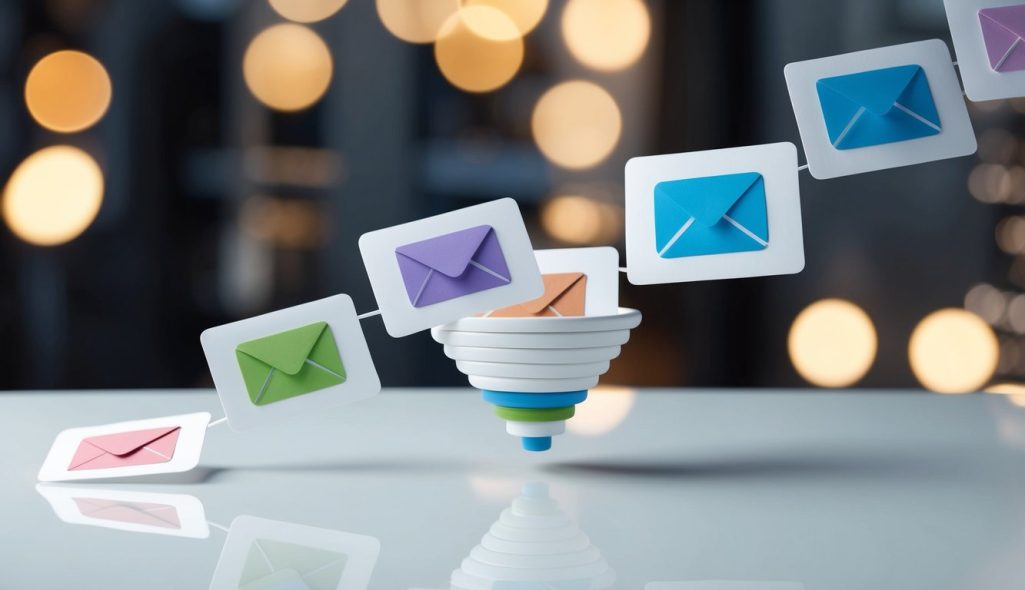
Sales funnel email templates are designed to nurture relationships with potential customers and lead them towards making a purchase. These templates play a crucial role in maintaining communication and keeping engagement high.
By understanding the different stages of a funnel, you can create customized email templates that cater to each phase uniquely.
Different funnel stages require different approaches. From creating awareness to closing the deal, using the right sales funnel templates can have a significant impact. Experimentation and optimization are key, whether you’re using ready-made templates or customizing your own designs to best fit your audience’s needs.
Key Takeaways
- Use sales funnel email templates to guide customers through buying stages.
- Customize templates to match different stages of the funnel.
- Optimize and experiment to increase conversion rates.
Understanding the Sales Funnel
The sales funnel is a key concept in marketing that represents the journey potential customers undergo before making a purchase. Understanding each part of this funnel can boost your marketing strategy and conversion rates.
Stages of Sales Funnel
A sales funnel typically includes several stages: awareness, interest, desire, and action—often abbreviated as AIDA.
In the awareness stage, potential customers first learn about your product or service. Here, your goal is to capture attention through engaging content.
The interest stage is where you need to nurture prospects by providing valuable information. You want them to see the benefits of your product. This can be achieved through targeted email campaigns that highlight unique features.
Next is the desire stage, where you build a strong emotional connection. Use testimonials and case studies to foster enthusiasm about your offerings.
Finally, the action stage is where the deal is closed. At this point, you want to make it easy for customers to purchase, using strong calls to action and clear instructions.
Importance of Each Stage
Each stage in the funnel serves a vital purpose in the buyer’s journey.
During the awareness stage, establishing a broad reach is key. You want to attract as many potential prospects as possible.
In the interest stage, focus on building engagement by nurturing prospects with personalized content. This helps in improving your conversion rate by keeping your audience invested.
The desire stage is crucial for strengthening customer relations. Here, positive experiences and effective communication solidify customer trust and readiness to purchase.
Finally, the action stage directly impacts your bottom line. A well-executed plan here ensures purchases are completed smoothly, enhancing overall customer satisfaction.
Creating Effective Email Templates
To boost your sales process and lead generation, creating effective email templates is crucial. Focusing on key elements like components, personalization, and call to action strategies can significantly improve your conversion rates.
Components of a Strong Sales Email
A strong sales email should have clear objectives.
Start with an engaging subject line that encourages the recipient to open the email. This sets the stage for your overall marketing strategies.
Use a compelling opening line to hook the reader immediately. It should address a specific problem or need that your product can solve.
Include relevant and concise information about your product or service. Use bullet points for clarity. Provide links to more detailed content if necessary, so interested readers can explore further.
The email should have a professional tone and be free of grammatical errors. This helps build trust and credibility with your audience.
Personalization Techniques
Personalization is key in improving your email marketing and sales process.
Use the recipient’s name in the subject line and the body of the email. This catches their attention and makes the email feel more personalized.
You should segment your audience based on demographics, behavior, or interests.
Customize the content to match each segment’s preferences. This ensures that your emails are relevant and engaging to each recipient.
Incorporate personalized offers or recommendations. Use data analytics to understand past behaviors and predict what the reader might be interested in next.
Call to Action Strategies
A clear call to action (CTA) is essential for driving conversion rates.
Your CTA should be specific and actionable. Instead of saying “click here,” use phrases like “Download your free guide” or “Start your free trial today.”
Ensure the CTA stands out visually. Use bold fonts or contrasting colors to make it noticeable. Place the CTA where it can’t be missed, such as after relevant information or at the end of the email.
Offer an incentive to encourage action, such as a discount or free resource. Make the benefits clear, reinforcing how taking the action will solve a problem or meet a need.
Funnel-Specific Email Templates
Creating effective email templates for different stages of your sales funnel can help guide potential customers smoothly from one stage to the next. By tailoring your emails to specific parts of the funnel, you enhance engagement and increase conversion rates.
Lead Magnet Email Templates
Lead magnet emails are crucial in attracting potential customers to your lead generation funnel. These emails typically offer a free resource or incentive, like an eBook or free trial, in exchange for contact details.
Your email should emphasize the value of the free offer and encourage the recipient to take action quickly.
It’s important to have a clear call to action (CTA) and a catchy subject line to grab attention. A simple, direct approach usually works best. You want readers to feel that they’re gaining something valuable with minimal effort.
Personalize the email with the recipient’s name to make it feel relevant.
Use bullet points or short paragraphs to detail what they’ll receive. This structure makes your email easy to skim and digest. As part of a squeeze page funnel template, lead magnet emails can significantly boost your list of engaged prospects.
Tripwire Email Templates
Tripwire emails follow up on an initial low-cost offer. These are designed to convert leads who have shown interest in your lead magnet, encouraging them to make a small initial purchase.
When crafting a tripwire funnel template, focus on creating perceived value.
Highlight benefits rather than features. Emphasize how the tripwire product solves a specific problem.
Offering a discount or special limited-time deal can incentivize quicker purchases. Use direct language to build urgency and make readers feel like they’ll miss out if they don’t act now.
Include testimonials or social proof to build trust. This helps justify the purchase decision.
An effective tripwire email template leverages curiosity and urgency, nudging the recipient one step closer to becoming a long-term customer in your marketing campaigns.
Sales Letter and Video Sales Letter Templates
Sales letter emails aim to persuade the recipient to purchase a product or service. This type of email is comprehensive, explaining why the product meets their needs.
In a video sales letter funnel template, sometimes a video replaces text to convey the message more dynamically.
A compelling headline is vital. Your headline should make promises that catch the reader’s attention. Follow it up with a strong opening few sentences. These need to be engaging and explain what makes your offer unique or different from competitors.
In the main body, address potential objections. Be clear about how your solution outperforms others.
Include a link to a demo video if using a video sales letter, this can complicate your message but may also better illustrate benefits or demonstrate usage.
Webinar and Summit Funnel Templates
Webinar and summit funnel emails are tools to attract attendees to live events, such as an online seminar or multi-day summit. A webinar funnel template helps position your business as an authority while directly engaging your audience.
Begin with an inviting subject line that hints at the value of attending.
Highlight key speakers or topics, ensuring the attendee understands what knowledge or skills they can gain.
Time-limited registration or reserved spots can create a sense of urgency, urging quick RSVPs.
Subsequent emails in this funnel category can address FAQs and logistics. Your goal is to remove any barriers to attendance.
Use concise, informative content to maintain interest, and encourage sharing with peers. Adjustments to email design can make them visually appealing, emphasizing your call to action.
Email Template Designs for Different Funnel Stages
Creating effective email templates is key to guiding potential customers through each stage of the sales funnel. This involves designing messages that boost conversion rates and enhance productivity across the sales pipeline stages.
Awareness Stage Templates
In this stage, your goal is to capture the attention of potential customers. Design email templates that introduce your brand and offerings clearly.
Opt for engaging subject lines to increase open rates. Use bright visuals and concise language to convey your message quickly.
Include links to educational content like blog posts or infographics that explain the benefits of your products or services.
A call-to-action (CTA) should prompt readers to learn more, visit your website, or subscribe for newsletters. This sets the path for moving prospects to the next stage in the sales pipeline.
Interest and Evaluation Stage Templates
As prospects show interest, your focus shifts to educating them further.
Your email templates should provide detailed product information, benefits, and comparisons. Use bullet points and comparisons to highlight key features effectively.
Personalize these emails with the prospect’s name and tailor content to their specific needs.
Share testimonials and case studies that build trust and credibility.
CTAs should encourage signing up for free trials or webinars, moving potential clients toward a decision phase. This leads to better conversion rates as prospects see real-world applications of your offerings.
Decision and Action Stage Templates
At this stage, your emails should address any remaining questions or concerns to push prospects toward purchase.
Focus on urgency with time-limited offers or exclusive discounts. Templates should include clear, direct CTAs, guiding customers to complete purchases or book consultations.
Sharing success stories and highlighting strong customer support can reinforce a prospect’s decision to move forward.
Include links to automated follow-ups that keep potential buyers engaged until conversion.
A strong focus on value and resolution of typical objections aids in closing deals and improving sales management outcomes.
Optimizing Email Templates for Conversion
To boost conversion rates and average order value, focus on refining your email templates. Use precise marketing strategies by tracking performance, experimenting with different elements, and tailoring your approach to specific segments based on customer data.
Analyzing Email Performance Metrics
Use tools to track open rates, click-through rates, and conversion rates. These metrics can show where people engage and where they drop off. Look for patterns in the data to improve timing or content.
Integrating customer data from your CRM also helps in understanding how emails perform across different customer segments.
Make a habit of checking these metrics regularly to see trends and adapt strategies. Identifying high-performing templates can also guide future actions.
A/B Testing and Iteration
Run A/B tests on elements like subject lines, call-to-action buttons, and send times to identify what works best.
Changing one element at a time provides clearer insights. Use the data to iterate and refine your templates.
Consider testing different design layouts, too. Compare how simple versus complex visuals affect engagement.
Benchmark the results to detect improvements in conversion rates over time.
Segmentation and Targeting Strategies
Segment your audience based on behavior, demographics, and purchase history for better targeting. Use data from your CRM to create detailed customer profiles. This enables you to send more personalized content that resonates with the recipients.
Adopt dynamic content in your emails to tailor messages for each segment. Targeted strategies like these improve engagement and increase the average order value. This approach ensures your communications are relevant and timely for each customer group.
Integrating Sales Funnel Email Templates with CRM
Integrating sales funnel email templates with your CRM can boost efficiency and enhance customer engagement. It helps in leveraging customer data to deliver personalized experiences and automate workflows, enhancing productivity and forecasting accuracy.
CRM and Email Marketing Synergy
Your CRM can enhance your email marketing by storing and organizing customer data effectively. This allows you to segment audiences based on behavior, preferences, or purchase history.
By using sales funnel templates, you can craft tailored emails that address specific stages in the customer journey. Integrating these templates ensures that your CRM helps in tracking interactions, understanding customer needs, and fine-tuning your approach for better conversion rates.
Connecting your CRM with email marketing tools helps create a unified view of customer interactions. This alignment allows you to nurture leads effectively and guide them through the sales funnel with precision. The integration provides insights that help refine marketing strategies, making sure that each email strengthens customer relationships.
Automating Email Campaigns
Automation is key in streamlining your email marketing efforts with a CRM. With CRM integration, you can automate responses to different customer actions, such as sign-ups or purchases.
Utilize sales funnel templates to predefine message flows. This ensures that each potential customer receives timely, relevant communications without manual intervention. Automation saves time and reduces errors, boosting productivity.
Build automated campaigns that respond to customer behavior tracked in your CRM. For example, send follow-up emails when a prospect interacts with your website or purchases a product. This method increases engagement and moves leads seamlessly through the sales funnel.
Data-Driven Customization
Your CRM holds valuable insights into customer preferences and behaviors. Use this data to customize your sales funnel email templates for more personalized communication.
Templates can include personalized recommendations based on past purchases or browsing habits. This level of customization encourages better engagement and can lead to higher conversion rates.
Leverage customer data for segmentation and targeting within your sales funnel campaigns. Tailor content to match the interests and needs of each segment. Data-driven strategies ensure your emails remain relevant and engaging, enhancing customer satisfaction and driving conversions.
Advance Techniques and Strategies
To enhance your email marketing, focus on advanced strategies like utilizing sophisticated email features, crafting multi-step funnels, and applying lifecycle strategies. These approaches help you better engage your audience, personalize communication, and improve conversion rates.
Utilizing Advanced Email Features
Using advanced email features can significantly improve your communication with potential customers. Features like segmentation and personalization ensure your emails reach the right audience. You can tailor messages based on user behavior or preferences, enhancing engagement.
Incorporate automation to send timely emails without manual intervention. This is essential in a SaaS sales funnel, where customer interaction points vary. Another useful feature is A/B testing, allowing you to experiment with different email elements to find what resonates best with your audience. These strategies help refine your approach and boost your sales funnel’s effectiveness.
Creating Multi-Step Funnels
Multi-step funnels guide customers through a structured journey. Each stage of the sales funnel plays a crucial role, from awareness to decision-making. Use the AIDA model: Attention, Interest, Desire, and Action, to design effective email flows.
Start by capturing attention with compelling subject lines. Generate interest by offering valuable content or insights. Build desire with persuasive messaging or product benefits. Finally, drive action with a clear call to action. These steps enhance your marketing efforts, leading to higher conversions.
Lifecycle Email Strategies
Lifecycle email strategies align emails with the stages of the customer journey. This helps in nurturing relationships over time. For B2B sales funnels, it’s important to focus on delivering value at each stage.
Begin with welcome emails to introduce your brand. Follow up with educational content to nurture leads. Use re-engagement emails to win back inactive users. At each touchpoint, tailor your messaging to the customer’s needs and expectations.
Combining these strategies ensures your emails are relevant and timely, improving overall customer satisfaction and loyalty. Fine-tuning your approach based on customer feedback can further optimize your lifecycle email strategy.
Template Customization and Adaptation
Adapting and customizing sales funnel email templates is crucial for aligning with your brand and audience. Focusing on your brand voice, industry-specific needs, and ongoing updates can enhance the customer journey, increase engagement, and maximize the effectiveness of lead magnets.
Brand Voice Incorporation
Aligning an email template with your brand’s voice helps maintain consistency. When customizing, consider the tone and language you usually use in communication. This includes formal versus informal language, humor, and even color schemes and fonts.
For better engagement, let your brand personality shine through. This can establish a stronger connection with your subscribers and make your emails more recognizable. Ensure that every detail reflects what your brand stands for, enhancing trust and familiarity.
Industry-Specific Adaptations
Different industries have unique needs and expectations. Tailor your templates to meet these specific requirements.
For example, a live webinar funnel can be ideal for industries selling high-ticket products. Highlight the unique benefits and pain points relevant to your audience.
Use industry jargon sparingly to ensure clarity without alienating recipients unfamiliar with your terminology. Focusing on what resonates within your sector helps make sure your messages are impactful and relevant.
Continuous Improvement and Updates
Sales funnel email templates should evolve over time. Evaluate your emails’ performance to identify what’s working and what needs adjustment. Use metrics like open rates and click-through rates as indicators of success.
Regular updates keep your content fresh and aligned with changing audience expectations. A/B testing can provide insights into what changes lead to better engagement. Make it a routine to review and refine your templates, ensuring they remain effective tools in converting leads through each stage of the customer journey.
Types of Funnels and Corresponding Email Strategies
Understanding the different types of sales funnels and their corresponding email strategies is crucial for maximizing effectiveness. Whether you’re in B2B or B2C, operating an ecommerce site, or offering services, choosing the right approach helps in generating leads and increasing sales.
B2C vs B2B Funnels
B2C and B2B funnels function differently due to their distinct audiences and sales cycles. In a B2C funnel, emails might focus on quick engagement and direct sales through special offers or discounts. Squeeze page funnels can capture consumer interest, while cart funnels follow up on abandoned carts to boost conversions.
For a B2B sales funnel, emails should aim to establish trust and credibility. Longer sales cycles require nurturing through follow-ups and valuable content. Consider SaaS sales funnels and application funnel templates to maintain engagement over time. Emphasizing problem-solving and offering insights can be beneficial in B2B communications.
Ecommerce Sales Funnel Templates
Ecommerce funnels often start with awareness and interest stages. Email strategies here include personalized recommendations and exclusive deals. A common approach is using a cart funnel to recover abandoned carts, sending reminders and offering incentives.
Special promotions can also encourage repeat purchases. A squeeze page funnel may help expand your audience by collecting emails in exchange for discounts. The ultimate goal is to guide customers from the evaluation stage to commitment.
Service-Based Business Templates
Service-based businesses benefit from templates focusing on relationship building. Use a membership funnel template to segment and personalize communication, offering insights into your services and case studies that demonstrate success.
Online courses and informational content can help establish authority and trust. Squeeze page funnels work well for attracting initial interest, while sales letter funnels provide a deeper exploration of service benefits. Effective email sequences gradually move potential clients from curiosity to engagement and then to commitment.
Frequently Asked Questions
Creating an email marketing funnel involves strategic planning and execution. It is essential to have a well-designed email sequence, know the optimal number of emails, and understand key elements of automation tools.
How can I create an effective email marketing funnel?
Start by understanding your audience and their needs. An email marketing funnel should guide potential customers step-by-step, from awareness to purchase. Use engaging content and clear calls-to-action at each stage to keep them interested.
What are the best practices for designing a sales funnel email sequence?
Ensure each email in the sequence builds on the previous one. Personalize content, keep your tone consistent, and make sure the timing between emails keeps prospects engaged without overwhelming them. A/B testing can help refine your approach.
How many emails are recommended to include in a sales funnel sequence?
Typically, a sales funnel sequence includes five to seven emails. These can cover welcome messages, product information, promotions, and follow-ups. The exact number will depend on your specific goals and audience.
What are the key elements of an automated email sales funnel?
Automation should include email triggers based on user actions, personalized content, and integration with customer relationship management (CRM) tools. This ensures each lead receives relevant content at the right time.
Where can I find free resources for sales funnel email templates?
You can find useful templates at UpLead. These templates can guide you through creating personalized funnels tailored to your business needs. Free resources often offer insights into what successful businesses are using.
What software can assist with managing and creating email funnels?
Mailchimp and HubSpot are examples of software that provide tools for creating and managing email funnels. These platforms offer automation, analytics, and customer segmentation features to optimize your email marketing efforts.