Navigating the complex world of B2C marketing can seem daunting, especially when trying to capture the attention of potential customers. The B2C marketing funnel is a powerful tool businesses use to guide a customer through the journey from brand awareness to purchase and beyond. At its core, the B2C marketing funnel aims to convert prospects into loyal customers by strategically nurturing them at each stage of their journey.
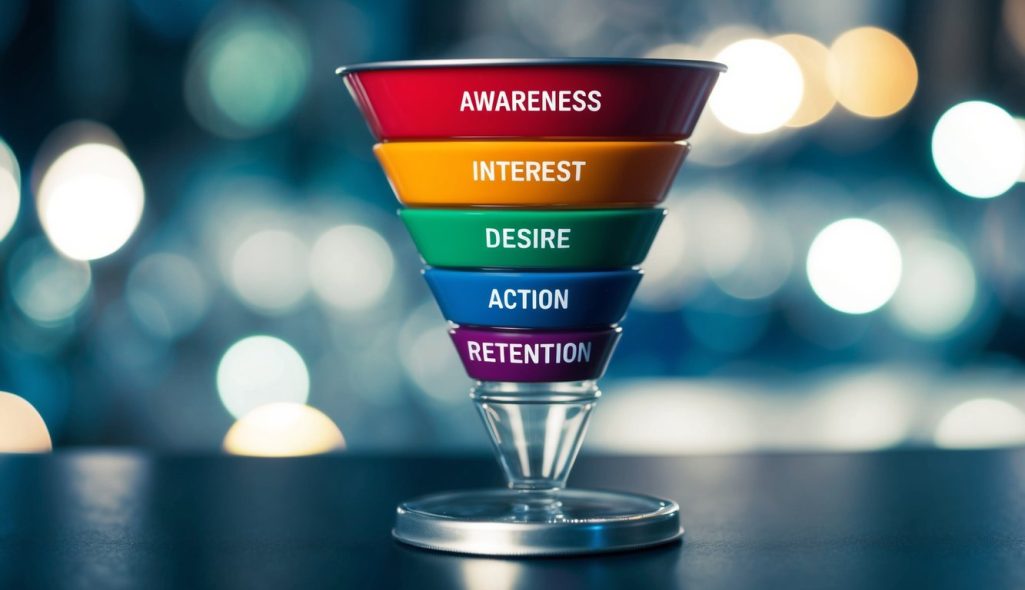
Understanding each stage of the marketing funnel is key to success.
The top of the funnel (TOFU) focuses on creating awareness, using tools like social media and content marketing to reach a wide audience.
As potential customers move to the middle of the funnel (MOFU), engagement efforts shift towards nurturing interest and consideration, often utilizing email campaigns and personalized content.
The journey concludes at the bottom of the funnel (BOFU), where the aim is to drive conversion, leading to a successful sale and the start of a long-term relationship.
Exploring the intricacies of the B2C marketing funnel helps you better target efforts at each stage, ensuring resources are effectively used to engage and convert customers. This funnel not only assists in understanding customer behavior but also provides insights on optimizing strategies for better results.
In the fast-paced world of B2C marketing, staying ahead means continuously refining these strategies to meet evolving consumer expectations.
Key Takeaways
- The B2C marketing funnel guides prospects to become customers.
- Each stage of the funnel requires different strategies and tools.
- Effective use of the funnel can improve customer conversion and loyalty.
Understanding the B2C Marketing Funnel
The B2C marketing funnel guides consumers from initial awareness to making a purchase. Each stage of the funnel plays a critical role in this journey and helps brands connect with customers on a deeper level.
Definition and Importance
A B2C marketing funnel represents the steps a consumer takes before buying a product. It helps marketers target potential customers with the right content at each phase. The funnel starts wide and narrows down as consumers move closer to a purchase.
Understanding this funnel is essential because it allows businesses to optimize their marketing strategies. By targeting consumers at different stages, companies can improve engagement and conversion rates. This approach helps in building stronger relationships with customers and encourages brand loyalty over time.
Stages of the Marketing Funnel
The funnel consists of several stages: Awareness, Interest, Desire, and Action.
- Awareness Stage: This is when a consumer first learns about a product or brand. Efforts here focus on reaching a wide audience through advertisements or social media.
- Interest Stage: Consumers start showing interest in the product. At this point, detailed information like blog posts or videos is crucial.
- Desire Stage: Potential buyers express a desire for the product. Testimonials or special offers can persuade them further.
- Action Stage: The consumer finally makes a purchase. Here, an easy checkout process and excellent customer service are vital to ensuring a successful transaction.
These stages, combined, guide potential customers smoothly through their purchasing journey. Each stage requires tailored strategies to effectively convert interest into sales. Understanding these stages can significantly enhance your marketing efforts, drawing in more customers efficiently.
Top of the Funnel (TOFU): Creating Awareness
Top of the Funnel (TOFU) strategies are crucial for building brand awareness. These tactics aim to introduce potential customers to your products or services during the early stages of their buying journey. Implementing strong SEO and leveraging digital platforms are key ways to effectively reach a broad audience.
SEO and Content Marketing
Search Engine Optimization (SEO) plays a vital role in increasing your brand’s visibility online. By focusing on relevant keywords and optimizing your site structure, you can improve your ranking in search results.
Content marketing complements SEO through engaging materials like blogs and industry reports that draw in visitors.
Creating blog posts related to your field helps establish authority. By providing valuable insights, potential customers will see your brand as a trusted source.
Additionally, writing detailed industry reports can capture attention from professionals looking for comprehensive information.
Emphasize quality and consistency in your content. A steady flow of informative articles not only helps in search ranking but also keeps your audience engaged.
Leveraging Digital Platforms
Digital platforms are essential for enhancing your reach at the top of the funnel. Social media, webinars, and PR publications are excellent channels for building brand awareness.
Regular social media posts about your products or industry news can help attract attention from potential clients.
Consider hosting webinars to showcase your expertise. This allows you to engage directly with your audience and answer their questions in real time.
Furthermore, media interviews and features in reputable PR publications can significantly extend your reach.
Engaging content like videos or interactive posts tend to perform well. This kind of material draws users in and encourages them to learn more about your brand.
Foster an active presence on platforms that align with your target demographic to maximize impact.
Middle of the Funnel (MOFU): Nurturing Interest and Consideration
In the middle of the funnel, the focus shifts to nurturing interest and encouraging potential customers to consider your product or service. This stage involves engaging with leads and offering personalized content to guide them towards a purchase decision.
Engagement and Lead Generation
Engaging potential customers at this stage involves using strong content that addresses their needs and questions. You can offer detailed information about your products or services. This could be through webinars, product demos, or informational articles.
Building a connection is key, as it encourages trust and curiosity about what you offer. Using tools like email campaigns helps you maintain communication with your audience.
These campaigns should highlight relevant features and benefits to capture attention.
Lead generation remains essential during MOFU. You can achieve this by using calls-to-action in your content. These prompts should guide potential customers towards actions like signing up for newsletters or downloading resources.
This converts interest into deeper engagement, moving leads closer to making a decision.
Personalization and Targeting
Personalization at MOFU makes your content more relevant and appealing to potential buyers. By tailoring messages based on customer behavior or preferences, you provide value that speaks directly to their needs.
Use data and analytics to understand what your audience seeks.
Targeting can involve segmenting your audience based on demographic details or past interactions. This ensures that the right message reaches the right people, boosting the chances of conversion.
Through personalized emails, you can share content that matches their interests. Crafting your communication in this way helps strengthen customer engagement.
By targeting potential users effectively, you make them feel understood and valued, increasing the likelihood of them choosing your brand.
Bottom of the Funnel (BOFU): Driving Conversion
At the bottom of the funnel, your focus shifts to converting interested prospects into actual customers. This stage involves crafting effective strategies that directly prompt purchase decisions and enhance conversion rates.
Effective Call to Action
A compelling call to action (CTA) is essential in BOFU marketing. Your CTA should be clear, direct, and aligned with the customer’s journey.
Use action-oriented verbs like “buy,” “get,” or “subscribe” to prompt immediate responses. Tailor your CTA to fit the specific needs and interests of your target audience, ensuring it stands out visually on the page.
Consider A/B testing different CTA placements, colors, and wording to identify which combination yields the highest conversion rates.
By optimizing these elements, you can guide potential buyers toward making a purchase decision, thereby enhancing your bottom-of-the-funnel performance.
Optimizing Conversion Rates
Optimizing conversion rates at the BOFU stage involves refining various aspects of your marketing strategy.
Start with analyzing user behavior data to understand barriers to conversion.
Simplifying the checkout process, offering multiple payment options, and ensuring a mobile-friendly experience can reduce friction and encourage purchases.
Leveraging personalized content can also boost conversion rates. Use data insights to tailor product recommendations and special offers, making your audience feel valued.
Implementing customer reviews and testimonials can build trust and convince hesitant buyers.
Regularly monitor performance metrics and adjust strategies based on what drives the best results.
By focusing on these elements, you can improve your bottom-of-the-funnel marketing efforts.
Post-Purchase: Fostering Loyalty and Retention
In B2C marketing, the post-purchase phase is crucial for turning one-time buyers into repeat customers. By focusing on excellent customer service and effective loyalty programs, you can enhance retention and encourage customer advocacy.
Customer Service and Support
Providing excellent customer service and support is key to fostering loyalty. Make sure you offer multiple avenues for assistance, such as live chat, email, or phone support.
Quick response times and efficient problem-solving can significantly boost the customer experience.
Encouraging your team to be proactive in addressing customer issues helps build trust. Personalizing interactions to cater to individual needs also makes a big difference.
Satisfied customers are more likely to make repeat purchases and leave positive online reviews, enhancing your brand’s reputation.
Loyalty Programs and Advocacy
Loyalty programs are effective in retaining customers and boosting repeat purchases. Offer rewards that provide real value, such as discounts, exclusive access to new products, or free shipping.
Make the program simple to understand and join. This encourages more customers to participate and stay engaged with your brand.
Encouraging customer advocacy transforms satisfied customers into brand ambassadors.
You can do this by making it easy for customers to share their experiences online or through social media. Engaging influencers who align with your brand values can also help amplify your message and reach a broader audience.
Analytics and Measurement
To optimize your B2C marketing funnel, it’s crucial to effectively analyze and measure your efforts. This involves not only tracking performance metrics but also making necessary adjustments to your marketing strategies to enhance each stage of the sales funnel.
Tracking Performance Metrics
Accurate tracking is essential for understanding how well your B2C marketing strategies are working.
Key performance indicators (KPIs) such as conversion rates, customer acquisition costs, and the return on investment can provide valuable insights.
Use tools like Google Analytics or dedicated marketing software to monitor these metrics.
Identify specific touch points within the sales funnel where customers engage with your brand. This can include website visits, time spent on a page, or engagement in drip campaigns.
Analyzing these points helps you understand user behavior and refine your strategies for better results.
Adjusting Marketing Efforts
Once you’ve gathered data on performance metrics, the next step is to adjust your marketing efforts based on this analysis.
If certain stages of your sales funnel show high drop-off rates, consider implementing changes such as personalized content or improved targeting.
For B2C marketing, it’s important to continually test and tweak your strategies. Run A/B tests to see which approaches yield better results, and make data-driven decisions.
Agile adjustments mean you can respond to changes in consumer behavior quickly, ensuring that your marketing strategy remains effective and relevant.
These adjustments aid in maintaining a robust and efficient marketing funnel, ensuring your brand captures and converts leads effectively.
Comparison between B2B and B2C Marketing Funnels
B2B and B2C marketing funnels have distinct characteristics that cater to different audiences and purchasing behaviors. These differences affect strategies from customer acquisition to activation, including how email marketing is used at various stages.
Key Differences
In a B2C marketing funnel, the process is often faster. Consumers make decisions quickly, often with just a few touchpoints. They usually move through the funnel alone, from awareness to purchase, often driven by personal needs or impulse.
In contrast, a B2B marketing funnel is usually more complex and prolonged. Multiple decision-makers or a team are involved, leading to a longer decision-making process that can span months or even years. This funnel needs detailed information and trust-building strategies, focusing on logic and strong value propositions to justify larger and more strategic investments.
Cross-Application of Strategies
Strategies that can cross-apply between B2B and B2C funnels exist, despite their differences. For instance, both B2B and B2C funnels find email marketing versatile and effective. In B2C, emails often aim to trigger immediate actions like purchases or sign-ups with discounts or time-limited offers.
On the other hand, B2B emails focus on nurturing leads through informative content, webinars, and case studies that build trust over time. Understanding customer needs is crucial in both processes. Adapting strategies like social proof, personalized content, and targeted communication can enhance both funnels’ effectiveness.
Multiple touchpoints and personalized engagement help smooth the journey from acquisition to activation in both types of funnels.
Future Trends in B2C Marketing
The landscape of B2C marketing is evolving, with new technologies and strategies shaping how businesses connect with their customers. Key trends include the rise of digital innovations and the integration of AI and machine learning to enhance marketing efforts.
Innovation in Digital Marketing
Digital marketing is rapidly transforming, driven by consumer behaviors and technological advancements. Short-form video content remains crucial, as platforms like TikTok and Instagram Reels continue to grow in popularity. This content style allows your brand to engage customers quickly and effectively.
Another priority is mobile-friendly website design. With more people accessing content on mobile devices, ensuring your website is optimized for smaller screens improves user experience. This approach keeps potential customers engaged and improves conversion rates.
In addition, content that reflects your brand’s values helps build a connection with your audience. By being authentic and transparent, you can cultivate loyal customers who are more likely to engage and purchase. The use of email marketing also allows you to maintain direct communication with your audience by sending personalized content that meets their interests and needs.
Integration of AI and Machine Learning
AI and machine learning are transforming the B2C marketing funnel with new capabilities in personalization and efficiency. AI-powered personalization enables you to tailor content and recommendations for individual users, enhancing customer experience and boosting engagement.
Meanwhile, predictive analytics powered by machine learning can help forecast consumer behavior, enabling businesses to strategize effectively. By understanding patterns and trends, you can better anticipate what your customers want and deliver it efficiently.
AI tools also facilitate omnichannel marketing, allowing you to create seamless interactions across multiple platforms. By integrating data from various sources, you ensure consistent and effective communication, improving how you engage with customers at every level of the funnel. Leveraging AI in your marketing efforts not only enhances your strategies but also helps in building a more responsive and adaptive marketing approach.
Frequently Asked Questions
Understanding the B2C marketing funnel is crucial for guiding potential customers from discovery to purchase. You should grasp the fundamental components, know the differences from B2B funnels, and learn effective measurement techniques. Consider the role of tailored content and avoid common pitfalls for success.
What are the key components of a successful B2C marketing funnel?
A successful B2C marketing funnel includes three main components: awareness, consideration, and purchase. You need to attract potential customers, educate them about your product, and then convert them into buyers. Focusing on these stages helps streamline customer journeys and increase sales.
How does a B2C marketing funnel differ from a B2B marketing funnel?
In B2C, customers often navigate the funnel individually, while B2B involves more decision-makers. This means B2B marketing requires tactics that cater to multiple stakeholders. In contrast, B2C strategies generally focus on direct engagement with individual buyers.
What are the stages of the B2C sales funnel, and what strategies work best for each?
The stages include awareness, consideration, and purchase. At the awareness stage, use catchy ads and social media to capture interest. During consideration, provide detailed product information and comparisons. For purchase, ensure a seamless checkout process and offer incentives like discounts to finalize the sale.
How can a marketer effectively measure the performance of a B2C marketing funnel?
Measure performance by tracking metrics like conversion rates, engagement levels, and customer acquisition costs. Use tools like Google Analytics to analyze customer behavior and identify areas for improvement. Regularly reviewing these metrics helps you optimize each stage of your funnel for better results.
What role does content play in the B2C marketing funnel, and how should it be tailored?
Content is crucial at all stages of the funnel. It should be engaging and informative, helping guide potential customers. Tailor your content to each stage; awareness content should be broad and attention-grabbing, whereas consideration content should be more detailed, addressing specific customer needs.
What are some common pitfalls to avoid when developing a B2C marketing strategy?
One common pitfall is ignoring customer feedback. This can lead to missed opportunities and decreased engagement. Another pitfall is failing to personalize your marketing messages. Make sure to address customer needs and interests. Use personalized ads and offers to enhance their journey through your marketing funnel.