In the competitive world of photography, standing out requires more than just talent behind the lens. One effective strategy is to use a sales funnel to attract and convert clients. A well-structured sales funnel can fill your calendar with bookings and help grow your business. This approach guides potential clients from discovering your services to booking a session. It makes it easier to manage inquiries and nurture relationships.
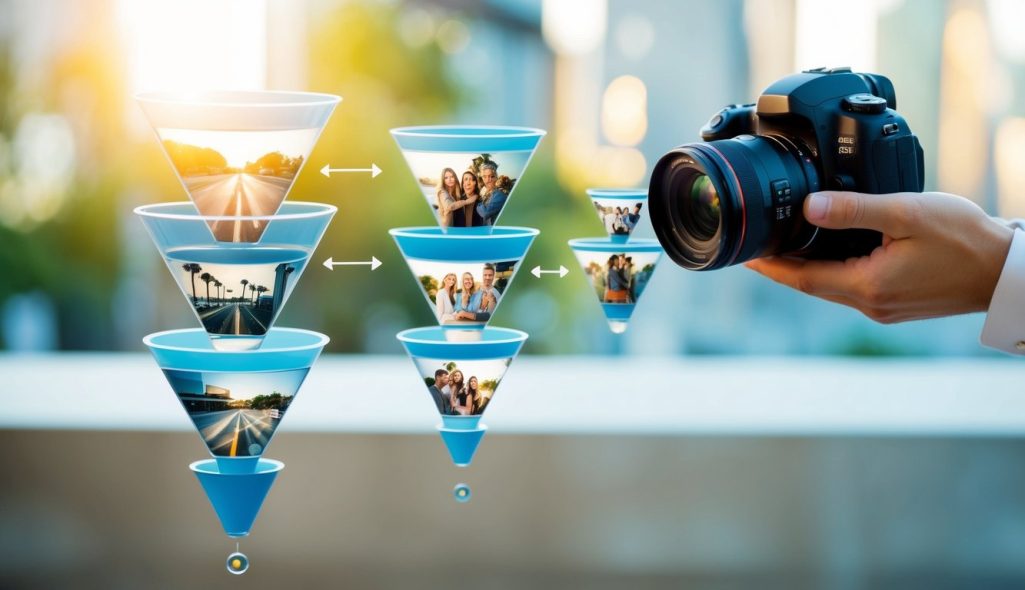
Sales funnels work for all types of photographers, whether you’re focusing on weddings, portraits, or commercial work. By capturing leads through your online presence, you can engage potential clients and guide them through the decision-making process. This systematic approach helps ensure that those who reach out are more likely to book, reducing the time you spend persuading uncertain prospects.
To maximize the effectiveness of your sales funnel, it’s essential to optimize each step and use the right tools. Leveraging software can automate many tasks, freeing you up to focus on what you do best—capturing stunning images. By measuring success and refining your strategy, you can continue to expand your client base and secure future bookings.

Key Takeaways
- Use sales funnels to convert leads into bookings.
- Optimize online presence to engage potential clients.
- Leverage software tools to streamline processes.
Understanding Sales Funnels
Sales funnels guide potential clients through the customer journey in a photography business. These funnels help photographers convert interest into bookings by optimizing each stage of the process.
Definition and Importance for Photographers
A sales funnel is a marketing model that represents the steps a potential client takes before becoming a paying customer. For photographers, a sales funnel can include everything from the initial inquiry to booking a photoshoot. This model is crucial because it clarifies how clients move through different stages of engagement. By structuring your marketing efforts around a well-defined sales funnel, you increase your chances of turning interested visitors into actual clients, which can significantly boost your business growth. For more details, check out this guide.
Key Stages of a Sales Funnel
The sales funnel consists of several stages: awareness, interest, decision, and action. In the awareness stage, potential clients first learn about your services. The goal here is to create engaging content that draws them in.
Once they are interested, the interest stage focuses on providing more information to nurture their curiosity. During the decision stage, you highlight what makes your services unique, helping them choose your business. Finally, the action stage involves converting interest into bookings through calls to action and easy scheduling options. Each stage plays a vital role in guiding clients smoothly from initial contact to a completed booking.
Types of Sales Funnels
There are various types of sales funnels you can use in your photography business. A typical lead generation funnel might start with a free offer, like a downloadable guide that captures a potential client’s email.

Another type is the product launch funnel, where you announce new services or promotions to warm up leads. A webinar funnel can also be effective for photographers who provide educational content. Each type of funnel serves different purposes and can help you reach your business goals. Choose the one that best suits your service and client base to maximize your results. Explore more types of funnels here.
Developing Your Photography Sales Funnel
Creating a successful sales funnel for your photography business involves understanding your audience, producing valuable content, and setting up effective landing pages. By focusing on these strategies, you can attract and convert more clients.
Identifying Your Target Audience
You need to clearly understand who your ideal client is. Think about what their needs, interests, and pain points are. Are you targeting wedding couples, corporate clients, or families? Knowing this will help guide your marketing efforts.
Consider the age, location, and lifestyle of your target audience. Use surveys or social media insights to gather data. This information will allow you to craft messages that resonate and attract more leads. The more specific you are about your audience, the more effective your sales funnel will be.
Crafting Your Value Proposition
Your value proposition is what sets you apart from other photographers. It’s important to communicate what makes you unique and why clients should choose you. Focus on the benefits your services offer.
Maybe you specialize in natural light photography, or you offer customizable packages. These details help highlight your strengths. Ensure your value proposition is clear and concise. It’s what potential clients should feel when interacting with your branding and materials.
Creating Lead Magnets
Lead magnets are free offers that entice potential clients to engage with you. Common examples include downloadable guides, checklists, or even short videos showcasing your work. The key is to offer something valuable that fits your target audience’s needs.
Identify the type of lead magnet that aligns with your services. If you are a portrait photographer, you could offer a style guide for photo sessions. Make sure these lead magnets capture the interest of your audience and encourage them to provide their contact information.
Designing Landing Pages
A well-designed landing page is essential for converting visitors into leads. This page should clearly communicate your value proposition and present your lead magnets effectively. The page needs to be visually appealing and easy to navigate.
Use bold headlines and strong calls to action. Focus on a clear message that guides the visitor to take action, like signing up or downloading a resource. Your landing page should also be mobile-friendly to ensure it works well on all devices. Remember, the purpose is to capture leads, so make the action simple and straightforward.
Optimizing Your Online Presence
Building a robust online presence helps attract potential clients and showcase your unique photography style. Focus on highlighting your skills through an impressive portfolio, leveraging customer testimonials, improving visibility with SEO, and reaching new audiences through blogging and guest posts.
Showcasing Your Portfolio
Your portfolio is key to displaying your work to prospective clients. Ensure it is up-to-date with high-quality images that reflect your best work. Organize the portfolio into categories such as weddings, portraits, or landscapes, so visitors can easily find what they’re looking for.
Consider using a visually appealing website layout to enhance the presentation. Make use of slideshows or galleries to keep potential clients engaged. A well-curated portfolio strengthens your brand identity and reinforces your capabilities to clients.
Leveraging Testimonials and Social Proof
Testimonials help build trust with new clients by showing feedback from satisfied clients. Display these prominently on your website and social media profiles. You can also share any press mentions or awards to strengthen credibility further.
Integrating social proof, like a client count or notable clients, can offer additional reassurance. Encourage past clients to post reviews on platforms like Google or Yelp. The more authentic feedback you display, the more trustworthy your services appear.
Improving SEO for Your Photography Business
Implementing SEO strategies can significantly increase your online visibility. Research and use relevant keywords for your photography niche to improve search engine rankings. Optimize titles, descriptions, and metadata to ensure each page is search-friendly.
Furthermore, ensure your website is mobile-friendly and loads quickly. Both factors are essential for retaining visitors and improving search engine performance. Creating a blog with informative content can also help boost your SEO by attracting more visitor traffic to your site.
Utilizing Blogging and Guest Posting
Blogging is a powerful tool for sharing your insights and experiences with a broader audience. Write about topics like photography techniques, client stories, or insights into the industry. This not only drives traffic to your website but also establishes you as an expert in your field.
Guest posting on popular photography or related blogs is another effective strategy for reaching new audiences. By contributing valuable content, you expose your brand to more potential clients and build valuable connections within the industry.
Engaging Prospective Clients
To effectively engage prospective clients, leveraging email marketing and personalized communication strategies is key. Webinars and targeted content further enhance your ability to capture interest and maintain engagement over time.
Email Marketing Strategies
Building a strong email list is essential for photographers looking to engage potential clients. To start, offer an enticing lead magnet, such as a photography tips guide or a discount on a session, to encourage sign-ups. This builds a list of people already interested in your services.
Segmenting your email list is another effective strategy. By dividing your contacts based on criteria like location or photography interests, you can send more personalized messages. This approach often leads to higher open rates and engagement levels, as subscribers receive content that resonates with their specific needs and interests.
Using attention-grabbing subject lines and concise emails can further boost engagement. Make sure to include a clear call-to-action in each email, guiding recipients toward booking a session or following your social media channels for more updates.
Creating Effective Email Sequences
Email sequences allow you to automate and streamline your communication with new leads. An initial sequence can welcome new subscribers and introduce them to your services, gradually nurturing their interest.
Start with a welcome email introducing yourself and your photography style. Follow up with a sequence that shares your best work, emphasizing client testimonials to build credibility. This creates a journey that leads the subscriber toward booking your services.
It’s important to schedule these emails at optimal times to ensure they don’t overwhelm recipients but keep you at the forefront of their minds. Monitoring the performance of your sequences—checking metrics like open and click-through rates—can help refine your approach for better results.
Adding Personal Touches with Automated Emails
Automated emails can be made more personal and engaging with a few thoughtful touches. Personalization goes beyond using a recipient’s name; consider customizing content based on past interactions or preferences identified during the sign-up process.
Include personalized offers or reminders for upcoming photography sessions. Customizing email copies to speak directly to the client’s needs or interests can also make a significant impact.
Employ feedback loops by inviting subscribers to participate in surveys or provide feedback on your services. This not only shows that you value their opinions but also can provide insights into what your clients appreciate most, allowing further refinement of your services.
Webinars and Targeted Content
Hosting webinars offers a dynamic way to connect with potential clients, allowing you to demonstrate expertise and build trust. Choose topics that address common challenges your clients face, like “Planning the Perfect Wedding Photoshoot.”
Webinars should be interactive and provide value. Consider including a Q&A session where attendees can engage directly, offering them a more personal connection with your brand.
Targeted content extends beyond webinars. Use social media and blogs to share articles or videos focused on your niche. This positions you as a thought leader and keeps your audience engaged with fresh, relevant material. Ensure all content includes clear steps on how clients can book your services or learn more.
Converting Leads into Bookings
Converting leads into bookings requires a few key strategies to guide potential clients through the buying process. By crafting special offers, using effective calls to action, and employing upsells and downsells, you can improve your conversion rates. A well-designed thank you page also plays an essential role in securing bookings.
The Art of Crafting Special Offers
Special offers are a powerful way to turn leads into bookings. Focus on creating offers that feel exclusive and irresistible. This could mean limited-time discounts or bonuses that add value to your service.
Consider your target audience and tailor your offer to their needs and desires. For instance, offering a free mini-session with a purchase can motivate action. Make sure the offer is simple to understand and communicates clear benefits. Use bold text or a table to highlight these points effectively on your sales pages.
Effective Calls to Action
A well-placed call to action (CTA) can greatly increase conversions. Your CTA should be clear, direct, and easy to find. Words like “Book Now” or “Reserve Your Spot” can encourage immediate action, especially when paired with an enticing offer.
Position the CTA prominently on your page, ensuring it stands out visually. Using colors that contrast with your website’s theme can draw attention. Additionally, repeat your CTA throughout the buying process to guide users seamlessly toward bookings.
Utilizing Upsells and Downsells
Introducing upsells and downsells can further enhance your conversion strategy. An upsell involves offering a higher-priced option after the initial decision to purchase, while a downsell offers a lower-priced alternative if the original offer is declined.
For photographers, a possible upsell could be a deluxe photo package or a longer session. Downsells might include digital downloads instead of prints. Proper use of these techniques can increase revenue and offer more choices to your clients.
The Importance of a Thank You Page
A thank you page is more than a polite gesture—it’s a strategic tool for further engagement. After a lead converts, the thank you page should confirm the booking details and reinforce satisfaction with their choice.
Use this page to suggest next steps or additional services, such as inviting clients to follow you on social media or leave a review. This continued interaction can build a relationship beyond the initial booking and lead to future business.
Measuring Success and Analytics
Tracking and understanding analytics is crucial for photographers using sales funnels. You’ll need to focus on conversion rates, use analytics tools, and evaluate marketing strategies to improve your funnel’s effectiveness.
Tracking Conversion Rates
Conversion rates in a sales funnel indicate how many potential customers take specific actions, like signing up for a newsletter or making a purchase. Tracking these rates helps you identify areas for improvement.
You can break down conversion rates by different stages of the funnel, such as:
- Initial lead capture: How many people sign up?
- Engagement: How often do they interact with your emails or content?
- Purchase or booking: How many leads convert into paying clients?
Understanding these metrics will help you optimize your funnel to increase your sales.
Analytics Tools for Photographers
Several analytics tools can help photographers track and measure their sales funnel success. Google Analytics is a popular choice, allowing you to monitor website traffic and user behavior.
Customer Relationship Management (CRM) software can also offer insights into client interactions and help manage leads more effectively.
Another option is ClickFunnels, known for its specialized analytics in sales funnel performance. It provides detailed reports on each stage of your funnel, helping you pinpoint where potential clients drop off.
By leveraging these tools, you can gain valuable insights and make informed decisions about your marketing strategies.
Evaluating Marketing Efforts
Evaluating marketing efforts involves analyzing how effective your campaigns are in driving traffic and converting leads. Consider different marketing channels, such as social media, email marketing, and paid advertisements. Each channel should contribute to the funnel’s success effectively.
Try A/B testing different ad copies or email subject lines to see which ones perform better. Measure the return on investment (ROI) by comparing the cost of your marketing activities against the earnings from new clients.
Consistently evaluating these efforts allows you to adjust your strategies, ensuring that your sales funnel provides the best results in attracting and retaining clients.
Leveraging Software Tools
Creating an efficient sales funnel can make a big difference for photographers looking to increase leads and revenue. By using specialized software tools, you can streamline your marketing efforts, automate processes, and access free templates that simplify the funnel creation process.
Sales Funnel Software for Photographers
Specialized tools help photographers create and manage sales funnels more effectively. ClickFunnels is a popular choice, offering features specifically designed for photographers. This platform provides a user-friendly interface with no need for coding skills, making it accessible even if you’re not tech-savvy.
By choosing the right software, you can save time and effort, focusing on creating compelling offers and marketing strategies.
Other available tools include Studiocloud, which combines CRM capabilities with lead management options. When selecting a tool, consider factors like ease of use, scalability, and customer support. This ensures that the software grows with your business needs.
Automating Your Sales Process
Automation is key to maximizing the efficiency of your sales funnel. It allows you to focus more on creative work rather than administrative tasks.
You can set up automated email sequences that nurture leads over time, ensuring they receive consistent follow-ups.
Integrating a CRM within your funnel software can help keep track of customer interactions. This lets you personalize communication and enhances customer satisfaction.
Automated invoicing and appointment scheduling are also functionalities that streamline processes, making it easier to manage client relationships. By automating these tasks, you maintain consistent communication without manual input.
Free Funnel Templates and Resources
Using templates accelerates the funnel building process, ensuring a professional look without needing design skills. Platforms like ClickFunnels offer free templates tailored for photographers.
These templates guide you in structuring your funnel with layouts that convert visitors into customers.
Free resources often include step-by-step guides and tutorials, helping you understand how to tailor the templates to your brand. These resources are valuable for those just starting or looking to refine their funnels.
With access to free templates, you can experiment and find what best fits your audience without financial risk.
Expanding Client Relationships
To build lasting connections with your clients, focus on nurturing trust and creating opportunities for repeat business. By developing loyalty and using strategic follow-up campaigns, you can transform one-time clients into long-term advocates for your photography business.
Building Long-Term Client Loyalty
Building long-term loyalty involves more than just delivering great photos. It’s about creating a relationship that encourages clients to return and recommend you to others.
Start by maintaining consistent and high-quality service, which helps in building trust. Offer personalized experiences like tailored photo packages or exclusive access to special promotions.
Engage with your clients through social media by showcasing their stories or tagging them in posts. This not only makes them feel valued but also promotes your work to their network.
Keeping in touch with clients after projects and expressing gratitude for their business can cement your enduring relationship.
Creating Follow-Up Campaigns
Creating effective follow-up campaigns is crucial to staying connected with past clients and turning them into paying customers again.
Email campaigns are a great way to achieve this. Design a series of emails that reconnect clients to your services, inform them about new offerings, or simply check in to maintain engagement.
Make use of automated follow-up emails timed for anniversaries, seasonal promotions, or new service announcements. Personalize these messages to make them more impactful.
Well-crafted follow-up campaigns show your clients that you care about their needs and experiences, encouraging loyalty and repeat business.
Generating Repeat Business
To generate repeat business, create incentives for clients to return. Offer loyalty discounts or rewards for repeat bookings. You can also provide add-on services to previous clients, such as updated photo albums or seasonal mini-sessions.
Utilize social media promotions to announce these offers and engage your audience. Sharing client testimonials or featuring client-focused posts can also inspire others to book your services again.
Regularly evaluate what brings clients back and refine your strategy accordingly.
Encouraging clients to return involves a strategic blend of personalized communication, value-driven offers, and effective marketing through various channels, such as emails and social media.
Specific Use Cases in Photography
Implementing sales funnels in photography can significantly boost your business. Different areas like wedding photography and event photography can especially benefit from targeted strategies. Additionally, incorporating multimedia like video footage can enhance engagement and conversion rates.
Sales Funnels for Wedding Photography
For wedding photographers, sales funnels can turn potential clients into booked shoots. Start by creating a lead magnet—a free downloadable guide or checklist for weddings. This captures interest and collects email addresses.
Follow up with an email sequence that highlights your portfolio, testimonials, and special offers. Use automated emails to nurture relationships. Include photos from past weddings and emphasize unique photography styles. This helps potential clients visualize their wedding day captured in your signature style.
Event Photography and Lead Generation
Event photographers often face the challenge of generating leads consistently. Create a landing page optimized for your services. Include details about the types of events you cover and highlight your experience. Use photos and client reviews for credibility.
To capture leads, offer a free consultation or limited-time discount. This incentive draws clients to provide contact details. Use targeted social media ads to drive traffic to your landing page, reaching people specifically interested in event photography services.
Incorporating Video Footage into Sales Funnels
Video footage can enhance a photography sales funnel by adding a dynamic element. Feature video slideshows of your work or client testimonials to engage visitors. This media is more immersive and can grab attention faster than static images alone.
Use video in email sequences to create a deeper connection with potential clients. Short clips of behind-the-scenes footage demonstrate your process and professionalism. Videos can also be a part of an introductory offer, providing a glimpse of what clients can expect from your photography services.
Consider video as a powerful tool that complements traditional photography, appealing to a broader audience.
Frequently Asked Questions
Sales funnels can help photographers attract more clients and increase revenue. Understanding each stage of the funnel and using tactics to boost conversions is essential for success.
How do sales funnels benefit wedding photographers?
Sales funnels help wedding photographers by guiding potential clients through various stages, starting from brand awareness to the final booking. They can enhance client relationships by providing personalized experiences, which in turn, increases the probability of retaining clients and securing referrals.
What steps are involved in creating an effective photography sales funnel?
Start by identifying your target audience and creating a valuable lead magnet, such as a free guide or photography tips. Use a landing page to capture contact information. Develop an email sequence to nurture leads and present irresistible offers to convert leads into bookings. Finally, follow up for feedback and build long-term client relationships.
What are common mistakes to avoid when developing a sales funnel for a photography business?
Avoid neglecting the target audience’s preferences and posting irrelevant content. Failing to optimize landing pages and emails for mobile devices can also hinder success. Another common oversight is not tracking metrics, such as conversion rates, which can help you refine your approach.
How can photographers measure the success of their sales funnel?
Track key performance indicators like conversion rates, such as the number of inquiries turning into booked sessions. Look at engagement metrics from email campaigns and website visits to see which strategies resonate best. Monitoring these metrics provides insights into what is working or where improvements are needed.
What strategies can photographers use to optimize their sales funnels for higher conversions?
Personalize communication with potential clients by addressing their specific needs and preferences. Create compelling calls to action on your landing pages and use testimonials to build trust. Regularly update your strategies based on performance data to ensure they remain effective.
How important is content marketing in a photographer’s sales funnel?
Content marketing is crucial because it helps in attracting and engaging potential clients. Offering valuable content, such as blog posts, tutorials, or behind-the-scenes videos, establishes you as an expert in your field. This content can nurture leads through the funnel and encourage them to become paying clients by building trust and connection.