Crafting an effective sales funnel is crucial for guiding potential buyers through your sales process and turning them into loyal customers. Understanding each stage of the funnel can make a significant difference. By mastering the steps of a sales funnel, you can boost your conversion rates and retain more customers in the long run.
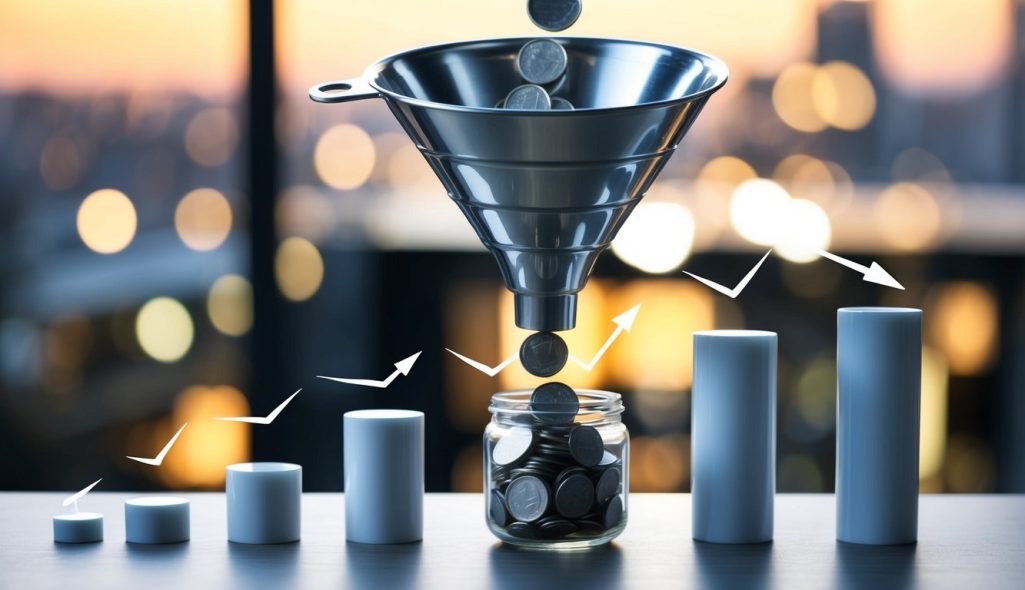
A well-designed sales funnel captures interest at the top, nurtures it in the middle, and closes the deal at the bottom. Each of these stages requires a unique strategy tailored to the buyer’s journey. Techniques like targeted ads and personalized content can help you attract and move prospects through the funnel stages efficiently.
Analyzing your funnel’s performance with the right tools can highlight areas for improvement. Make sure to leverage technological tools to enhance your funnel. This will align it with your overall marketing strategies to achieve maximum efficiency. Improving retention rates can also be a result of an integrated sales and marketing approach.
Key Takeaways
- Build a tailored sales funnel for different buyer stages.
- Use targeted strategies for each funnel stage.
- Leverage technology to track and improve funnel efficiency.
Understanding the Sales Funnel
A sales funnel is a tool that helps you guide potential customers from the first time they hear about your product to the moment they purchase it. Each stage of the funnel plays a significant role in moving people closer to a decision.
Definition and Importance of a Sales Funnel
A sales funnel is a structured path that outlines the journey of potential customers. This journey starts when they first hear about your product and finishes when they make a purchase. The funnel is important because it helps you see where prospects are in their buying process.
Visualize the funnel as an inverted triangle with broad and narrow points. At the top, many people may be interested. As they move down, fewer people continue. The funnel guides you in designing strategic actions to lead prospects through each stage, from discovering your product to making a decision.
Stages of a Sales Funnel
The sales funnel includes various stages, each representing a different point in the customer’s journey. Common stages are awareness, interest, consideration, desire, and decision.
Awareness is where potential customers first learn about your product. Interest and consideration involve evaluating whether your product meets their needs. In the desire stage, prospects show stronger intent towards buying. Finally, the decision stage is when they make a purchase. Understanding these stages helps tailor your approach to customer needs.
Awareness: The Top of the Funnel
Awareness is the first stage where people discover your product or service. Here, the goal is to reach a wide audience and create brand recognition. At this stage, potential customers might not know much about what you offer.
You can use content marketing, social media, and ads to capture attention and provide basic information. Introducing value propositions and benefits can pique their interest further. Effective use of SEO and engaging content helps draw in more leads, setting the stage for their journey down the funnel.
Interest and Consideration: Middle of the Funnel
In the interest stage, prospects show a genuine interest in your offerings. They start to explore how your product can solve their problems or fulfill their needs. Providing informative content like blogs, videos, and webinars can nurture this interest, helping prospects learn more about your product’s benefits.
As they move into the consideration stage, prospects begin comparing options and weighing the pros and cons. You can support their decision-making by sharing case studies, reviews, and detailed product information. It’s key to highlight unique selling points that distinguish your product from others in the market.
Desire and Decision: Bottom of the Funnel
The desire stage is where prospects have a strong inclination towards purchasing. They might be looking for more personalized engagement, such as demos or trials. At this point, it’s important to engage them with tailored offers and targeted follow-ups that show how your product meets their specific needs.
In the final decision stage, the prospect is ready to buy. To close the sale, consider offering incentives like discounts or bonuses to encourage prompt action. Making the purchasing process smooth and hassle-free ensures that potential customers become actual buyers, effectively moving them through the funnel.
Optimizing the Top of the Funnel
Optimizing the top of the funnel is crucial for boosting brand visibility and attracting quality leads. This involves generating traffic, creating engaging content, and employing effective lead generation strategies. Here’s how you can enhance these key areas.
Generating Traffic and Brand Awareness
Building brand awareness is essential for increasing traffic at the top of the funnel. Effective strategies include social media marketing, search engine optimization (SEO), and paid advertising.
Social media platforms allow you to connect with a broad audience, while SEO improves your website’s visibility on search engines. Paid ads, on the other hand, can target specific demographics to draw in larger crowds.
Consistency in your brand message across all channels reinforces recognition and trust. Collaborating with influencers and thought leaders can also extend your reach. These partnerships expose your brand to their followers, generating additional traffic to your website or landing pages.
Creating Engaging and Interactive Content
Engaging content is vital for capturing attention at the top of the funnel. Using a mix of visuals, videos, and infographics can make complex information more digestible.
Interactive elements like quizzes, polls, and surveys encourage participation and keep visitors on your site longer. Meanwhile, live webinars and Q&A sessions provide real-time interaction, building a connection with potential customers.
Personalizing content to fit the preferences of your audience further boosts engagement. By regularly updating and refreshing content, you keep material relevant and engaging. This approach helps in nurturing an interest in your brand.
Using Lead Generation Strategies
For effective lead generation, focus on building high-quality connections. Offering valuable resources like free e-books, guides, or webinars in exchange for contact information is one approach.
Ensure your landing pages are optimized with clear calls-to-action and seamless navigation to maximize conversions. Leveraging tools like email marketing to nurture leads by sending personalized, relevant content is also effective.
Retargeting ads can help by reaching out to those who have previously shown interest in your brand but have not yet converted. Utilizing data analytics informs which strategies are effective, allowing you to continually refine your tactics for better results. Exploring these lead generation methods will support efforts in converting traffic into potential leads.
Enhancing the Middle Funnel Conversion Tactics
To boost conversions in the middle of the funnel, focus on lead scoring, nurturing strategies, and optimizing efficiency with templates. These tactics help maintain engagement and move prospects closer to making a purchase.
Lead Scoring to Prioritize Prospects
Lead scoring is crucial for identifying potential buyers who are more likely to convert. By assigning scores to leads based on their behavior and engagement, you can concentrate efforts on the most promising prospects.
Use factors like interaction frequency with your content and website visits. Implementing an accurate lead scoring system helps improve communication between marketing and sales. It ensures sales teams concentrate on high-priority leads, saving them time and effort.
Regularly review and update your scoring criteria to reflect changing customer behavior and ensure that your approach remains relevant and effective.
Developing a Lead Nurturing Program
A lead nurturing program guides potential customers through the middle of the funnel. Use targeted content to educate and engage them.
Emails, webinars, and personalized messages can keep leads interested and informed. By tailoring your message to address questions and challenges, you demonstrate your expertise and establish trust.
Consistent communication helps move leads closer to a decision. Track engagement and adjust your strategies based on lead responses to ensure your nurturing efforts remain on point.
Improving Productivity with Sales Funnel Templates
Sales funnel templates improve productivity by streamlining your processes. They provide a standardized approach that can make managing complex sales activities easier.
Templates help ensure consistency in communication and tracking. By using templates, you can simplify tasks such as follow-up emails, lead tracking, and reporting. This consistency allows teams to focus on creative strategies and high-value interactions instead of repetitive tasks. Templates can also enhance team collaboration by providing a clear framework for funnel activities. Utilizing these tools leads to more efficient lead management and a smoother sales process.
Effective Techniques for the Bottom of the Funnel
Focusing on the bottom of the funnel involves strategies like encouraging immediate action, guiding purchase decisions, and creating persuasive product demos to boost conversions and enhance customer retention.
Encouraging Action and Purchase Decisions
At this stage, potential buyers are close to making a purchase. Prompt action by offering clear calls-to-action (CTAs). Use CTAs that are concise, compelling, and create urgency, such as “Buy Now” or “Limited Stock Available”.
Another strategy is to provide social proof. Include testimonials or reviews that highlight customer satisfaction. This builds trust and assures potential buyers of product value.
Deliver guarantees like money-back offers or free trials. These reduce perceived risk, encouraging them to finalize their purchase. Clear return policies also increase confidence in buying.
Customer Contemplation and Incentives
This phase revolves around addressing the buyer’s final hesitations. Implement personalized incentives, such as discounts or exclusive offers. Tailor these perks based on past interactions or preferences.
Keep communications open and interactive. Follow up with emails or messages to answer any lingering questions. Offering expert advice or additional product information can also aid decision-making.
Crafting Compelling Product Demos
Product demos play a critical role in convincing buyers. Create engaging, interactive demos that show real-life applications of your product.
They should be easy to follow and visually appealing to maintain interest. Utilize platforms or software that let you customize demos.
Personalized demos resonate more with your audience because they address their specific needs or problems. For a successful demo, focus on outlining solution benefits. Highlight unique features and how they differentiate the product from competitors. Make sure every point keeps the potential buyer engaged and eager to proceed with a purchase.
Measuring and Increasing Sales Funnel Efficiency
Boosting sales funnel efficiency involves focusing on key metrics that drive performance. By strategically increasing conversion rates, accurately forecasting sales, and accelerating sales velocity, you can enhance the effectiveness of your funnel.
Utilizing Conversion Rates as Performance Metrics
Conversion rates are crucial in evaluating how effectively leads are moving through your sales funnel. They show the percentage of prospects who complete a desired action, such as signing up or making a purchase.
Tracking these rates lets you see where improvements are needed. For instance, you might notice a drop in the rate from lead to opportunity. This signals a need to refine your call-to-action or improve lead nurturing strategies to boost engagement.
Consistently analyzing conversion rates helps to identify strong and weak points in your funnel. Use this insight to test different approaches, like new messaging or offers. By understanding these metrics, you can make informed decisions to enhance your overall sales process.
Sales Forecasting for Future Growth
Sales forecasting is essential to predict future revenue and plan accordingly. It involves analyzing past sales data and market conditions to set realistic goals.
By forecasting accurately, you ensure that your team is prepared for demand fluctuations and revenue expectations. This process helps align your sales strategies with broader business objectives.
Utilize software tools and historical data to create precise forecasts. Regular updates to your forecast allow for adjustments based on changing conditions.
Accurate forecasting provides insights into potential sales growth and areas that require attention. It supports strategic planning and resource allocation to maximize efficiency and effectiveness in your sales funnel.
Accelerating Sales Velocity for Quick Wins
Sales velocity measures how quickly deals move through your sales funnel. It combines various factors like deal size, win rate, and time to close.
High sales velocity implies quicker revenue generation, which is critical for businesses looking to grow rapidly. To accelerate sales velocity, focus on reducing cycle time for deals.
Streamline your sales processes by removing bottlenecks and improving communication. Ensure your sales team has the tools and training they need to close deals faster.
Regularly evaluate your team’s performance and the steps in your sales process. Use these insights to make necessary changes that speed up deal closure and improve the efficiency of your funnel. Increasing sales velocity can lead to more quick wins, boosting overall sales performance.
Leveraging Customer Relations and Retention
Building strong relationships with your customers helps improve their satisfaction and loyalty. With a clear customer journey and strategic offers for repeat buyers, you can enhance retention effectively.
Fostering Customer Satisfaction and Loyalty
Understanding what your customers need and expect is key. Strong communication and personalized service make customers feel valued. Keep in touch through emails and surveys to get feedback on their experiences. Listen actively and implement changes based on their responses.
Focus on rewarding loyalty by creating loyalty programs that offer discounts or special perks. This not only boosts satisfaction but also encourages repeat business. Always aim to resolve issues quickly, as this demonstrates commitment and builds trust.
Implementing Customer Journey Mapping
Creating a customer journey map helps visualize each touchpoint your customer experiences. Start by identifying key stages like awareness, consideration, and decision. This map assists in improving customer relations by pinpointing where customers drop off and understanding their needs better.
Use this information to refine marketing strategies and enhance the user experience.
Employ tools like CRM systems to track interactions and maintain consistency in communication. This structured approach ensures you can address concerns at every stage, leading to higher retention.
Offering New Products and New Offers to Repeat Buyers
Loyal customers can become brand advocates when you offer compelling new products and tailored deals. Introduce new products with exclusive early access, or bundle existing products at a discount to entice repeat purchases.
Understand purchase patterns to personalize offers. For instance, if someone buys monthly, send offers shortly before the expected next purchase. Tailoring these offers can increase customer retention, as it shows you value their business and understand their preferences.
Remember: Consistent follow-up and meaningful engagement improve your chances of keeping customers coming back.
Integrating Sales Funnel with Marketing Strategies
Aligning your sales funnel with your marketing strategies can improve lead generation and customer relationships. This approach ensures consistency across different channels and touchpoints, making it easier for potential customers to move from awareness to purchase.
Aligning Sales Pipelines with Marketing Campaigns
To create a seamless experience, align your sales pipeline with marketing efforts. This can be done by making sure that marketing campaigns are synchronized with the stages of your sales funnel. For example, a marketing campaign should address the specific needs or questions people have at different points in their journey. Marketing campaigns that highlight product benefits can lead to increased conversion rates.
Develop a collaborative strategy between marketing and sales teams. Shared goals and regular meetings can help teams understand each other’s priorities. With clearly defined roles, the transition from marketing leads to qualified sales prospects becomes smoother.
Content Marketing for Lead Generation and Awareness
Utilize content marketing to build interest and awareness. Content like blog posts, webinars, and e-books can educate potential customers about your products and services, guiding them through the early stages of the funnel.
Quality content can position your brand as a leader in the field and provide answers to common questions, fostering trust.
Focus on generating content that addresses the pain points of your audience. Use targeted keywords to attract the right visitors to your site. Include clear calls-to-action in your content to prompt the next step in the sales process, whether it’s signing up for a newsletter or downloading a guide.
Utilizing Testimonials and Reviews in Sales Funnels
Incorporating testimonials and reviews into your sales funnel can be highly persuasive. Potential buyers often look for social proof before making a decision. Share positive feedback from satisfied customers to build credibility and trust in your offerings.
Display reviews prominently on your website, especially on landing pages and product descriptions. Consider video testimonials, which are often more engaging and authentic. Encourage happy customers to leave reviews by following up after a purchase. Responding to both positive and negative feedback shows that you value customer experiences, further enhancing your brand’s reputation.
Developing a Personalized Approach
Creating a personalized approach helps address the unique needs of each customer. This strategy can significantly improve customer satisfaction and retention by tailoring your methods to specific segments.
Building Buyer Personas for Target Marketing
To start, develop detailed buyer personas. A buyer persona is a semi-fictional character that represents your ideal customer. It includes key information like demographics, job roles, challenges, and goals.
By focusing on these details, you can better understand what each segment needs.
Interviewing your existing customers can provide valuable insights. Analyze data from customer interactions to identify patterns and preferences. Use surveys or feedback tools to gather this information. Once you have your personas, align your marketing efforts accordingly.
Segment your audience based on these personas and develop targeted messages for each group. Personalize emails, advertisements, and other content to resonate with your target audience.
By ensuring your marketing speaks directly to the characteristics and intent of each persona, you enhance engagement and conversion rates.
Conversion Optimization for Different Customer Segments
Conversion optimization involves tailoring your approach to suit different customer segments. Begin by analyzing each segment’s behavior throughout the sales process. Different segments may respond to varied offers or calls-to-action.
For example, younger audiences might prefer fast digital communication, while older segments may appreciate more detailed product information.
Use A/B testing to determine which strategies work best for each group. Track metrics like click-through rates and bounce rates to evaluate performance.
Organize your strategy into different stages of the funnel to visualize where enhancements are needed.
Regularly update your conversion tactics based on changing trends and customer feedback. By customizing your conversion efforts, you increase the possibility of turning potential leads into satisfied buyers.
Technological Tools and Analytics
Leveraging the right technological tools and careful analytics can significantly enhance your sales funnel efficiency. By managing customer relationships and analyzing data, you can drive performance and automate lead generation. These strategies help you capture and convert more leads effectively.
CRM and Sales Funnel Management
Customer Relationship Management (CRM) systems play a crucial role in tracking interactions and managing relationships throughout your sales funnel. A CRM helps you organize customer data, making it easier to customize communication and follow-ups.
By integrating your CRM with your sales process, you can automatically update customer information and track progress through different funnel stages. This streamlines operations, so your sales team has more time to focus on closing deals.
Popular CRM tools like Salesforce and HubSpot offer features that allow real-time analysis and report generation. These insights enable strategic adjustments to improve your sales outcomes.
Using a CRM system maximizes your ability to build strong customer relations and enhance sales funnel performance.
Analyzing Data for Improved Sales Performance
Data analysis is key to understanding how your sales funnel performs and where improvements can be made. Tools like Google Analytics and specialized sales funnel software allow you to monitor customer behaviors and conversion rates.
With analytics, you can identify drop-off points in your funnel and modify strategies to reduce these losses.
Visualizing data through charts and graphs makes it easier to communicate insights and decisions within your team.
Evaluate metrics such as conversion rates and customer lifetime value to gauge success. These insights help you optimize each stage of the funnel, from awareness to action.
Consistent data analysis enables you to refine your sales approach, leading to better results over time.
Email Opt-Ins and Automated Lead Generation Tools
Email opt-ins are essential for capturing leads at the top of your sales funnel. Utilizing automated tools can streamline this process, helping you efficiently gather potential customer information.
Platforms like Mailchimp and Constant Contact offer automation features to manage email campaigns and scheduling. These tools save time and ensure timely communication with prospects.
Automating the lead generation process includes setting up automated responses and personalized email flows that nurture leads until they’re ready to convert.
By combining effective email opt-ins with automation, you can build a robust system that feeds your sales funnel with qualified leads, ready to move to the next step.
How does one measure the success of a sales funnel?
Success can be measured by tracking metrics like conversion rates and customer retention. High conversion rates and returning customers indicate a healthy funnel. Utilize analytics tools to regularly assess these metrics and make informed adjustments.