Ecommerce sales funnels guide potential customers from their first interaction with your brand to the final purchase. Understanding and optimizing each stage can increase conversions and boost your revenue. A well-crafted funnel not only attracts and retains customers but also builds brand loyalty through personalized marketing strategies.
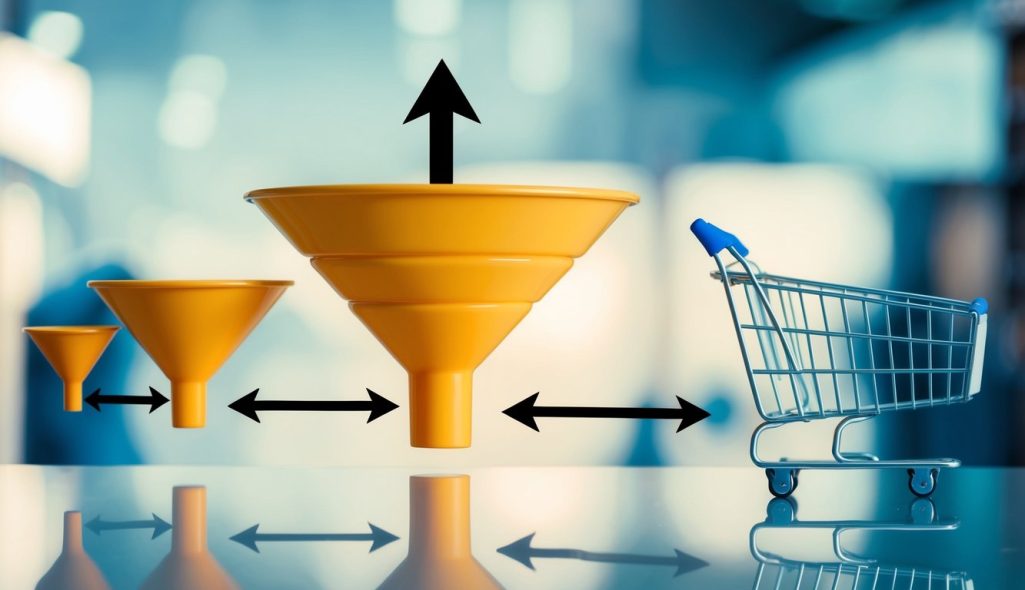
Think of a sales funnel as a map of your customer’s journey. From the initial interest sparked by an engaging ad to the final click of purchasing, every step is crucial. This journey involves building awareness, fostering engagement, and ultimately ensuring customer satisfaction. Successful ecommerce businesses pay close attention to each stage to enhance the overall shopping experience and drive sales.
By leveraging insights from target audience behavior and implementing smart marketing tactics, you can refine your funnel to address specific customer needs. Whether it’s improving your site’s user experience or utilizing effective retargeting campaigns, the right approach can mean the difference between a one-time buyer and a loyal customer.
Key Takeaways
- Understand each step in the sales funnel to boost conversions.
- Improve customer experience at every funnel stage.
- Use marketing strategies to turn interest into sales.
Understanding Ecommerce Sales Funnels
Ecommerce sales funnels guide potential buyers through a journey from initial prospects to completed sales. Understanding this path helps in tailoring strategies to capture and convert interest into desire and eventual action.
Defining a Sales Funnel
A sales funnel is a visual model that represents the steps a potential customer takes to eventually make a purchase. It typically involves four key stages: attention, interest, desire, and action. You capture attention to bring prospects into the funnel. Then, you nurture their interest by providing valuable information and solutions, turning prospects into interested buyers.
Next, desire is built through targeted content that shows how your products meet specific needs. Finally, action is where you encourage customers to make a purchase. A well-defined funnel helps create a structured approach to engage and convert buyers effectively.
Overview of the Ecommerce Conversion Funnel
The ecommerce conversion funnel is an adaptation for online stores. It starts with attracting potential buyers, often with digital marketing strategies like ads or social media. Once you have their attention, guide them with engaging content to maintain their interest.
At this stage, you provide detailed product info and examples of effective funnels to further build desire. When they reach the decision point, ensure the checkout process is smooth to facilitate action. By understanding each stage, you can optimize your funnel to improve sales and enhance the customer journey from awareness to purchase.
The Role of Marketing in Ecommerce Funnels
Marketing plays a crucial role in guiding customers through each stage of an ecommerce sales funnel. From content marketing to email strategies, each type of marketing helps attract, engage, and retain customers, ultimately leading to increased sales and customer loyalty.
Content Marketing and SEO
Content marketing and SEO are vital in attracting visitors to your online store. By creating valuable blog content, you can drive traffic from search engines. SEO techniques like keyword optimization ensure your product pages rank higher in search results. Including advertorials in your marketing strategy can also influence potential buyers, providing them with more information on your products.
Good content is also essential for building trust and authority. Social proof, such as customer reviews and testimonials, can be highlighted within content to establish credibility. By effectively using SEO, you not only improve visibility but also enhance the quality and relevance of your website’s content to potential customers.
Social Media Ads and Influencer Marketing
Social media ads, such as Facebook ads, can significantly boost brand awareness. These ads allow you to target specific demographics, ensuring that your marketing efforts reach the right people. Facebook ads are highly customizable and can be tailored to different stages of your funnel for maximum impact.
Influencer marketing is another powerful tool. Collaborating with influencers allows you to tap into their established audience base, providing a form of social proof that encourages followers to explore your offerings. Through strategic influencer partnerships, you can reach new customers and bolster your brand’s credibility and visibility.
Email Marketing Strategies
Email marketing is a key component in nurturing leads and converting them into customers. By using targeted email campaigns, you can send personalized content that resonates with your audience. These campaigns can include exclusive offers, product updates, or reminders about abandoned carts, which help boost sales.
Email automation is another useful tactic. You can set up sequences that trigger based on user behavior, ensuring your emails are timely and relevant. This type of direct communication helps build customer relationships and encourages repeat purchases. With these strategies, your chances of turning prospects into loyal customers improve significantly.
Stages of the Ecommerce Funnel
Ecommerce funnels guide potential customers from discovery to purchase. They involve steps that help you understand how to engage users and turn them into loyal customers, improving your sales process and customer relationships.
Awareness Stage
In the awareness stage, potential customers discover your brand or products for the first time. They may come across your business through various channels like social media, search engines, or online advertisements. The goal here is to capture attention and create a positive first impression.
To be effective, focus on content that introduces your brand’s values and unique selling points. Use platforms like Facebook or Instagram to showcase engaging posts or ads. Including informative blog posts, videos, or infographics can also spark interest.
Building brand recognition is essential at this stage. This can eventually lead potential customers to explore more about what you offer.
Interest Stage
Once you have captured attention, the interest stage is where potential customers start seeking more information about your products or services. They visit your website, read customer reviews, or sign up for newsletters. Your goal is to further engage them and highlight key benefits.
Provide detailed product descriptions and compelling testimonials to build interest. Encouraging interactions through online chat support or webinars can also help.
At this stage, it’s vital to maintain engagement and keep their curiosity alive. This encourages them to move forward in the funnel, exploring your offerings more deeply.
Consideration Stage
During the consideration stage, potential customers evaluate your products among options available. They compare features, prices, and reviews to make informed decisions. Here, you aim to position your offering as the best choice.
Highlight unique selling points and offer detailed comparisons or case studies. Providing limited-time offers, discounts, or bundles can incentivize decision-making.
Transparency and clear communication are crucial. You want to build trust and confidence, guiding prospects toward converting into paying customers.
Conversion Stage
The conversion stage is where the actual purchase occurs. Your aim should be to make the buying process as smooth and straightforward as possible. Reduce friction by ensuring your checkout process is user-friendly and secure.
Offering multiple payment options and ensuring clear return policies can help ease customer concerns. Personalized recommendations at checkout can encourage additional purchases.
Streamlining the buying experience is essential. A hassle-free transaction can significantly boost the chances of completing a sale and fostering customer satisfaction.
Post-Purchase Stage
The post-purchase stage is crucial for customer retention and loyalty. After the sale, your focus shifts to customer satisfaction and continued engagement. This stage helps turn one-time buyers into repeat customers.
Follow up with personalized thank you emails or requests for feedback. Providing excellent customer support and being responsive to inquiries further solidifies your brand’s reputation.
Consider loyalty programs or exclusive offers for returning customers. These strategies help maintain engagement and encourage long-term relationships, ultimately benefiting both you and your customers.
Optimizing Conversion Rates
Improving conversion rates involves understanding user behavior, enhancing product pages, and testing different strategies. These factors can significantly impact how users interact with your site and make purchase decisions.
Analyzing User Experience
User experience plays a crucial role in conversion rates. Start by examining how easily users navigate your site. Is the path to purchase straightforward? Tools like heatmaps and user session recordings can help identify problem areas.
Also, consider the importance of site speed. Slow loading times often lead to higher abandonment rates. Streamlining your website elements can significantly enhance user experience. Clear calls to action and a clean design can guide users smoothly through the sales funnel.
Product Page Optimization
A well-optimized product page can significantly boost conversions. Ensure product images are high-quality and that details are descriptive. Include customer reviews to build trust and offer a clear return policy.
Consider the strategic placement of your calls to action. Make sure they stand out but aren’t intrusive. Evaluate your sales funnel template to ensure each step encourages further engagement. This can help transform browsing into buying.
A/B Testing for Performance
A/B testing is a powerful method for understanding what changes will enhance conversion rates. This involves creating two versions of a page and analyzing which performs better.
Test variables such as headlines, button colors, and layout. Aim for significant data to drive informed decisions. Successful examples and strategies demonstrate how small tweaks can have big impacts on conversions. Regular testing keeps your strategies fresh and relevant.
Enhancing Customer Journey and Retention
Improving customer retention in e-commerce often involves loyalty programs and upselling, effective outreach through follow-up emails, and incorporating customer feedback for better strategies. Each of these areas plays a role in building stronger connections with your customers.
Loyalty Programs and Upsells
Creating loyalty programs can significantly enhance customer retention. Encourage repeat purchases by offering points or rewards every time customers shop. This not only builds brand loyalty but also incentivizes customers to choose your store over competitors.
Upselling and cross-selling are key strategies here. Suggesting complementary products or premium options during checkout can boost sales. It’s crucial to personalize recommendations based on previous purchases. By doing this, you can increase average order value and enhance the overall shopping experience.
Customer Outreach and Follow-up Emails
Consistent communication keeps your brand fresh in customers’ minds. Follow-up emails are vital for this. Send thank-you emails after purchases and reminders for items left in the cart.
Personalized emails with product suggestions can re-engage customers. Creating segmented email lists allows for targeting specific customer needs. Additionally, introducing special offers or discounts in these emails can encourage more regular visits to your site, further boosting customer engagement and retention.
Utilizing Customer Feedback
Customer feedback is a goldmine for improving your business. Encourage customers to share their thoughts through surveys or reviews. Use this valuable information to refine products and services.
Responding to feedback builds trust. Address customer concerns and highlight how their input has influenced changes. This shows that you value their opinions and are committed to enhancing their experience. Tracking feedback trends also helps identify opportunities for innovation and improvement.
Leveraging User-Generated Content
User-generated content (UGC) adds authenticity to your brand and helps build trust with potential customers. By showcasing real experiences, you can enhance engagement and drive more sales.
Encouraging Customer Reviews and Testimonials
Encourage your customers to leave reviews and testimonials by making the process easy and rewarding. You can offer incentives like discounts or loyalty points for leaving feedback. Highlighting positive reviews on your website or product pages can significantly boost credibility.
Ensure your review section is visible and accessible. Utilizing email campaigns to request reviews after purchase can also be effective. By prioritizing transparency, you reassure new customers about the quality of your products, as positive testimonials often lead to higher conversion rates.
Showcasing User-Generated Content
Showcasing UGC on your website and social media creates a sense of community and authenticity. Create spaces specifically for customer photos or videos, such as dedicated galleries or social media feeds featuring user content.
Using visuals like customer photos makes your brand relatable. Highlight real-life product use cases by sharing customer posts with a branded hashtag. Encourage users to share their experience with your products by spotlighting their content on your platforms. This can lead to increased engagement and brand loyalty.
Incorporating UGC into Marketing Campaigns
Incorporate UGC into your marketing campaigns to add a genuine touch. Use customer testimonials and reviews in your advertisements to provide social proof. Real-life stories or experiences shared by users can make an ad more relatable and persuasive.
Feature user-generated visuals in email marketing to bolster engagement. When customers see others like them using your products, it creates a desire to be part of the community. UGC can also help in creating compelling narratives that resonate with a wider audience, enhancing the effectiveness of your campaigns.
Metrics and KPIs for Ecommerce Funnels
Tracking the right metrics and KPIs is vital for understanding your ecommerce sales funnel. By focusing on key indicators, you can pinpoint where improvements are needed. This enhances your customer journey from lead generation to conversion.
Importance of KPI-based Measurement
Using KPI-based measurement allows you to assess essential aspects of your funnel’s performance. Key Performance Indicators (KPIs) such as conversion rate, average order value, and customer lifetime value help you identify where a customer might drop off in the buying process. These metrics give you clear insight into how well your funnel converts leads into paying customers.
Monitoring your customer acquisition cost, or CoCA, is another important metric. By keeping track of CoCA, you can manage your marketing budget more effectively, ensuring your spending leads to significant returns. Understanding these metrics will enable targeted strategies to enhance customer acquisition and retention, driving better performance for your ecommerce business.
Analyzing Traffic Sources and Sales Pipeline
Analyzing where your traffic originates is crucial. Identifying your top traffic sources can help you allocate marketing resources more efficiently. Whether it’s social media, email campaigns, or search engines, knowing which channels are most effective ensures that you target your audience with precision.
In your sales pipeline, it’s important to track how leads move through different funnel stages. This can highlight bottlenecks or areas needing improvement. A well-optimized funnel should smoothly guide potential customers from the interest stage to making a purchase, boosting overall ecommerce conversions. By keeping a close eye on these areas, you can refine your funnel to maximize sales opportunities and enhance customer experiences.
Strategies to Reduce Cart Abandonment
To reduce cart abandonment, it’s crucial to focus on crafting effective calls to action and implementing abandoned cart emails. These elements help guide customers towards completing their purchases and recapturing lost sales.
Crafting Effective Calls to Action
Creating strong calls to action (CTAs) is key to reducing cart abandonment. The CTA should be direct and encourage customers to complete their purchase. Use clear and compelling language such as “Buy Now” or “Complete Your Order” to create urgency and guide them through the checkout process.
Make sure the CTA stands out on the page. Use bold colors or larger fonts to ensure it catches the customer’s eye. Position it prominently during the shopping journey to keep customers moving forward. CTAs should also match the customer’s intent and be relevant to the product or service being offered.
You can test different CTAs to see which performs best. Consider using A/B testing to find the most effective design and wording for your specific audience. This approach ensures that your CTA resonates with your customers and effectively reduces cart abandonment.
Implementing Abandoned Cart Emails
Abandoned cart emails are a valuable tool for bringing customers back to complete their purchases. These emails remind customers of items left in their cart, often prompting them to return to the site.
Personalize your emails by including product images, names, and prices to entice customers.
Timing is crucial for abandoned cart emails. Send the first email within a few hours after the cart is abandoned, and follow up with additional emails over the next few days if necessary. Offering a discount or free shipping in your email can provide an added incentive for customers to make the purchase.
Include a clear and compelling CTA within the email. The CTA should direct them back to their cart, making the process of returning to checkout as seamless as possible. Regularly reviewing and optimizing your email strategy will improve its effectiveness in reducing cart abandonment.
Developing a Successful Marketing Campaign
Creating a successful marketing campaign requires effective brand awareness and converting leads into sales. By focusing on these key areas, you can guide potential customers through the buying process and keep them engaged in your conversion funnel.
Building Brand Awareness
Brand awareness is the first step in a marketing campaign. You need to make sure people recognize your brand and what it stands for. Start by using social media, content marketing, and advertisements to get your name out there.
Target the right audience by understanding their needs and interests. This can be achieved through customer surveys and market research. A strong presence in places where your potential customers spend time can enhance customer acquisition.
Collaborations with influencers can also spread your message further. Consistent branding across platforms will make your brand memorable, increasing the likelihood of repeat purchase.
Converting Leads into Sales
Once you’ve captured potential customers’ interest, the next step is to turn those leads into sales. This involves nurturing leads through email marketing, personalized offers, and engaging content. Keep track of your leads’ progress in the conversion funnel and adapt strategies as needed.
Provide clear and informative content that addresses common questions or concerns. This helps move leads further along the buyer’s journey. A seamless buying process, including easy navigation on your site and clear calls to action, is essential to encourage purchasing.
By understanding and anticipating customer needs, you can guide them from interest to purchase. Providing excellent after-sales service can increase the chances of repeat purchases, solidifying customer loyalty.
Latest Trends in Ecommerce Sales Funnels
In 2024, ecommerce sales funnels are evolving to be more customer-centric. AI is becoming a key player in personalizing the shopper’s journey. AI can predict what users are most likely to purchase, helping you optimize online sales and improve conversion rates.
Search engine optimization (SEO) remains crucial. By optimizing each stage of the sales funnel, you can attract more traffic and keep potential customers engaged. Use targeted keywords throughout your funnel to enhance visibility and draw in the right audience.
Improving the customer experience is another focus. Shoppers want a seamless journey from start to finish. Ensure that pages load quickly and that the checkout process is smooth. This can greatly reduce cart abandonment.
Interactive content, like quizzes and surveys, is becoming popular. It keeps users engaged and can provide valuable insights into user preferences. Use this info to refine your funnel stages and boost engagement.
Here’s a simple table to illustrate key points:
| Trend | Description |
|---|---|
| AI Integration | Personalized shopping experiences |
| SEO Optimization | Increases visibility and attracts the right audience |
| Enhanced Experience | Fast, seamless navigation improves conversions |
| Interactive Content | Engages users and provides insights |
Frequently Asked Questions
Ecommerce sales funnels are vital for guiding potential customers through the buying process. Understanding their stages and metrics is key to improving conversions and engagement.
What are the essential stages of an ecommerce sales funnel?
An ecommerce sales funnel typically includes four stages: awareness, interest, decision, and action. In the awareness stage, potential customers learn about products through ads or content. During the interest stage, they explore further, eventually reaching a decision to purchase in the later stages.
How can converting sales funnels be structured for online stores?
Effective funnels lead customers from discovery to purchase through a series of targeted interactions. Start with capturing attention using advertisements and promotions. Then, nurture interest with valuable information, useful guides, or engaging content, ultimately encouraging customers towards making a purchase with incentives or special offers.
What metrics are crucial for measuring the success of an ecommerce funnel?
Key metrics include conversion rate, bounce rate, and average order value. Tracking these helps you understand customer behavior at each funnel stage. Monitoring cart abandonment rates can offer insights into potential bottlenecks in the purchasing process, enabling you to make necessary adjustments.
What strategies can optimize the top of the funnel for online retailers?
Increasing brand visibility is crucial at the top of the funnel. Use targeted ads, social media engagement, and informative content to attract potential customers. High-quality blogs or videos can draw interest and set the stage for further interaction. Another effective tactic is using SEO strategies to improve search engine rankings.
How do successful ecommerce businesses utilize funnels to improve sales?
Successful businesses tailor their funnels to fit their specific audience. They use personalized email marketing and retargeting ads to maintain customer interest. By analyzing customer segments and behaviors, they can refine their approach, ensuring that every stage of the funnel is efficient in converting leads into sales.
Can you provide examples of ecommerce sales funnel tactics that drive customer engagement?
Brands often use personalized product recommendations to keep customers engaged. Offering free trials or samples can also entice potential buyers.
Another effective strategy is creating a sense of urgency through limited-time offers or discounts. This encourages quicker decision-making and enhances engagement throughout the funnel stages.