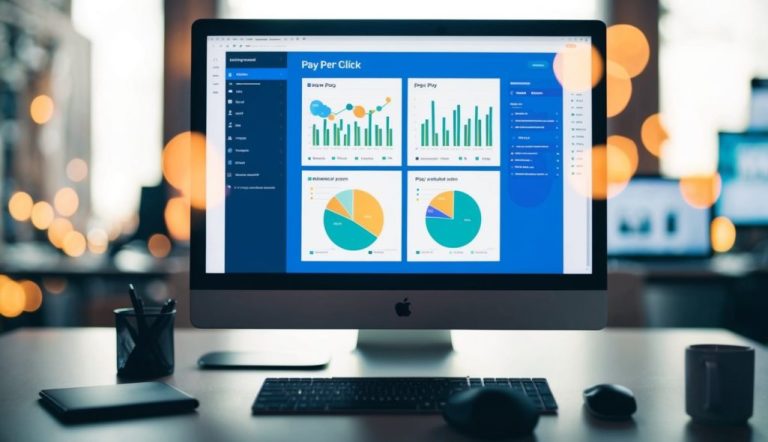
Pay-per-click (PPC) platforms are key tools for businesses looking to boost their online presence through digital advertising. PPC platforms allow you to place ads and pay only when someone clicks on them. This gives you direct control over your advertising budget and effectiveness.
Whether you’re new to digital marketing or looking to optimize your current strategy, understanding PPC can help drive significant results for your business.

It’s crucial to know how different PPC platforms work and which one best suits your needs. Google Ads stands out as the most popular choice globally, known for its substantial reach and potential for high returns. Platforms like social media networks also offer PPC options, each with its own unique capabilities and audience targeting features. Choosing the right platform can make a big difference in reaching your business goals.
Creating an effective PPC campaign requires a mix of strategic planning and precise execution. This involves setting the right budget, targeting the correct audience, and continually measuring your results to refine your approach.
By aligning PPC strategies with other marketing channels, you can maximize their impact and achieve a more integrated advertising effort.
Key Takeaways
- PPC platforms charge only when ads are clicked.
- Google Ads is the most widely used PPC platform.
- Align PPC with other channels for best results.
Understanding Pay Per Click
Pay-per-click (PPC) advertising is a method where you pay each time someone clicks your ad. This approach is common in digital advertising, providing control over your ad budget.
CPC vs. CPM vs. CPP:
- CPC (Cost Per Click): Pay per click.
- CPM (Cost Per Thousand Impressions): Pay for every 1,000 views.
- CPP (Cost Per Purchase): Pay per sale.
These models let you choose how you want to spend money on ads.
PPC Campaigns are the backbone of digital marketing strategies. With these campaigns, you aim to maximize conversion rates by reaching a targeted audience. You set a maximum bid for your ad, which is the highest amount you’re willing to pay per click.
The click-through rate (CTR) is crucial in gauging your ad’s effectiveness. A higher CTR means more people are clicking your ad compared to the number of impressions it receives.
Quality Score is important in PPC. This metric affects your ad’s position and cost. A better quality score can lower your costs while improving ad placement.
Key Platforms for PPC Advertising
Pay Per Click (PPC) platforms play a crucial role in digital advertising by allowing businesses to reach specific audiences effectively. These platforms vary in their offerings, targeting capabilities, and user bases, making it essential to choose the right one for your needs.
Google Ads
Google Ads is the largest and most widely used PPC platform. With access to the extensive Google Search Network, you can showcase ads to users searching for specific keywords. Its robust targeting options include demographics and geolocation. Google Ads also offers various ad formats, like text, display, and shopping ads, which are effective for both B2B and B2C businesses. The platform provides detailed analytics, helping you track performance and optimize campaigns. Globally, ad revenues with Google Ads are forecasted to reach $190 billion in 2024.
Facebook and Instagram Ads
For social media marketing, Facebook and Instagram Ads are ideal due to their immense user bases, with Facebook alone having nearly 4 billion users. These platforms allow you to target specific audience segments based on interests, demographics, and behavior. This makes them powerful tools for engaging potential customers with personalized ads. The ability to retarget users based on activity ensures your campaigns reach those most likely to convert. Additionally, Instagram allows for visually striking ads, ideal for brands with strong visual content.
Microsoft and Bing Ads
Microsoft Advertising, often referred to as Bing Ads, offers a valuable PPC platform by connecting with searchers across the Bing, Yahoo, and AOL networks. It is beneficial for reaching an audience that might not be accessible via Google. Microsoft Ads provides targeting similar to Google, with unique audiences that could lead to less competition and potentially lower costs. The ads tend to perform well in industries such as finance and technology. Bing Ads supports a variety of ad formats, enabling you to create text and shopping ads effectively.
LinkedIn Ads
LinkedIn Ads are perfect for B2B marketing, focusing on professional demographics. This platform offers targeting based on job titles, industries, and company sizes, making it highly effective for reaching decision-makers. LinkedIn’s precise targeting ensures your ads connect with the right audience, which is essential for businesses looking to build professional relationships. The platform supports text ads, sponsored content, and InMail, allowing versatile ad presentations to engage prospects. With over 774 million users, LinkedIn provides access to a professional and motivated audience.
YouTube Ads
YouTube, owned by Google, gives you a powerful video advertising platform with YouTube Ads. You can reach millions of viewers through skippable and non-skippable ads, bumper ads, and sponsored displays. YouTube allows targeting based on user activity, demographics, and interests. This makes it a valuable tool for engaging users with compelling, multimedia content. Leveraging the storytelling aspect of video ads can enhance brand recall and engagement. Utilize in-depth analytics to improve campaign strategies by understanding viewer reactions and interaction levels.
Pinterest Ads
Pinterest Ads are particularly valuable for businesses focusing on visual and lifestyle content. Pinterest offers promoted pins, video pins, and story pins, catering to visually driven audiences. It excels in reaching users during planning phases, making it suitable for fashion, home decor, and cooking-related industries. The ability to target based on user interests and past interactions ensures your content reaches users ready to engage. A strong presence on Pinterest can enhance brand discovery and drive traffic to other ecommerce channels.
Twitter Ads
Twitter Ads focus on real-time interaction and trends, offering ad formats like promoted tweets, trends, and accounts to increase brand visibility. The platform is effective for reaching audiences interested in immediate news and updates. Twitter is known for its engagement rates, ideal for businesses wanting to connect with trend-conscious and socially active audiences. The targeting options include followers, interests, and keywords, allowing precise audience selection. For businesses aiming to participate in current conversations, Twitter provides an excellent space.
Other Notable Ad Networks
In addition to the prominent platforms, several other ad networks provide unique opportunities. Taboola and Outbrain are known for native advertising, allowing your content to blend into various web environments. AdRoll offers retargeting across numerous channels. Media.net supports contextual ads, particularly via the Yahoo Bing Network. BidVertiser and AdBlade are lesser-known options that can offer cost-effective solutions. These networks provide diverse approaches, formats, and prices, offering flexibility in planning comprehensive advertising strategies tailored to different audiences and objectives.
Creating Effective PPC Campaigns
Creating a successful Pay-Per-Click (PPC) campaign requires careful planning and execution. You’ll need to focus on clear objectives, smart keyword choices, compelling ad design, and optimizing the landing page experience.
Setting Clear Objectives
Before launching a PPC campaign, define what you want to achieve. Are you aiming for more website visits, product purchases, or specific actions on your site?
Clear objectives help guide your strategy and measure success. Create specific goals like “increase sales by 20% in three months” or “gain 1,000 newsletter sign-ups in one quarter.” Use metrics to track progress, ensuring your goals align with your broader marketing strategy. Structuring your PPC goals provides a clear framework for success.
Keyword Research and Selection
Selecting the right keywords is crucial for any PPC campaign. You’ll need to find keywords that match your audience’s search queries.
Use tools like Google Keyword Planner to research and identify high-potential keywords. Consider including long-tail keywords, which are often less competitive and can target specific user intent.
Organize keywords into tightly themed ad groups. This way, each ad group can target related search terms, and your ads will be more relevant to potential customers. Regularly review keyword performance, adjusting your strategy to improve results.
Ad Copy and Creative Design
Ad copy and design are key elements that must grab attention and convey value. Your ad text should be clear and concise, highlighting what sets your product or service apart. Include a strong call-to-action (CTA) to prompt users to click your ad.
Incorporate visual elements, where possible, to enhance engagement. Use A/B testing to experiment with different headlines, descriptions, and images. This process helps you determine which combinations perform best, allowing you to refine your approach for maximum effectiveness.
Landing Page Optimization
Once users click on your ad, the landing page is where conversions happen. A well-optimized landing page aligns with the ad’s promise and offers a seamless experience.
Ensure the page loads quickly, is mobile-friendly, and has a clear path to conversion, like a purchase or sign-up.
Keep the design clean and focused, with simple navigation. Use compelling headlines, concise content, and visually appealing layouts to guide users. Regularly test your landing page designs and layouts to identify which configurations lead to higher conversion rates.
Targeting and Audience Segmentation
When using pay-per-click platforms, reaching the right audience is vital. Targeting and audience segmentation are key strategies. They help you focus your ads on those who are most likely to become customers. This increases the efficiency of your campaigns and improves ad placement.
Demographics and Interests
Understanding demographics and interests helps you tailor your ads effectively. You can target by age, gender, income, education, and more. For example, platforms like Facebook and Google provide options to select based on these criteria.
Additionally, targeting by interests allows you to reach potential customers who have specific likes or hobbies.
This method can enhance your ad rank by ensuring relevance. The more relevant your ad is, the higher the chance of engagement. By knowing your audience’s characteristics, you can improve your ad content and boost conversions.
Retargeting and Remarketing
Retargeting, also known as remarketing, focuses on users who have already interacted with your site. This strategy targets those who may have shown interest but did not convert.
By displaying your ads to these users again, you encourage them to return and complete a purchase.
Retargeting can be highly effective for increasing conversions. It reminds potential customers of their initial interest, keeping your brand top-of-mind. By using customer behavior data, you can create tailored ads that specifically address previous interactions, fostering a sense of familiarity.
Geographic and Location Targeting
Geographic and location targeting allows you to focus on specific areas. This is crucial for businesses operating in certain regions or with localized offerings.
Platforms let you choose from countries, regions, cities, or even a radius around a location.
This ensures that your ads are only shown to people within your desired area, maximizing relevance. If you run a local business, this targeting method reduces wasted impressions and boosts ad effectiveness. By tailoring campaigns to specific locations, you align with your audience’s needs and market demands.
Device and Platform Targeting
Device and platform targeting ensures your ads are displayed optimally across different devices. You can customize your approach for each platform, whether users are on mobile, desktop, or tablets. This enhances user experience since ads are designed with each device in mind.
Understanding which platforms your audience uses most can guide your targeting strategy. For example, mobile-specific ads might be suitable for younger audiences, while desktop ads could target professionals. By aligning your strategy with user preferences, you optimize ad performance and engagement.
Budgeting and Bidding Strategies
Budgeting in pay-per-click (PPC) advertising is crucial. It involves deciding how much to spend on your campaigns. Setting an advertising budget helps you manage costs effectively. This ensures that your funds are allocated wisely for maximum impact.
Bidding strategies are key for optimizing your campaign. You have options like manual bidding, where you set the maximum bid yourself, giving you full control. Another option is automated bidding, which adjusts bids based on your goals, like a target cost-per-click (CPC).
To increase your return on ad spend (ROAS), focus on bid adjustments based on ad performance. Analyzing metrics like ad quality and relevance can help. Adjusting bids for specific devices or locations can also optimize results.
Try to balance between cost and performance by testing different bid strategies. This can help you find the best combination for your goals. Make sure to monitor and refine these strategies regularly for better results in PPC marketing.
Measuring and Analyzing PPC Results
Understanding how to measure and analyze PPC results is crucial for optimizing your campaigns. You’ll focus on key performance indicators, conversion tracking, ROI analysis, and the use of analytics tools. These components are essential for effective performance tracking and improving user engagement.
Key Performance Indicators (KPIs)
Key Performance Indicators, or KPIs, are critical metrics that help assess the effectiveness of your PPC campaigns. Common KPIs include click-through rate (CTR), which shows how often users click your ad after seeing it. Another is cost-per-click (CPC), indicating how much you’re spending for each click.
Tracking conversion rates is essential as it reveals how many users take desired actions, like making a purchase, after clicking your ad. Monitoring these metrics allows you to gauge user engagement and make necessary adjustments to improve performance.
Conversion Tracking
Conversion tracking is all about measuring how many users complete your intended actions after clicking on your ad. Setting up conversion tracking involves defining what actions are valuable, such as form submissions or sales. Search engines like Google offer tools to track these conversions directly in their platforms.
By understanding conversion data, you can identify which ads or keywords are driving valuable actions. This helps in refining your strategy and ensuring that your PPC efforts align with your business goals and improve ROI.
ROI and Profitability Analysis
ROI, or Return on Investment, is a critical measure of your PPC campaign’s financial success. To calculate ROI, compare the revenue generated from your campaigns to the advertising costs. Understanding profitability goes beyond just revenue—it involves considering both direct and indirect costs associated with your campaigns.
For detailed profitability analysis, you might look at metrics like cost per acquisition (CPA) or lifetime value (LTV) of a customer. Analyzing this data helps ensure your campaigns are not only generating revenue but also operating efficiently.
Use of Analytics Tools
Analytics tools play a vital role in PPC performance tracking. Platforms such as Google Analytics offer in-depth insights into user behavior and marketing data. Using these tools, you can monitor important metrics and see how users interact with your ads.
These tools also provide features to segment data, allowing you to assess performance across different channels or audience groups. By leveraging analytics, you gain a clearer picture of how your campaigns are performing, which is essential for making data-driven decisions and improving SEM and SEO strategies.
Integrating PPC with Other Marketing Channels
Integrating PPC with other marketing channels can maximize your digital marketing efforts. Pay-per-click (PPC) campaigns work well alongside channels like SEO, social media, and email marketing.
Combine PPC and SEO:
Both PPC and SEO focus on search engines but target different aspects. While SEO aims for organic rankings, PPC involves paid ads. Using both can help increase visibility and engage different user segments.
Mix PPC with SEM:
Search Engine Marketing (SEM) includes SEO and PPC. Integrating these helps in keyword strategy, improving brand reach. SEM utilizes paid advertising to enhance traffic from search queries.
Benefits of Using PPC with Social Media:
Social media platforms can amplify your brand awareness. PPC advertising on Google or Facebook offers targeted social ads, which complement organic content and drive engagement.
Email Marketing Synergy:
Integrating PPC with email campaigns allows you to retarget audiences. Use ads to remind users of your brand, leading to higher conversion rates.
The combination of pay per click platforms with these methods can significantly enhance your marketing strategy. Consider the advantages of each channel to fully leverage their potential for your campaigns.
Future Trends in PPC
PPC is evolving with new trends you should watch. Privacy changes and technology advancements are transforming how ads work. Platforms like Meta, Google, and Amazon are adding AI tools to improve targeting and measurement. Staying informed will keep your advertising campaigns competitive.
First-party data is becoming more important. Companies are prioritizing this type of data to target users more effectively. This shift impacts how you create and manage your ads, especially on major platforms. Read more about this trend in PPC.
Mobile and video ads continue to grow. The rise of platforms like TikTok and Instagram offers new ways to reach audiences. Video content captures attention quickly, which is ideal for mobile ads. Utilizing these platforms can drive high-quality traffic to your brand.
List of Ad Types Trending in PPC:
- Native Advertising: Blends well into content, reducing ad fatigue.
- Display Advertising: Visually appealing with banners and videos.
- Video Ads: Engage users effectively through short and interactive clips.
- Mobile Ads: Target users on smartphones for broader reach.
Major ad platforms are innovating to keep up. For example, Amazon and Meta are introducing advanced AI features for better targeting. These changes can optimize your ROI by ensuring your money reaches the right audience. To remain competitive, adapting to these technological advancements is crucial for success in digital marketing.
Frequently Asked Questions
In pay-per-click (PPC) advertising, certain platforms stand out for marketers. Understanding these platforms can enhance your site’s earnings and affiliate success. Differences in ROI and platform features play a crucial role in choosing the best fit for your goals.
What are the leading platforms for pay-per-click advertising?
The leading pay-per-click platforms include Google Ads, Facebook Ads, and Bing Ads. Each offers unique features and vast reach, allowing you to target specific audiences effectively.
How can one monetize a website through pay-per-click sites?
To monetize your site, you can sign up for an ad network like Google AdSense. Once accepted, place ads on your site and earn money each time a visitor clicks on them.
Which pay-per-click platforms offer the best affiliate programs?
Platforms like Google Ads often provide excellent affiliate programs. They allow you to earn by promoting products or services with high commission rates. Regular tracking of your performance is essential for maximizing earnings.
What are the differences between the top pay-per-click platforms?
Google Ads boasts extensive reach and advanced targeting options. Facebook Ads allows for precise demographic targeting. Bing Ads may provide lower competition and cost. Each platform has its own strengths depending on your specific advertising needs.
Can businesses achieve a high ROI with pay-per-click advertising?
Yes, a high ROI is possible with PPC advertising. Machine learning-optimized campaigns, for example, have improved ROI by 20%. By closely monitoring and adjusting your campaigns, you can maximize your return on investment.
How does Adcash’s pay-per-click system compare to other platforms?
Adcash offers competitive rates and a wide array of targeting options. However, larger PPC platforms may not offer as much versatility. It provides various ad formats and robust analytical tools for advertisers.