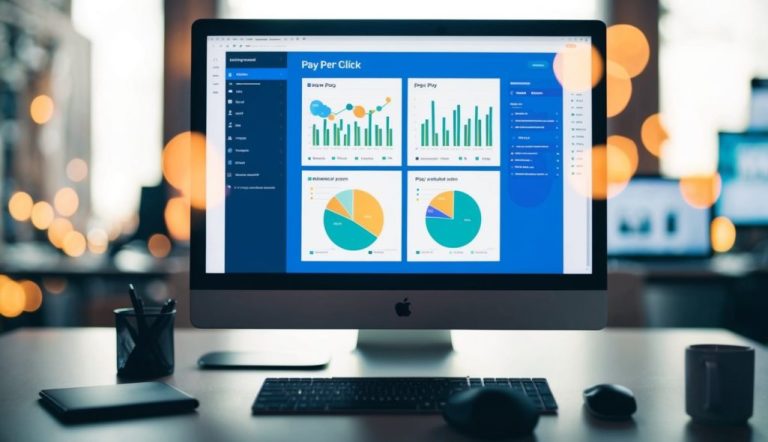
In the fast-paced world of digital marketing, managing your pay-per-click (PPC) campaigns effectively can make all the difference. A pay per click monitor can optimize your budget and enhance ad performance by scrutinizing traffic and clicks. This tool not only helps ensure that you reach the right audience but also increases your return on investment.

Getting a handle on PPC campaigns involves understanding how they work, setting them up for success, and continuously monitoring their performance. Implementing advanced strategies and integrating PPC with your overall digital marketing plan can provide robust results. Staying up-to-date with the latest trends and tools ensures long-term success in this ever-evolving field.
Key Takeaways
- PPC monitors optimize budget and ad performance.
- Continuous monitoring enhances campaign efficiency.
- Integration with digital marketing boosts effectiveness.
Understanding Pay-Per-Click (PPC) Advertising
Pay-Per-Click (PPC) advertising is an essential part of digital marketing. It involves advertisers paying a fee each time their ad is clicked. This section explores key aspects of PPC that are crucial for running successful campaigns.

Fundamentals of PPC
PPC advertising is a model where businesses bid on keywords to place ads on search engines and other platforms. You pay only when someone clicks on your ad. One of the advantages is the ability to control your ad spend and target specific audiences effectively.
It’s important to optimize the cost per click (CPC) to ensure that you get the best returns on your investment. By setting a maximum CPC, you can manage your budget better while focusing on increasing clicks and impressions. To get started, tools like Google Ads allow you to create and manage your campaigns efficiently.
Different Types of PPC Campaigns
There are several types of PPC campaigns to fit different marketing goals. Search ads are the most common; they appear alongside search engine results when users look for keywords related to your business. These ads are great for targeting users with clear intent.
Display ads, which show on websites across the internet, help with brand awareness. They are useful for reaching a broader audience. Social media platforms like Facebook and Instagram also offer PPC advertising, allowing you to engage with users in a more personal context. Video ads on platforms like YouTube can also be powerful, especially for storytelling and visual engagement.
Key Terms and Concepts
Understanding specific terms is important for effective PPC management. CPC refers to the price you pay for each click on your ad. Impressions indicate how often your ad is shown, even if it isn’t clicked. The quality score is a rating used in platforms like Google Ads to determine the relevance and quality of your keywords and ads.

A high-quality score can lower your CPC and improve your ad placement. Ad spend is the total amount of money used in your PPC campaigns, and tracking this helps in budget management. By monitoring performance metrics, you can adjust strategies for better outcomes.
Setting Up a PPC Campaign
Setting up a successful PPC campaign involves defining clear goals, selecting effective keywords, crafting compelling ad copy, and precisely targeting your audience. Each step contributes to the overall success of your advertising efforts.
Defining Campaign Goals
Before launching a PPC campaign, determine what you want to achieve. Common goals include increasing website traffic, generating leads, or boosting sales. Having clear objectives helps guide decisions throughout the campaign process.
Be specific about your goals. For example, if your goal is to increase sales, set a target percentage or number. This clarity will aid in measuring the campaign’s success. Utilize tools like Google Ads and Microsoft Advertising to track progress toward your goals.
Keyword Research and Selection
Selecting the right keywords is crucial. They connect your ads to potential customers. Start by brainstorming relevant terms related to your product or service. Use tools like Google Keyword Planner to discover search terms and see their competition levels.
Prioritize keywords with a good balance between search volume and competition. Long-tail keywords may offer less competition and higher conversion rates. Regularly review and adjust your keyword list based on performance data.
Creating Compelling Ad Copy
Your ad copy should grab attention and encourage clicks. Focus on crafting a headline that highlights what makes your offer unique. Include a strong call-to-action (CTA) to motivate users to click on your ad.
Use concise and clear language. Make sure your ad copy is relevant to the keywords and landing pages you are targeting. Consistent messaging across these elements improves user experience and can increase your click-through rate.
Audience Targeting and Segmentation
Targeting the right audience is essential to maximize the effectiveness of your PPC campaign. Use demographic data to reach specific groups, such as age, gender, or location. This ensures your ads are shown to users most likely to be interested.
Segmentation can further refine your audience. Divide your audience into distinct groups based on interest or behavior. This allows you to tailor ads to each segment for better engagement and results. Tools like audience insights in advertising platforms can assist with effective segmentation.
Monitoring and Measuring PPC Performance
Understanding how to track and measure pay-per-click (PPC) performance is crucial for optimizing campaigns. You’ll learn about essential metrics like click-through rate (CTR), conversion rates, and how A/B testing can enhance your advertising strategies. Tools like Google Analytics can be valuable for detailed analysis.
Key Performance Indicators (KPIs)
Monitoring KPIs is vital for evaluating PPC campaigns. Important KPIs include impression share, which shows how often your ad is displayed versus competitors’. CTR indicates how many people clicked on your ad compared to how many saw it.
The cost per click (CPC) tells you the average expenditure per click, while the conversion rate measures how many clicks lead to intended actions. Tracking these metrics helps optimize ad spend and improve campaign outcomes.
Conversion Tracking and ROI Analysis
Conversion tracking lets you see how well your ads turn clicks into actions, like sales or sign-ups. Knowing your conversion rates is key to understanding the effectiveness of your campaign. Use tools like Google Analytics to set goals and analyze data.
Analyzing return on investment (ROI) determines if your campaign is financially successful. You can calculate ROI by comparing the revenue generated from PPC campaigns to the money spent. This helps in planning future strategies and allocating budgets more efficiently.
Utilizing A/B Testing for Optimization
A/B testing involves running different versions of an ad to see which one performs better, helping refine your strategies based on data. This method can adjust elements like headlines, images, or calls to action.
By comparing the performance of each variant, you can improve quality scores and increase CTR. A/B testing is a practical approach to ensuring your PPC campaigns are as effective as possible, leading to better engagement and increased conversion rates.
Advanced PPC Strategies
To succeed in pay-per-click (PPC) advertising, you can adopt advanced strategies like analyzing competitor insights and using strategic bidding. These methods not only improve brand visibility but also help manage budgets effectively.
Leveraging Competitor Insights
Understanding your competitors is crucial in PPC advertising. By analyzing their strengths and weaknesses, you can adjust your approach. Consider using tools that reveal competitor strategies and keywords. This can inform your choices and help you outperform them.
Look at their ad positioning, average cost-per-click, and landing pages. Adapt what works for them while avoiding their pitfalls. Regularly monitoring these aspects allows you to refine your own campaigns. Using these insights aids in achieving better cost per conversion and overall performance.
Strategic Bidding Tactics
Effective bidding strategies are vital for optimizing your PPC budget. Consider using automated bidding tools that help adjust your bids based on current market conditions. These tools can save time and help achieve a lower average cost-per-click.
Explore strategic approaches like target return on ad spend (ROAS) and enhanced cost-per-click (ECPC). These methods focus on maximizing profits while managing risks. By balancing manual and automated tactics, you can maintain control over your spending and enhance campaign optimization.
Enhancing Brand Awareness with PPC
Expanding your brand awareness through PPC is possible by focusing on display ads and social media channels. These platforms offer broad reach and targeted options to improve recognition.
Design compelling ads that highlight your brand values and engage your audience. Use consistent messaging and visuals to build trust and familiarity. Tracking metrics, like total impressions and click-through rate, helps measure your progress. By enhancing visibility, you support long-term growth and customer loyalty.
Scaling and Budget Optimization
Scaling your PPC campaigns requires a keen focus on budget decisions. Begin by analyzing historical data to identify top-performing ads and keywords. This information helps allocate resources effectively.
Set clear benchmarks to measure success, such as cost per conversion and total costs. Adjust your budget according to seasonality and market trends to maintain profitability. Employ features like day-parting to optimize ad spend throughout the day. By refining your approach, you can scale effectively while maintaining cost efficiency.
PPC and Digital Marketing Integration
Integrating PPC into your digital marketing strategy enhances the effectiveness of your campaigns. This approach boosts visibility on search engine results pages (SERPs), helping your business reach a wider audience. It also supports seamless data flow between marketing channels, creating a cohesive strategy.
Incorporating PPC with Other Marketing Channels
To achieve a comprehensive digital marketing strategy, combine PPC with other channels like social media, email, and content marketing. This blend lets you share data across platforms, giving you insights into your audience’s behavior.
By analyzing PPC data alongside metrics from social media and email, you can refine your messaging for better engagement. This coordinated effort can improve lead generation and website traffic.
Explore options like PPC dashboards to track performance metrics, ensuring campaigns align with your goals. These tools offer visual representations of clicks, impressions, and conversion rates, helping you refine strategies for success.
Maximizing Impact on SERPs
Using PPC effectively can maximize your presence on SERPs, positioning your ads alongside organic search results. This dual presence increases your visibility, making it more likely that users will visit your website.
PPC ads can target specific keywords, ensuring your site appears prominently for queries related to your business. Participating in Google Display Network extends your reach to potential customers who may not find you through search ads alone. By appearing on relevant websites, your brand gains exposure, ultimately enhancing both paid and organic reach.
The Synergy Between PPC and SEO
PPC and SEO have a complementary relationship in search engine marketing. While PPC offers immediate results through paid placements, SEO focuses on improving organic search results over time. Together, they strengthen your marketing strategy by occupying more real estate on SERPs.
Keyword research is crucial for both PPC and SEO. Tools like Semrush simplify this process, helping you identify terms that drive traffic to your site. Leveraging these insights improves your SEM efforts, ensuring your brand is visible both in paid advertisements and organic listings.
The Future of PPC Monitoring and Trends
In the evolving landscape of online advertising, understanding the latest developments in PPC is essential. This section dives into new trends in ad platforms and changes in user behaviors, while also examining how to adapt to shifts in digital marketing.
Emerging Trends in PPC and Ad Platforms
The future of PPC marketing is shaped by advances in technology and changing platform dynamics.
Artificial intelligence and machine learning are now integral, driving improvements in ad performance through automation and more precise targeting. Using AI helps to create dynamic ads that adjust in real-time to suit different audience demographics.
Platforms like Google Ads and Microsoft Ads are incorporating smart bidding and optimization tools. This ensures optimal ROI by automatically adjusting bids based on expected conversions.
Additionally, voice search and video ads are becoming more important as users increasingly rely on these formats for information. Keeping up with these changes is crucial for successful PPC campaigns.
Evolving Audience Behaviors and Expectations
Shifts in audience behaviors and expectations also influence PPC monitoring. People continue to embrace mobile devices, and there’s a noticeable trend toward mobile-focused advertising. Statistics show that mobile PPC ads can have a higher CPC compared to desktop, indicating their growing significance.
Moreover, there’s a rising demand for personalized and engaging ad experiences. Tailoring content to the unique preferences of different audience segments can lead to better engagement and conversion rates. Understanding your audience’s journey and expectations will help refine your digital marketing strategy.
Adapting to Changes in Digital Advertising Landscape
To thrive in the fast-paced world of PPC advertising, adaptability is key. This involves staying ahead of changes in the digital advertising landscape, such as privacy regulations and the decline of third-party cookies. Advertisers are increasingly using first-party data to ensure precise targeting while complying with new standards.
Additionally, there’s a trend toward integrating PPC campaigns with broader digital marketing strategies. This includes aligning PPC with social media ads, content marketing, and other tactics to create a seamless brand message. By monitoring industry shifts and adapting quickly, you can maintain a competitive edge in PPC marketing.
Frequently Asked Questions
When managing pay-per-click (PPC) campaigns, it’s important to have strategies for monitoring, evaluating tools, and understanding key metrics. You also need to know about challenges and available resources.
What are effective strategies for monitoring pay-per-click campaigns?
Begin by carefully tracking metrics such as impressions, clicks, and conversion rates. Use real-time data to make quick decisions. Then, regularly audit your campaigns to identify areas for improvement.
Which tools are considered the best for PPC management?
Popular tools include ClickReport and Google Ads. These options provide comprehensive analytics for tracking performance and optimizing campaigns.
How can one assess the performance of a pay-per-click monitor tool?
Evaluate the accuracy of the data and how user-friendly the interface is. User reviews and success stories can also provide insights into a tool’s reliability.
Are there any free PPC monitoring tools that provide comprehensive analytics?
Yes, Google Ads offers a free version with robust features. It allows you to track key metrics and improve your campaigns without any cost.
What metrics are critical to evaluate in PPC campaigns?
Focus on metrics such as click-through rate (CTR), cost-per-click (CPC), and conversion rate. These provide insights into the effectiveness of your ads and overall campaign performance.
What are the common challenges when using PPC monitoring software?
Some challenges include data accuracy and the complexity of using certain tools. Make sure to choose software with a reputation for reliability and ease of use.