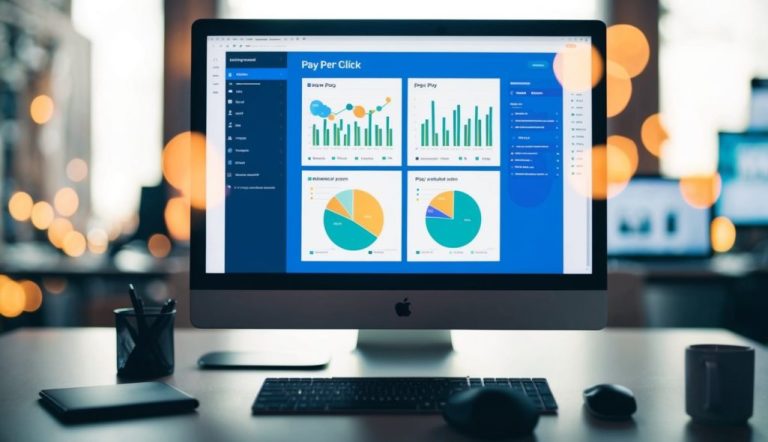
Navigating the world of pay-per-click (PPC) advertising can be overwhelming. With so many options and strategies, you need to choose the right partner. KlientBoost has been recognized as a top choice in PPC services. They are known for effective strategies and strong results.

Picking a PPC agency is a crucial step for any business aiming to boost online visibility and drive targeted traffic. Leading agencies like KlientBoost and others offer diverse services that cater to different industry needs, ensuring your marketing spend is optimized effectively.
Understanding which agencies excel and offer value is key to your success. Whether you’re looking for affordable services, cutting-edge techniques, or industry-specific expertise, there are choices available to suit your needs. By selecting the right agency, you can achieve higher returns and reach your business goals.
Key Takeaways
- Choosing the right PPC agency is crucial for maximizing ad spend.
- Industry-leading agencies provide specialized services and strategies.
- Effective PPC campaigns can significantly increase online visibility.
Understanding PPC
Pay-Per-Click (PPC) is a key strategy in digital marketing that can boost your online presence and increase Return on Investment (ROI). This section highlights important aspects of PPC, including its basic principles, advantages for your digital plans, and how it stands apart from Search Engine Optimization (SEO).
Fundamentals of PPC
PPC is a type of online advertising where you pay each time a user clicks on your ad. This method lets you set a budget and target specific audiences. Common platforms include Google Ads and Bing Ads, where ads appear in search results based on relevant keywords. A well-structured PPC campaign involves keyword research, ad creation, and continuous monitoring for performance improvements. By capturing immediate traffic, PPC campaigns can quickly drive potential customers to your website, something crucial for businesses needing prompt results. Metrics like click-through rates (CTR) and conversions help assess the campaign’s success.
Benefits of Incorporating PPC into Your Digital Strategy
Incorporating PPC into your strategy offers numerous advantages. It provides immediate visibility on search engines, allowing your brand to reach new audiences quickly. With PPC, you can precisely target demographics by location, age, and behavior. This targeting enhances your ad’s relevance, potentially increasing engagement and conversions.
PPC services also offer flexibility with budget control, allowing you to adjust spending based on performance. Furthermore, it delivers measurable results, offering detailed analytics on ad performance, making it easier to calculate ROI. In a competitive market, PPC helps maintain an edge by attracting high-intent users ready to purchase.
Differences Between PPC and SEO
PPC and SEO are both critical in digital marketing, but they function differently. PPC is paid search where your ads appear instantly, but costs occur per click. In contrast, SEO involves optimizing content to rank organically in search engine results, which can take time. SEO focuses on long-term growth by improving site visibility through keyword optimization and link-building.
Unlike PPC, well-executed SEO efforts are free from direct costs per visitor. While PPC benefits include immediate impact and clear cost assessments, SEO provides a foundation for sustainable traffic growth. Businesses often use a combination of PPC and SEO to balance immediate visibility with lasting online authority.
Selecting the Right PPC Agency
Choosing a PPC agency involves understanding their management skills, communication style, and reporting methods. These elements ensure your campaigns are handled effectively, aiming for improved optimization and achieving your business goals.
What to Look for in a PPC Agency
When searching for a PPC agency, start by evaluating their expertise in your industry. Understanding specific market needs is key. Experience counts. Agencies with a proven track record in PPC management for businesses like yours can offer insights that inexperienced agencies may lack.
Look for agencies that prioritize optimization. They should offer strategies for keyword targeting, ad design, and budget management to enhance your returns. Ask for examples of past successful campaigns.
Consider their transparency. A good PPC agency will clearly outline their services, pricing, and expected results without hidden fees. This openness helps build trust from the start.
Evaluating PPC Management Competencies
Assessing an agency’s management abilities involves reviewing their approach to campaign optimization. They should have a strategic method for analyzing data to make informed decisions aimed at improving results.
Check their credentials and certifications. Many leading agencies have certifications from platforms like Google Ads, which indicates a deep understanding of PPC tools.
Examine the team’s size and expertise. A well-rounded group with diverse skills generally handles various aspects of campaigns better than a one-person operation. Make sure they have specialists like data analysts and ad designers who work to improve each part of your campaign.
Communication and Reporting Practices
Effective communication is crucial. Your PPC agency should maintain regular contact with you, discussing campaign progress and addressing any concerns promptly. This ensures alignment with your expectations and goals.
Agencies should provide detailed, frequent reports covering key metrics that matter to you. These reports should include data on conversions, costs, and other relevant statistics, helping you understand whether the campaigns are hitting targets.
Look for agencies that are proactive in suggesting improvements. After analyzing campaign data, they should offer suggestions for enhancing performance, ensuring continual optimization. This ongoing dialogue helps refine strategies and drive better results over time.
Effective PPC Campaigns
Effective PPC campaigns require strategic planning to boost conversions and improve your return on ad spend (ROAS). Understanding key components and employing smart strategies can lead to measurable results and a significant return on investment.
Key Components of a Successful PPC Campaign
Successful PPC campaigns hinge on several important factors. First, keyword selection is vital. Choosing the right keywords ensures your ads appear in relevant searches. Use tools like Google Keyword Planner to find suitable keywords.
Ad copy is another crucial element. Writing engaging and persuasive ad copy attracts clicks and can lead to higher conversion rates. Ensure that your ads have a clear call to action and are tailored to your target audience.
Analytics play a critical role in tracking the performance of your PPC campaigns. Regularly analyze data to understand which ads perform well and adjust your strategy accordingly. Tools such as Google Analytics provide insights into user behavior and can guide your next steps.
Conversion Rate Optimization Strategies
Conversion rate optimization (CRO) focuses on turning clicks into actions. A/B testing is a powerful method for improving conversion rates. By comparing two versions of a webpage or ad, you can determine which one performs better.
Landing pages should be streamlined and relevant to your ads. Ensuring that your landing page matches the promise of your ad helps guide visitors toward conversion. Make sure to include strong headlines and clear, persuasive content.
Utilize customer feedback to refine your approach. Understanding user needs and experiences can highlight areas for improvement. Additionally, consider simplifying forms and checkout processes to reduce dropout rates and improve conversions.
Achieving Measurable Results and ROI
To achieve measurable results, define clear goals and KPIs. These should align with your overall business objectives, such as increasing sales or lead generation. Setting specific, measurable goals helps in evaluating the success of your PPC campaigns.
Regularly monitor ROAS to ensure that your advertising spend is generating sufficient returns. Focus on optimizing campaigns based on performance data to maximize ROAS and improve profitability.
Utilize dashboards to keep track of metrics such as click-through rates and conversions. This ongoing evaluation helps in making data-driven decisions to enhance your campaign’s performance and achieve your desired outcomes. Consider linking with expert PPC agencies to further refine your strategies.
Industry-Specific PPC Strategies
Industry-specific PPC strategies tailor advertising efforts to meet the unique needs of different sectors. E-commerce companies rely on targeted ads and dynamic product listings, while distinguishing between B2B and B2C audiences is crucial for optimizing PPC campaigns. SaaS companies benefit from showcasing features and targeting niche markets.
PPC for E-Commerce Companies
For e-commerce businesses, PPC campaigns need to focus on attracting buyers who are ready to make a purchase. Google Shopping Ads and Dynamic Search Ads are essential tools. They display products directly to users and match search queries with available items.
Utilizing remarketing strategies helps re-engage users who have previously visited the site but did not purchase. Optimizing ad copy with clear call-to-actions and incorporating customer reviews can also improve effectiveness. E-commerce platforms should regularly update their product feeds to ensure ads reflect current inventory and pricing.
B2B versus B2C PPC Tactics
Understanding the target audience’s intent is crucial when distinguishing between B2B and B2C PPC tactics. B2B strategies often focus on longer sales cycles and require comprehensive, informative content. Use platforms like LinkedIn to target industry professionals and decision-makers.
B2C campaigns are typically more transactional and emotion-driven. Social media and display ads can be effective in capturing interest quickly. It’s important to tailor ad messaging to appeal to consumer emotions or immediate needs. Audience segmentation is valuable in both areas to create personalized user experiences based on behavior and interests.
PPC for SaaS and Software Companies
SaaS companies need to emphasize their unique features and benefits through PPC campaigns. Highlighting free trials or demos can entice potential users to engage with the service. Focus on targeting specific niches or industries that would benefit most from the software.
Using keyword research to align ads with user needs is crucial. Landing pages should be optimized to provide clear information and an easy path to conversion. Look for opportunities to showcase customer testimonials and success stories to build trust. SaaS companies can benefit from A/B testing various ad formats to determine what resonates best with their audience.
Advanced PPC Techniques
In advanced PPC campaigns, you can significantly improve results by integrating remarketing, performing detailed keyword analysis, and employing AI technologies. These strategies help you target audiences more effectively and optimize every dollar spent on advertising.
Leveraging Remarketing and Retargeting
Remarketing and retargeting are crucial components of advanced PPC strategies. By focusing on users who have previously interacted with your website or ads, you can provide personalized experiences that encourage conversion. Google Ads and Facebook Ads allow you to create remarketing lists that target users based on their behavior.
Use dynamic remarketing to show content-specific ads like exact products a user viewed. This encourages them to return and complete a purchase. Regularly updating your remarketing lists ensures they reflect user interests and behavior changes, maximizing their impact.
Utilizing Advanced Keyword Analysis
Advanced keyword analysis involves more than just picking the most popular keywords. Tools like Google’s Keyword Planner and SEMrush help you delve into keyword trends and competition levels. Long-tail keywords are a critical part of this analysis, as they often lead to higher conversion rates due to their specificity.
Consider negative keywords as well, which prevent ads from showing for unrelated search queries, saving budget and increasing relevance. Regularly update your keyword lists to adapt to market shifts and consumer behavior changes, ensuring optimal engagement.
Incorporating AI and Machine Learning in PPC
AI and machine learning are transforming PPC campaigns. These technologies help predict trends, automate bidding, and provide insights into campaign performance. Google’s Smart Bidding feature, for example, adjusts bids in real-time based on predicted conversion outcomes.
AI can analyze massive datasets quickly, identifying patterns that humans might miss. This leads to more precise targeting and improved ad placements. Machine learning algorithms can also optimize ad copy and display times, ensuring content reaches the right audience at the optimal moment. Employing these technologies can significantly enhance the efficiency and success of your PPC efforts.
Optimizing Ad Platforms
When optimizing ad platforms, it’s important to leverage the unique strengths of each one. Using tools like Google Ads, Facebook Ads, and Amazon PPC can help target different audiences effectively. Understanding these tools allows you to expand your reach and improve campaign performance.
Maximizing Google Ads Performance
To get the most out of Google Ads, make sure your campaigns are structured well. Use specific and relevant keywords to target your audience better. Also, consistently monitor and adjust your bids to balance cost and exposure.
Partnering with a Google Partner can provide expert insights and recommendations. A/B testing ad copy is another way to improve click-through rates. Using Google’s various ad extensions can enhance visibility and user engagement.
Exploring Facebook and Amazon PPC Opportunities
Facebook Ads provide detailed targeting options, letting you reach precise demographics. Utilize lookalike audiences to find new users who resemble your current customers.
For Amazon PPC, focus on both Amazon Ads and product listing optimization. Ensure your listings have high-quality images and keyword-rich content. Effective bidding strategies on Amazon can boost visibility in a highly competitive market. Also, regularly analyze and refine your ad strategies based on performance data.
Expanding Reach with Bing Ads and Other Platforms
Bing Ads may have a smaller audience than Google, but they often deliver a high return on investment. Microsoft’s user demographics can be a good match for certain businesses, offering a more cost-effective option for some advertisers.
Experiment with Bing’s features like enhanced targeting options to tailor your reach. Don’t overlook other smaller platforms like LinkedIn or Twitter for niche markets. Diversifying your ad spend across multiple platforms can increase overall campaign success and reach new audiences. Make sure to adjust your strategy according to platform-specific strengths and user behavior insights.
PPC Management Services and Pricing
Choosing the right PPC agency involves knowing their service offerings, evaluating their costs, and understanding how to manage your PPC budget effectively. This ensures you get the most value for your investment in digital marketing strategies.
Understanding Service Offerings
PPC management services differ between agencies. Look for agencies that provide a comprehensive suite of services such as keyword research, ad creation, and performance tracking. Agencies like Location3 offer everything from SEO and PPC to social and listings management. Another agency, Ignite Visibility, excels in SEO, online advertising, and social media marketing. Consider if they also offer specialized services like local PPC targeting or conversion rate optimization.
A professional agency should offer custom strategies tailored to your business goals. This may include creating a mix of search, display, and video ads. Assessing the service offerings helps determine if the agency aligns with your campaign needs and objectives.
Assessing PPC Agency Costs
The cost of PPC services can vary widely depending on the agency’s pricing model and the level of service provided. Agencies like WebFX aim to deliver higher returns with their PPC services, showing it’s not just about the upfront cost but the return on investment you receive. Many agencies have flexible structures, from project-based fees to hybrid pricing models.
Understanding the costs involves more than just knowing the price. It includes recognizing what you’ll receive for your budget, such as the amount of ad spend managed, the type of campaign strategies developed, and reporting frequency. Weigh these factors to ensure the costs align with your business goals.
Budget Management for Your PPC Investments
Effective budget management is crucial for your PPC efforts, ensuring you maximize your ad spend. Begin by setting clear goals and defining what success looks like. This could be increased lead generation, improved brand awareness, or higher conversion rates.
Consider using a flexible budget that allows room for testing and optimizing ad performance. This can include tweaking bids, adjusting keywords, or reallocating spending across different platforms.
Tracking your campaign performance is essential for budget management. Make adjustments based on data insights and ensure you’re not just spending efficiently but that your investments are producing meaningful returns. Regularly review metrics such as cost-per-click and conversion rate to adapt your strategy as needed.
Trends and Innovations in PPC
The world of PPC is rapidly evolving with new technologies. Key areas of change include the integration of predictive analytics and a growing focus on personalizing ads. Exploring these trends can help improve your advertising strategy.
Keeping Up with PPC Evolution
Staying ahead in PPC demands attention to changes in digital advertising. Use AI-powered ad creation and smart bidding to enhance results. AI helps in crafting more effective ads while optimizing budgets.
Another trend is the migration towards first-party data utilization. With privacy regulations tightening, relying on your own data sources becomes crucial. It allows for precise targeting without breaching privacy norms.
Finally, Microsoft Ads are gaining prominence. As Google Ads face saturation, exploring Microsoft can offer less competition and better ROI.
Predictive Analytics in PPC
Predictive analytics is transforming online advertising. By analyzing past data, it helps forecast future outcomes, making campaigns more effective. This innovation can guide you in adjusting bids and targeting strategies.
Using predictive analytics tools, you can foresee trends in search behaviors and adapt your digital advertising efforts accordingly. This tech not only enhances efficiency but also boosts your return on investment.
It facilitates dynamic ad adjustments, ensuring your ads are always relevant. Adapting to this innovation will help you maintain a competitive edge and maximize your ad spend.
The Future of PPC Advertising
The future of PPC is set to be shaped by video and voice search optimization. Video ads are quickly gaining traction as more users consume video content. This format allows for creative storytelling and engaging visuals.
Voice search optimization is equally important. With more consumers using voice-activated devices, tailoring your PPC campaigns for voice searches is crucial. This shift requires adapting keywords and ad copy to match voice query patterns.
Emphasizing personalized and immersive content will dominate the next phase of display advertising. Staying adaptable to these trends ensures your PPC remains relevant and effective in capturing and converting audiences.
PPC Success Stories
When you explore success stories in the PPC world, it’s inspiring to see real examples of growth and achievement. Various agencies have used successful strategies to boost their clients’ outcomes, with many clients expressing high satisfaction.
Case Studies from Top PPC Agencies
Looking at case studies can give insight into what makes certain PPC agencies successful. For instance, KlientBoost has demonstrated how tactical improvements can yield impressive returns. Notably, Black Propeller worked closely with clients to significantly increase conversion rates. Similarly, Smartsites achieved notable revenue growth for a furniture store, proving how bespoke strategies in PPC campaigns can drive substantial increases. Agencies like Disruptive Advertising and Directive Consulting have mastered the art of turning challenges into lucrative opportunities. They carefully customize campaigns to meet specific client goals, often achieving revenue and engagement boosts. Examining these case studies highlights the importance of strategic planning and execution in PPC success.
Client Feedback and Satisfaction
Client feedback plays a crucial role in showcasing an agency’s effectiveness. Many clients of Adventure Media Group and AgencyPPC report being pleased with improved engagement and sales growth. Grow My Ads is praised for its attentive service and significant advertising results. Stryde is another agency that shines through client feedback, often receiving accolades for its dedicated customer service and impactful campaign delivery.
Understanding how these agencies interact with their clients can reveal the secrets to their high satisfaction rates. It’s not just about the numbers; it’s about communication, understanding client needs, and delivering results that align with business objectives. This emphasis on client happiness and performance is what sets these PPC agencies apart.
Frequently Asked Questions
When choosing a PPC agency, it’s important to know the criteria that define the best ones, which platforms they prefer, and how their pricing typically works. It’s also crucial to think about whether you want a local or global agency and to understand the benefits of specialized agencies for platforms like Amazon.
What criteria define the best PPC agencies?
The best PPC agencies often have a strong track record of successful campaigns and a team of certified experts. They will also offer transparent communication and reporting to keep you informed about your campaign’s progress.
Which PPC platforms are favored by top agencies?
Top agencies commonly use platforms like Google Ads and Facebook Ads due to their extensive reach and features. Some agencies may also specialize in Amazon PPC for businesses focused on e-commerce.
How do PPC agencies structure their pricing and fees?
PPC agencies typically structure their pricing based on factors such as the complexity of the campaign, the platforms used, and the level of service you need. Many agencies charge a management fee, which can be a flat rate or a percentage of your ad spend.
What factors should be considered when choosing a local versus global PPC agency?
When deciding between a local and global PPC agency, consider the nature of your business and your target market. Local agencies might offer more personalized service and understanding of regional markets, while global agencies could have broader resources and breadth of experience.
What are the benefits of hiring a specialized Amazon PPC agency?
Hiring a specialized Amazon PPC agency can provide expertise in optimizing listings, targeting the right keywords, and using specific tools to enhance product visibility on Amazon. This focus can lead to improved sales and advertising efficiency.
What tools do leading PPC agencies use for effective reporting and analytics?
Leading PPC agencies use tools such as Google Analytics, SEMrush, and specialized software to track campaign performance. These tools help analyze data and generate insights to refine strategies and improve results.