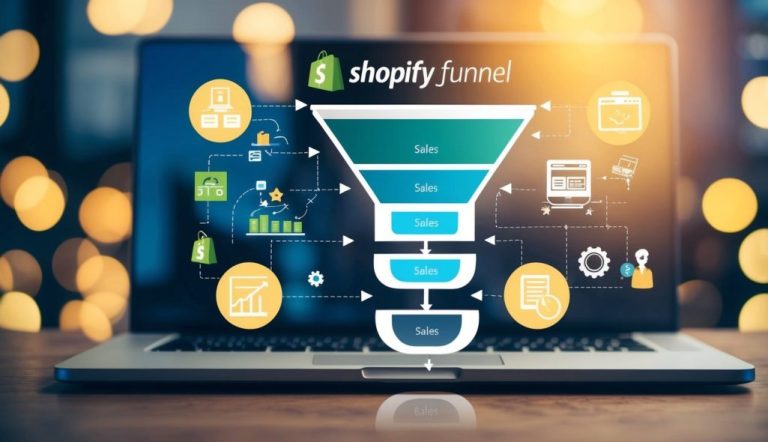
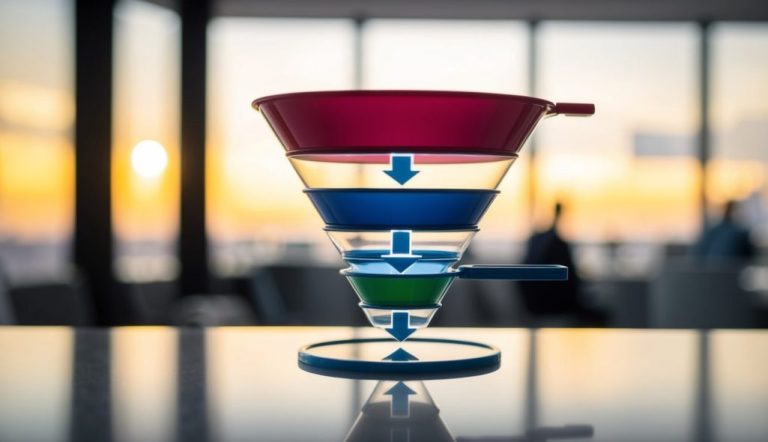
Tracking your sales funnel is crucial for understanding how potential customers move from initial awareness to final conversion. You can identify areas for improvement and optimize the journey to maximize sales potential. This process helps pinpoint bottlenecks and craft strategies to nurture leads effectively.

Sales funnel tracking involves analyzing customer interactions at various stages. It provides insights into which steps are working smoothly and which ones need attention. Using tools like CRM software, you can automate many tasks. This makes tracking more efficient and allows more time to focus on customer engagement.
Optimizing your sales funnel helps in boosting conversion rates and enhancing customer retention. With a well-maintained funnel, your business can target the right audience and deliver personalized messages. Integrating automation can further streamline operations, ensuring that every lead is nurtured effectively and guided towards a purchase.
Key Takeaways
- Monitor each stage for better conversion.
- Use tools to enhance funnel efficiency.
- Optimize funnel for improved retention.
Understanding Sales Funnels
Sales funnels are crucial for guiding potential customers through their buying journey. You need to identify and understand each stage to maximize the chances of converting leads into purchasers.
Defining the Sales Funnel Stages
The sales funnel consists of several stages: awareness, interest, consideration, intent, and purchase. In the awareness stage, potential customers first learn about your product or service. It’s essential to capture their attention with engaging content.
Next is the interest stage, where prospects seek more information. Providing detailed and relevant content helps solidify their interest. During the consideration stage, potential customers evaluate options and compare benefits. Offering clear comparisons and testimonials can play a vital role here.
As they move to the intent stage, they show readiness to purchase. This is your opportunity to present offers or incentives. Finally, in the purchase stage, make the transaction smooth and straightforward to ensure a successful conversion.
Importance of Customer Journey Mapping
Mapping the customer journey is key to understanding how your potential customers move through the funnel. It involves tracking interactions and pinpointing where prospects are in their journey. This map helps identify gaps or hurdles that might be affecting conversions.

By analyzing this journey, you can tailor marketing messages and strategies to meet customer needs at each funnel stage. For instance, in the awareness stage, your focus should be on brand visibility. During the consideration phase, detailed content and demos are more effective.
With a well-defined customer journey map, you’re better equipped to guide prospects smoothly toward making a purchase. This not only improves conversion rates but also enhances customer satisfaction and loyalty.
Elements of a Successful Sales Funnel
A successful sales funnel effectively converts prospects into customers by guiding them through different stages. Two critical elements are developing buyer personas and planning a solid lead generation strategy. These elements ensure you engage the right audience and fill your pipeline with qualified leads.
Developing Buyer Personas
Buyer personas are detailed profiles of your ideal customers. Creating these profiles helps you tailor your sales process to meet specific needs. To develop a persona, identify common demographics, behaviors, and pain points of your target market.
List key attributes such as age, job title, and location. Understanding motivations and challenges is essential.
Engagement increases when you customize messages to resonate with these personas. Use tools like surveys, interviews, and customer feedback to gather data. Incorporating this information into your sales funnel template ensures your approach is targeted and effective.
Planning the Lead Generation Strategy
A strategic lead generation plan attracts the right prospects. Focus on channels where your buyer personas are most active. Whether it’s social media, email marketing, or SEO, the goal is to reach potential customers effectively.
Develop content that speaks to the interests and challenges of your audience. Each piece should be designed to move prospects to the next stage. Use calls-to-action (CTAs) to encourage engagement and capture contact info.
Track metrics like conversion rates and qualified lead volume. Refining your strategy is crucial for continuous improvement. By aligning your lead generation efforts with your sales funnel, you optimize the entire process for maximum impact.
Tracking Sales Funnel Metrics
Tracking sales funnel metrics is crucial for improving sales performance. By focusing on key metrics, you can understand and enhance conversion rates and win rates. Applying tools like Google Analytics helps make informed decisions based on data.
Key Performance Indicators (KPIs)
Key Performance Indicators are essential metrics to track your sales funnel’s performance. They offer insights into stages of the sales process, helping you identify areas needing improvement. Common KPIs include lead conversion rates, average deal size, and sales cycle length.
Focusing on these can reveal which parts of your funnel are performing well and which are bottlenecks. Regularly reviewing KPIs ensures you stay aligned with business goals, enabling prompt adjustments to optimize your sales strategies.
Understanding Conversion Rates and Win Rates
Conversion rates measure how effectively prospects turn into leads or customers at each funnel stage. Tracking this metric helps identify successful strategies and points of friction in the sales process. A higher conversion rate often indicates an efficient funnel, leading to increased revenue.
Win rate focuses on the percentage of closed deals out of total opportunities. Monitoring this helps assess overall sales effectiveness. Striving for improvements in both rates can significantly enhance sales outcomes and customer retention.
Making Data-Driven Decisions with Google Analytics
Using Google Analytics to track sales funnel metrics enables data-driven decision-making. This tool provides valuable insights into customer behavior, pinpointing where prospects drop off in the funnel. It helps you optimize marketing strategies to target the right audience effectively.
Google Analytics allows you to create custom reports focused on key sales metrics. By analyzing this data, you can fine-tune campaigns and improve conversion rates and win rates. Leveraging these insights guides strategic planning for better sales performance.
The Role of CRM in Sales Funnel Management
Effectively using CRM tools can greatly enhance your sales funnel management. These tools help streamline processes and automate crucial tasks like lead scoring and nurturing, improving workflow and efficiency.
Streamlining the Sales Process with CRM
CRM systems integrate seamlessly with your existing sales funnel tools, offering a visual pipeline for easy management of the sales process. This helps you track prospects at every stage, from initial contact to closing the deal. By using custom fields, you can tailor the system to match your specific sales needs.
HubSpot, for instance, allows for automation and integration with various platforms, making it easy to access and update sales data. A CRM’s mobile app lets your team access information on the go, ensuring they never miss an update. This constant accessibility improves communication within your team and enhances overall productivity.
Automating Lead Scoring and Nurturing
Automating lead scoring ensures that each lead in your sales pipeline is prioritized effectively. CRMs use data to assign scores based on the likelihood of conversion, which helps your sales team focus on high-potential opportunities.
With CRM tools, lead nurturing becomes a more personalized and efficient process. Automated emails and follow-ups keep leads engaged over time. This is particularly useful with integrations that support various communication methods, allowing for a consistent nurturing strategy.
CRM systems simplify these tasks, making it easier to manage large volumes of data and improving your chances of turning leads into satisfied customers.
Enhancing Sales Funnel with Automation
Automation can drastically improve your sales funnel by increasing efficiency and personalization. It allows you to handle processes like sending emails and segmenting leads, freeing up time to focus on more strategic tasks.
Implementing Email and Marketing Automation
Email automation streamlines how you reach out to potential customers. By setting up automated email sequences, you can ensure timely and consistent communication. These sequences can automate everything from welcome emails to follow-ups, keeping leads engaged without manual intervention.
Marketing automation tools, like CRMs or email platforms, let you monitor user activity, such as email opens or clicks. This data helps you understand customer behavior and adjust your communication strategy. With these insights, you can personalize messages to match the customer’s journey stage, enhancing engagement and conversion rates.
Segmentation for Personalized Customer Experiences
Segmentation involves dividing your customer base into specific groups based on their characteristics or behavior. This allows for more targeted and relevant messaging, increasing the likelihood of conversions. By using data from customer interactions, you can segment audiences efficiently.
Automation tools help this process by automatically sorting customers into different segments. These tools can use criteria such as demographics or purchase history to create personalized experiences. For instance, a customer frequently purchasing a particular product might receive special offers related to that item. This approach makes potential customers feel understood and valued, boosting satisfaction and loyalty.
Optimizing Sales Process
Optimizing your sales process involves carefully evaluating your sales opportunities and performance while using data-driven techniques to forecast future sales. This ensures you can strategically plan for growth and meet your business goals.
Assessing Sales Opportunities and Performance
To optimize your sales process, start by evaluating sales opportunities. Identify the potential deals in your pipeline and determine their likelihood of closing. This involves looking at the sales cycle and understanding where each opportunity stands.
Tracking metrics like conversion rates and average deal size can highlight areas for improvement. Consider using tools to visualize these metrics, as they help you quickly assess where resources are best allocated. Regular assessments lead to efficient resource allocation and better sales performance.
Ensure that your team regularly monitors and updates the status of sales opportunities. This keeps the pipeline accurate, allowing you to make informed decisions about how to pursue potential deals.
Forecasting Sales for Strategic Planning
Sales forecasting is crucial for strategic planning. Forecasting involves predicting future sales based on historical data. This helps in setting realistic targets and creating effective strategies. Start by analyzing past sales data and market trends.
Use key performance indicators (KPIs) such as win rate and time to close to forecast future sales accurately. Implement forecasting tools to create precise reports that guide your planning process. Accurate sales forecasting enables you to align resources, anticipate market demands, and prepare for varying sales cycles.
Incorporate regular reviews of your forecasts to adjust strategies as needed. This continuous improvement loop helps in adapting to changes, maintaining efficiency, and optimizing the sales process throughout the business cycle.
Customer Retention Strategies
Focusing on customer retention helps ensure continued growth and profit stability. By understanding how to maintain customer satisfaction and loyalty and by tracking relevant metrics, you can enhance the overall customer experience throughout the entire sales journey.
Maintaining Customer Satisfaction and Loyalty
Meeting customer needs is crucial for retention. Offer outstanding customer support and tailor your approach to each customer’s preferences. Understanding their journey from the awareness stage to the action stage helps in creating personalized interactions.
Focus on building trust and delivering consistent quality. Encourage feedback and actively resolve issues. Enhancing satisfaction requires proactive engagement. You can achieve this through loyalty programs, personalized offers, or exclusive events that add value and make customers feel appreciated.
By ensuring a positive experience, you increase the likelihood of repeat purchases, leading to sustained loyalty.
Metrics to Measure Customer Retention Success
Tracking specific metrics allows you to gauge retention success. Repeat purchase rate is a key indicator of loyalty. It shows how often customers return after their initial purchase. Calculating this rate helps you understand buying patterns.
Time to close is another metric worth monitoring. It measures the time taken from first contact to final purchase. A shorter time indicates a streamlined process and higher customer satisfaction.
Retention metrics like customer lifetime value are vital. They represent the total revenue a customer brings over their relationship with your business. Understanding these metrics helps you refine strategies to improve retention, ultimately boosting profits and enhancing the customer journey.
Utilizing Sales Funnel Software
Sales funnel software can enhance customer journey tracking and sales process optimization. These tools help streamline lead management and close deals more efficiently.
Comparison of Top Sales Funnel Software Tools
When choosing sales funnel software, consider tools like HubSpot, Zendesk, and Salesforce. HubSpot is notable for its automated workflows, helping businesses of any size manage leads effectively. It offers a free option for up to 200 contacts, with paid versions starting at $44.00/month annually.
Zendesk provides a comprehensive sales funnel builder with a 14-day free trial. It excels in B2C and B2B contact management, which can help maximize your funnel’s reach and volume. Salesforce CRM is known for its AI-powered features and advanced customization, making it ideal for businesses seeking a robust solution. Comparing these tools helps to ensure the best match for your specific needs.
Integrating Sales Tools with Existing Platforms
Successful integration of sales funnel software involves ensuring compatibility with your current systems. Many tools offer APIs for seamless integration.
Monday CRM and Kommo are recommended for businesses needing customizable dashboards and intuitive interfaces.
Kommo has features that are particularly beneficial for large businesses, offering advanced automation and customer management at $45/user/month.
When integrating, focus on maintaining data accuracy and improving team collaboration. Look for features that complement the existing workflow to enhance effectiveness and ensure a smoother transition.
Consider software compatibility with platforms like CRM tools, email marketing systems, and analytics solutions to maximize efficiency and throughput in your sales funnel process.
Leveraging B2B Sales Funnel Dynamics
To effectively manage the B2B sales funnel, it’s important to customize your funnel for the specific business environment and employ advanced techniques for lead qualification.
Customizing Funnels for B2B Environments
Each B2B environment is unique, requiring personalized approaches to the sales funnel. Start by analyzing your target audience to understand their preferences and pain points. This information will enable you to create tailored content and communication strategies that resonate with potential clients.
Adapt your funnel stages to reflect the complexity of B2B transactions. Typically, B2B sales involve multiple decision-makers and longer sales cycles. It’s crucial to design your funnel to accommodate these factors, ensuring you engage all stakeholders effectively.
Utilize customer relationship management (CRM) tools for tracking interactions. CRM systems help maintain detailed records of sales leads, providing insights into customer behaviors and improving your interaction strategies. By doing this, you’ll be better equipped to move prospects smoothly through the funnel.
Advanced Lead Qualification Techniques
Effective lead qualification methods can significantly enhance your sales funnel’s performance.
Implement scoring systems to prioritize leads based on criteria such as budget, authority, need, and timeline. These criteria, often referred to as BANT, help determine a lead’s potential value.
Engage through personalized follow-ups and conversations. By understanding a lead’s specific needs, you can tailor your approach to address their unique challenges. This personal touch increases the likelihood of conversion and boosts your lead qualification rate.
Leverage data analytics to gain insights into prospect behavior. By analyzing engagement metrics, you can refine your strategies, identifying which approaches yield the best results. This helps in prioritizing efforts and ensuring resources are allocated efficiently.
Frequently Asked Questions
When tracking sales funnels, understanding the tools and methods available can help you improve conversion rates. It’s important to know which software to use, how to track each stage, and the key metrics to focus on.
Which sales funnel tracking software is recommended for small businesses?
For small businesses, tools like Sellingsignals can help manage and track your sales funnel effectively. These tools offer features to monitor key metrics and identify leaks, supporting better decision-making and optimization.
Can you explain the different stages of a sales funnel and how to track them?
The stages include awareness, consideration, decision, and purchase. Tracking involves analyzing metrics such as website visits during the awareness stage, engagement during consideration, decision-making interactions, and conversions at the purchase stage. SmartReach provides insights into these stages.
What metrics are most important when assessing the effectiveness of a sales funnel?
Important metrics include average deal size, time to close, and win rate. These help you evaluate performance and make necessary adjustments for improvement. Dive deeper into metrics with the guide on 15+ best sales funnel KPIs.
How can you set up a tracking template for a sales funnel?
Create a template that includes each stage of the funnel, the actions taken at each stage, and the metrics you want to track. This helps in systematically monitoring progress and identifying areas for improvement.
What are the best practices for optimizing a sales funnel using tracking data?
Regularly review your tracking data to spot trends and pinpoint where prospects are dropping off. Adjust your strategy based on this data to improve conversion rates. Testing different approaches and learning from results is crucial.
Are there any quality free tools for sales funnel tracking, and if so, what limitations do they typically have?
Free tools like basic versions of analytics platforms may offer essential tracking features. However, they often come with limitations such as fewer features or capped data storage. Make sure to assess what your business needs and whether these tools meet those requirements.