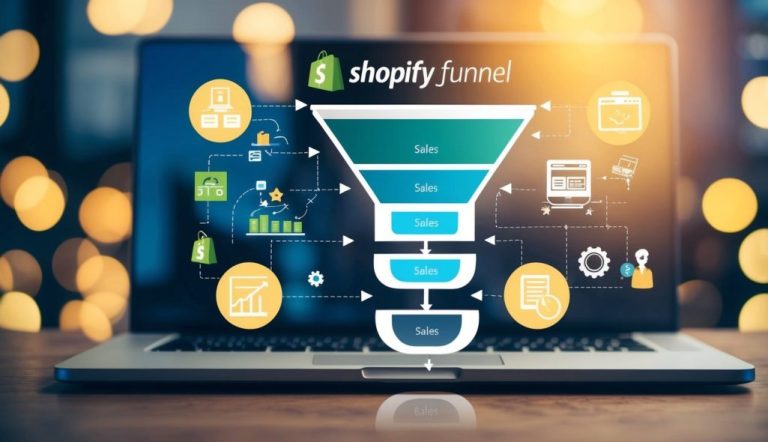
In the dynamic world of online marketing, pricing funnels play a crucial role in maximizing profits and enhancing customer experiences. A pricing funnel is a strategy that guides potential customers through a series of steps, starting from initial interest to making a purchase. This funnel helps convert leads and optimize sales by adjusting offers based on customer behavior and preferences.

Understanding how to integrate pricing efficiently within your sales funnel can significantly impact your revenue.
By strategically positioning products or services with varied pricing options, you can capture the attention of different customer segments. This approach not only increases the likelihood of conversion but also ensures a tailored shopping experience.
As you explore the technical aspects of funnel pricing, including tools like ClickFunnels, you’ll discover ways to optimize conversion rates and enhance user experience.
This journey through the pricing funnel can lead to a sustainable and scalable marketing strategy that adapts to changing market trends.
Key Takeaways
- Pricing funnels guide potential customers step-by-step to purchase.
- Strategic pricing options boost conversions and profits.
- ClickFunnels tools optimize conversion rates and user experience.
Understanding Pricing Funnels
Pricing funnels are essential tools in sales strategy. They guide potential customers through a structured journey, making it easier for them to decide to purchase.
Sales funnels consist of several stages:
- Awareness: Customers learn about your product.
- Interest: They begin to engage and show curiosity.
- Decision: They consider your pricing and evaluate options.
- Action: They make a purchase.
Using an effective pricing funnel can boost conversion rates. Each stage of the funnel can include different price points designed to attract a wide range of customers.
You might start with a free trial, then offer a basic package at a lower price, and finally introduce premium options.
When planning your pricing strategy, consider how each part of the funnel impacts your conversion rates.
It’s crucial to offer value at each stage, ensuring your customers don’t drop off.
A clear, well-defined pricing strategy can improve customer retention and increase conversions.
Be sure to test different pricing levels and monitor their impact on conversion rates to optimize results.
Fundamentals of Sales Funnel Strategy
Understanding the structure of a sales funnel can significantly improve your business strategy. It involves guiding potential customers through several stages, ensuring maximum conversion rates. Key techniques and tools enable you to optimize conversion rates, facilitating upselling opportunities.
Sales Funnel Stages
The sales funnel is divided into distinct stages: awareness, interest, decision, and action.
In the awareness stage, potential customers become aware of your brand through various channels like social media and content marketing.
During the interest stage, you engage them by providing valuable information that piques their interest.
As prospects move to the decision stage, consider deploying a sales funnel builder, which helps create personalized offers that meet their specific needs. The action stage is where conversion happens, turning leads into paying customers. You may use upselling techniques here to maximize sales. Each stage requires specific strategies to move the prospect further down the funnel.
Conversion Optimization Techniques
Increasing conversion rates involves using targeted techniques. First, ensure your landing pages are compelling and easy to navigate.
Clear calls-to-action (CTAs) guide users to the next step, crucial for capturing interest.
Using A/B testing allows you to determine which elements are most effective.
Incorporate data analytics to track customer behavior throughout the funnel. This information helps in tailoring your content and offers.
Another technique is to implement upselling strategies at the right moment in the funnel to increase overall sales.
Tools like a funnel builder can simplify this process, allowing you to adjust parts of your funnel swiftly.
Regular evaluation and optimization can lead to a more efficient funnel and better conversion rates.
Pricing Strategies and Their Impact
Choosing the right pricing strategy is crucial for maximizing your revenue and crafting effective pricing plans. The strategies discussed here, particularly value-based pricing and tiered pricing models, are integral to how companies can upsell and address different customer needs.
Value-Based Pricing
Value-based pricing involves setting a product’s price based on the perceived value to the customer. This strategy often leads to higher profits because prices are aligned with what customers believe the product is worth.
For example, if you offer a premium service, customers may be willing to pay more if they feel they are getting high value.
Implementing value-based pricing requires understanding your customers’ needs and how your product meets those needs better than competitors. This means effectively communicating the benefits and unique features of your offerings.
This strategy is common in industries like software, where a sense of personalization or exclusivity is part of the product’s charm. A well-executed value-based approach can not only increase revenue but also enhance customer satisfaction.
Tiered Pricing Models
Tiered pricing models let you offer multiple pricing plans, often including a basic plan, pro plan, and a high-end option like a funnel hacker plan.
This approach caters to different customer segments by offering appropriate features and prices to meet varied needs. Customers can start with a basic plan and upgrade to a pro plan as their needs grow.
Tiered pricing makes it easier to upsell, as customers in a lower tier might see benefits in higher tiers, encouraging them to move up. This model increases your revenue by maximizing the value each customer extracts over time.
For instance, businesses using software services often use tiered models to attract a broad range of customers with differing budgets and needs. This not only enhances user experience but also optimizes revenue streams through strategic price differentiation.
Integrating Pricing with Sales Funnels
Pricing plays a key role in the effectiveness of sales funnels. It’s essential to design pricing pages that convince visitors to take action and ensure the checkout process is smooth to avoid losing potential customers.
Effective Pricing Page Design
An effective pricing page on your landing pages should clearly present your pricing models. Use clean and simple layouts to avoid overwhelming customers.
Consider implementing a pricing table that highlights the features and benefits of each plan clearly. Using bullet points can help to make complex information more digestible.
Integrating pricing information early in the sales process helps set expectations. Offering visual cues like ticks or symbols can guide customers in their decision-making.
Additionally, testimonials and reviews can enhance credibility and trust.
To further optimize the pricing page, experiment with different layouts and calls to action (CTAs). Ensure your CTAs are prominent and encourage quick decision-making.
Showcasing discounts or special offers can create a sense of urgency, increasing conversions.
Seamless Checkout Processes
Ensuring a seamless checkout process is crucial for reducing cart abandonment.
Integration with reliable payment gateways ensures security and trust. Offering multiple payment options, such as credit cards, digital wallets, or installments, accommodates various customer preferences.
The checkout page should be simple, with minimal distractions. Avoid unnecessary form fields to keep things straightforward.
Including progress indicators helps users understand how close they are to completing their purchase.
Offering options like saving payment information for repeat purchases can enhance user experience. Providing customers with clear expectations, such as confirmation emails, reassures them and ties the sales process nicely together.
Technical Aspects of Funnel Pricing
When considering funnel pricing, two important technical aspects are crucial: software solutions that facilitate pricing strategies and analytics tools that evaluate funnel performance. Both are essential for optimizing your sales funnel effectively.
Software Solutions for Funnel Pricing
Choosing the right sales funnel software is key. It offers essential features like CRM integration, SSO, and automation, making it easier to manage customer data and streamline processes.
Automating tasks such as follow-ups and data entry enhances efficiency and reduces errors.
Additionally, the software should be user-friendly and scalable to grow with your business needs. Integrations with other platforms, such as email marketing tools and payment gateways, boost functionality.
This ensures a seamless process from lead generation to conversion, assisting you in setting competitive and effective pricing strategies.
Analytics and Reporting for Funnel Performance
Analytics and reporting play an integral role in understanding your funnel’s efficiency.
By leveraging data analytics, you can track important metrics like conversion rates, customer acquisition costs, and user behavior. These insights allow you to identify areas for improvement and adjust pricing strategies accordingly.
Tools with robust analytics features enable detailed performance reports, letting you measure ROI and gain a deeper understanding of customer interactions.
Regularly reviewing these reports helps in making informed decisions about pricing and marketing strategies. With the right analytics, you maintain an edge by fine-tuning your funnel to meet business goals efficiently.
Maximizing Revenue with ClickFunnels
To boost your sales and grow your business efficiently, understanding ClickFunnels features and pricing is crucial. You can leverage its tools to enhance conversions and drive revenue.
ClickFunnels Pricing Overview
ClickFunnels offers several subscription plans designed to meet different business needs.
The basic Startup plan costs $97 per month and provides essential features to build simple funnels. For those needing more advanced capabilities, the Platinum plan at $297 per month includes additional tools such as Actionetics for email marketing and Backpack for affiliate management.
You can explore these features risk-free with a 14-day free trial.
The cost is justified by the platform’s potential to increase average order value (AOV) and maximize profits through its funnel creation capabilities. Choosing the right plan is key to getting the most out of ClickFunnels for your business objectives.
Advanced Features and Add-Ons
ClickFunnels is equipped with powerful features that cater to advanced marketing needs.
FunnelFlix, often called the “Netflix for marketers,” offers training resources that help enhance your funnel strategies.
The platform’s API and webhooks allow seamless integration with other tools, facilitating customized solutions.
One standout feature is the Value Ladder model, which helps you create a structured approach to upsells and customer engagement. This model is crucial in maximizing revenue by encouraging repeat purchases and higher-value sales.
By utilizing these advanced options, you can refine your funnel strategies and improve your bottom line.
Optimizing Conversion Rates for Higher Profits
Increasing conversion rates is crucial for boosting profits. By carefully analyzing customer behavior, you can make informed pricing decisions and create effective strategies for optimization. Methods like A/B testing and price anchoring can significantly impact your bottom line.
A/B Testing for Improved Pricing Decisions
A/B testing is a powerful tool when optimizing conversion rates.
By comparing two versions of a webpage or pricing model, you can determine which option performs better. Start by changing one element, such as price or product description, and measure its effect on sales.
Use clear metrics to track success. Experiment with different prices or discounts to find the best balance between attracting customers and maintaining profit margins.
This method allows you to optimize efficiency and make data-driven decisions.
Regular A/B testing helps ensure that your pricing strategies remain competitive and effective. By constantly refining your approach, you position your business to maximize conversions. This leads to higher profits and greater customer satisfaction.
Price Anchoring and Decoy Pricing
Price anchoring involves presenting a higher-priced item next to the target product to create a perception of value. This strategy can increase conversion rates by making the target price seem more reasonable.
For example, displaying a premium version alongside a standard product can make the latter appear more appealing.
Decoy pricing is another effective tactic. By offering a clearly inferior or overly expensive option, you guide customers toward the more profitable choice. This manipulation of customer perception can enhance sales and boost conversion rates.
Both tactics rely on influencing customer psychology. By carefully designing your pricing structure, you can increase efficiency and optimize your sales funnel. This strategic approach ensures that you capture the maximum potential from each sales opportunity.
Maintaining and Scaling Your Funnel
In managing a successful pricing funnel, you need to focus on consistent maintenance and effective scaling. Ensuring that your funnel stays relevant and efficient is crucial for optimizing performance and achieving long-term growth.
Routine Maintenance and Updates
Regular maintenance is vital for a well-functioning funnel. You can start by auditing your funnel to identify any weak points. Check each stage to ensure it aligns with your goals and operates smoothly.
After that, update content, such as product descriptions and calls to action, to keep them engaging and relevant to your audience.
Automation can significantly aid in funnel maintenance. With tools, you can automate repetitive tasks, such as sending follow-up emails or updating lists. This reduces manual errors and saves time, allowing you to focus on more strategic tasks. Remember that the digital landscape changes rapidly, so continuous adaptation is necessary.
Strategies for Funnel Scalability
Scaling your funnel involves increasing its capacity to handle more leads and convert them into customers. To start, consider leveraging automation for workload-heavy processes like lead nurturing and conversions.
Implementing an efficient workflow can streamline these processes and prevent bottlenecks.
Next, focus on strengthening areas that drive recurring revenue. Analyze how well each stage converts and identify any potential drop-off points.
After that, adjust strategies to enhance these areas, making your funnel more robust and capable of handling growth. Lastly, ensure that your team is aligned and ready to support scalability, providing seamless customer experiences at every stage.
Enhancing User Experience in Pricing Funnels
Improving user engagement and building trust are crucial elements in optimizing pricing funnels. By focusing on personalization and effective support systems, you can significantly enhance customer experiences.
Personalization and User Engagement
A personalized approach in pricing funnels can dramatically improve user engagement. You can utilize marketing automation to tailor the experience based on user behavior, preferences, or previous interactions.
For example, presenting dynamic pricing options based on the user’s history can create a more relevant and meaningful experience.
Additionally, consider implementing interactive elements such as chatbots or guided assistance for real-time personalization. These tools allow users to feel more connected and understood, which can increase their willingness to move further down the funnel.
It’s important to continuously analyze user data to refine and improve these personalized interactions.
Customer Support and Trust Building
Trust is a cornerstone of any effective pricing funnel. Providing excellent customer support is key to establishing this trust.
Make sure you have readily available support options like live chat or a comprehensive FAQ section to address common concerns.
Building a community around your brand can further enhance trust. Encourage users to leave reviews and share their experiences.
Transparency about pricing and any potential additional fees is critical. This openness reassures users and helps build a trusting relationship. Sharing real stories or testimonials can also help humanize your brand and strengthen user confidence in your pricing structure.
Additional Tools and Resources
When exploring a pricing funnel, having access to the right tools and educational content is crucial. Utilizing marketing platforms and online courses can greatly enhance your strategies and knowledge.
Utilizing Marketing Platforms and Tools
Investing in marketing platforms can elevate your pricing funnel efforts. Tools like ClickFunnels offer structured plans that expand your capabilities with multiple funnels and API access. This supports integrating your funnel with other marketing tools and allows for extensive customization.
Platforms providing robust pricing options, such as Funnel.io, help manage your data efficiently. They offer services for implementation and data destinations to connect with BI tools and warehouses.
They provide a comprehensive view, streamlining data management and ensuring seamless operations.
Educational Content and Online Courses
Gaining a deeper understanding of pricing funnels is enhanced by engaging with educational content and online courses. Websites and blogs offer insights into selecting and using funnel builders effectively. These resources aid in identifying features like flexible pricing and customer support provided by different tools.
Online courses can further deepen your knowledge of digital marketing strategies related to pricing funnels. Many platforms offer specialized courses on various aspects of digital marketing, including lead generation and conversion optimization.
These courses typically include practical exercises to help you apply what you’ve learned to real-world scenarios. Engaging with these materials can broaden your approach and refine your marketing tactics.
Summary and Key Takeaways
Understanding the pricing funnel can greatly help in maximizing your sales. It involves guiding your potential customers from initial interest to making a purchase. The funnel usually includes several stages that you should carefully optimize.
Key Stages of a Pricing Funnel:
-
Awareness: At this stage, customers become aware of your product or service.
-
Interest: Customers show interest and start looking for more details.
-
Consideration: Customers compare your products to competitors.
-
Purchase: The final stage where the customer decides to buy.
Each stage may require different strategies to move customers along. You need to ensure that your pricing strategy aligns with the needs and perceptions of your customers.
In the awareness stage, clear messaging and branding can make a strong first impression.
During the interest phase, detailed descriptions and testimonials can encourage deeper engagement.
At the consideration stage, competitive pricing and offers can influence the decision in your favor.
Finally, simplifying the purchasing process can increase the number of completed sales in the purchase phase.
Frequently Asked Questions
Understanding pricing funnels can help you improve your marketing strategy and customer engagement. This section answers common questions to guide you in creating more effective and efficient funnels.
What are the components of an effective pricing funnel?
An effective pricing funnel includes clear stages such as awareness, interest, decision, and action. Each stage engages potential customers differently, guiding them through the buying process. This structured approach helps in understanding customer needs and tailoring your messages accordingly.
How can a sales funnel impact overall pricing strategy?
A sales funnel can refine your pricing strategy by revealing customer behaviors and preferences. By analyzing customer journeys, you can adjust pricing models to better align with what customers are willing to pay. This can enhance your competitiveness in the market.
What is the average cost to implement a sales funnel in a marketing plan?
The cost of implementing a sales funnel can vary significantly. Basic funnels might start at around $500, while complex ones could exceed $5,000.
Factors like complexity, desired features, and required expertise often dictate the price. For a detailed guide, check this expert pricing guide.
How does funnel marketing influence customer purchasing decisions?
Funnel marketing influences purchasing decisions by providing valuable content and offers at each stage. It nurtures leads gradually, addressing their concerns and demonstrating value. This builds trust and encourages customers to commit to a purchase.
In what ways can a pricing funnel template optimize conversion rates?
A pricing funnel template can streamline your process by standardizing how you guide customers. It ensures each step effectively persuades and retains the customer’s attention. This consistency can improve conversion rates by reducing drop-offs and increasing lead quality.
What role does analytics play in the effectiveness of a pricing funnel?
Analytics are crucial in assessing the success of a pricing funnel. They provide insights on which stages are effective and which need improvement. By analyzing data, you can make informed adjustments to improve performance. This will help you optimize conversion pathways and attain better results.