In the competitive world of consulting, understanding how to effectively attract and convert clients is crucial for success. A consulting sales funnel is a powerful tool that helps you guide potential clients from the initial stage of awareness to becoming loyal customers. You’ll learn a step-by-step approach to strategically manage and optimize this client journey, ultimately boosting your business growth.
Throughout your consulting journey, you’ll engage potential clients and nurture their interest. By focusing on each stage of the sales funnel, you can tailor your strategies to meet their needs and build trust, paving the way for conversion.
You can look at compelling techniques used in building a consulting sales funnel to enhance your consulting process.
As technology evolves, it plays a significant role in enhancing your consulting sales funnel. Using data and analytics, you can continuously improve your approaches to attract and retain clients.
Explore how you can build long-term relationships and leverage tools that optimize your consulting process.
Understanding the Consulting Sales Funnel
A consulting sales funnel is a structured pathway that guides potential clients from initial awareness of your services to making a purchase. This section will cover its definition, compare it with general sales funnels, and outline its key stages.
Definition and Importance
A consulting sales funnel is a method used to manage and streamline your sales process. It’s important because it helps you identify where prospects are in their journey and tailor your approach at each stage. By understanding this process, you can improve engagement and boost conversion rates.
This structured approach ensures that you do not lose potential clients at any step, making it essential for growing your consulting business. A well-managed funnel leads to more effective client acquisition and long-term success.

Comparing Sales Funnels and Consulting Sales Funnels
While all sales funnels follow a sequence of stages, a consulting sales funnel is tailored for the consulting industry. Unlike a typical sales funnel that might focus on product sales, consulting funnels emphasize building relationships and trust.
In a consulting context, each stage might require more personalized attention. You need to demonstrate value through expertise and insights.
Consulting funnels often include stages like initial consultation and personalized follow-up, which are less common in standard sales funnels. This unique approach differentiates it from a general sales process and highlights the need for a more customized client experience.
Key Stages of the Consulting Sales Funnel
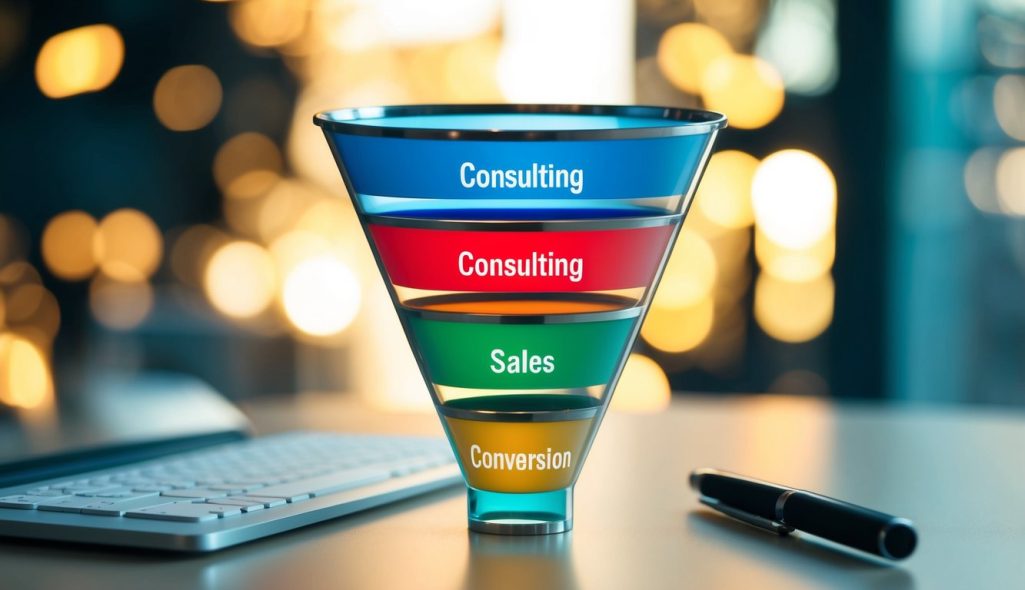
The consulting sales funnel typically includes stages like awareness, interest, decision, and action.
During the awareness stage, potential clients first learn about your services. Engaging content and marketing efforts are crucial here.
In the interest stage, you nurture these leads by showcasing your expertise and value through tailored content or consultations.
The decision stage is where potential clients weigh their options. Your communication at this point should focus on addressing specific needs and offering solutions.
Finally, in the action stage, your goal is to close the deal. This involves guiding clients towards making a purchase decision. Throughout these stages, tracking the conversion rate helps refine and improve your funnel for better results.
Building Awareness at the Top of the Funnel
At the top of the funnel, your main goal is capturing the attention of potential clients. The focus is on creating brand awareness and generating interest through targeted strategies.
Lead Generation Strategies
Lead generation is crucial at the top of the funnel. You should identify where your potential clients spend their time and tailor your approach accordingly.
Hosting webinars, creating informative ebooks, and offering free trials are effective methods.
Networking and partnerships can also be valuable. Consider teaming up with other businesses to reach a broader audience. You might participate in industry events and conferences to meet new prospects face-to-face.
Using a mix of these strategies helps in attracting diverse leads.
Content Marketing and SEO
Content marketing, coupled with SEO, is a powerful way to build awareness. You should create valuable, relevant content such as blog posts, infographics, and videos that address the challenges your audience faces. Make sure your content is optimized with keywords related to your services.
SEO enhances your visibility, helping potential clients find you through search engines.
Regularly updating your content and including internal and external links improves your search rankings. This continuous effort increases your chances of being noticed by the right audience online and builds your brand credibility.
Leveraging Social Media
Social media platforms are essential for expanding your reach. You can create engaging posts that highlight your expertise and share client success stories.
Platforms like LinkedIn and Facebook work well for professional audiences, while Instagram and Twitter are better for more casual interactions.
Running targeted social media ads can help amplify your message. Focus on demographics that align with your ideal client profile to maximize your ad’s effectiveness.
Engaging with your audience through comments and messages fosters a community and keeps your brand top of mind.
Engaging Potential Clients in the Middle of the Funnel
In the middle of the funnel, your goal is to build relationships and maintain interest. This stage is crucial for nurturing leads by providing value, practicing effective communication, and establishing yourself as a thought leader.
Nurturing Leads with Value
Providing value is key when you’re working on nurturing leads. You should focus on delivering engaging content that addresses potential clients’ needs.
This can include webinars, white papers, or case studies.
These resources should help clients see solutions to their problems. Use targeted emails to offer personalized content.
This not only keeps you in their minds but also shows that you understand their challenges. Building trust at this stage is important for moving them further down the customer journey.
Effective Communication Strategies
Effective communication is crucial to keep potential clients interested. Regular check-ins can help reinforce relationships.
Use emails, phone calls, or video meetings to stay in touch. Personalize messages to reflect their specific needs.
Being responsive and timely with your communication can make a significant impact. Show empathy and understanding in your interactions.
This builds trust and assures clients that you care about their concerns. Strong communication helps maintain momentum in the lead nurturing process.
Establishing Thought Leadership
Establishing yourself as a thought leader involves sharing insights and expertise in your field. Create and distribute high-quality content that showcases your knowledge.
Blog posts, podcasts, or industry reports can effectively demonstrate your authority.
Engage with potential clients on social media and in industry forums. Offer unique perspectives to set yourself apart.
By positioning yourself as an expert, you gain their trust and confidence. This further cements your place in their consideration set, guiding them through their consulting sales funnel.
Conversion at the Bottom of the Funnel
Reaching the bottom of the funnel means focusing on converting prospects into paying clients. Here, your efforts aim to drive decisions and actions, build trust, and leverage CRM and sales strategies.
Driving Decision and Action
At this stage, the primary goal is to turn interest into commitment. This involves presenting clear and compelling reasons for prospects to make a final purchasing decision.
Offering incentives like discounts or limited-time offers can encourage action.
Highlight the benefits of your service and illustrate how it solves problems effectively. Use direct calls-to-action (CTAs) to guide prospects toward completing a purchase.
It’s about minimizing any friction that might prevent them from following through.
Building Trust Through Case Studies and Testimonials
Trust is crucial in the action stage. Potential clients need assurance that they are making the right decision.
Use case studies and testimonials to showcase successful outcomes and satisfied customers.
Case studies provide real-world examples of how your services have helped others. They detail the process and highlight measurable results.
Testimonials add a personal touch, with past clients sharing their experiences and satisfaction.
These elements help reduce any skepticism and reinforce confidence in choosing your services. Prospects are more likely to convert when they see evidence of past successes.
CRM and Sales Strategy
A well-structured CRM system is vital for managing interactions and tracking prospects. It serves as the backbone for organizing contacts and automating follow-ups, ensuring no lead slips through the cracks.
With effective CRM, you can personalize communication, tailoring messages to individual preferences. This personalization enhances engagement and can improve conversion rates.
Incorporate a robust sales strategy to align with your CRM efforts. This might include training your sales team on effective techniques or regularly updating them on new insights and tactics. Consistent communication and strategic follow-ups can help close deals more efficiently.
Post-Conversion Strategies for Business Growth
Focusing on specific strategies after converting a customer can significantly boost your business growth. Building strong customer relations, effectively monetizing the customer lifetime value, and leveraging referrals and repeat business are key components that enhance long-term success.
Maintaining Customer Relations
Maintaining strong customer relations is crucial for ensuring continued engagement and satisfaction. You should regularly communicate with your clients through personalized messages and newsletters.
Cultivate trust by delivering consistent quality and addressing concerns promptly.
Utilize feedback to improve services, showing clients that their opinions matter. Schedule check-ins to discuss progress and potential needs.
This proactive approach strengthens your connection and fosters loyalty.
Building relationships requires dedication but pays off in ensuring long-term partnerships. Strong customer relations can convert satisfied clients into long-term supporters who are crucial for business stability.
Monetizing the Customer Lifetime Value
To fully capitalize on each customer’s potential, focus on monetizing their lifetime value. You can employ upselling and cross-selling techniques to encourage further purchases.
Offer tailored solutions that align with their needs, ensuring they see the value in additional services.
Implement a loyalty program to reward continued business. By recognizing and valuing your clients, you enhance their experience and increase the chances of repeat purchases.
Analyze buying patterns to offer products or services that meet evolving needs.
Optimizing the customer lifetime value not only increases revenue but also strengthens client loyalty, which is indispensable for business growth.
Referrals and Repeat Business
Encouraging referrals and repeat business is a powerful way to expand your client base. Offer incentives for clients who refer new customers, such as discounts or exclusive services.
This strategy not only rewards loyal clients but attracts new prospects.
Ensure each customer experience is positive so they are more likely to recommend your services. Personal recommendations build trust and credibility, often leading to higher conversion rates.
Building a network of satisfied clients forms a robust foundation for sustained business success.
Metrics and Analytics for Optimizing the Sales Funnel
Using metrics and analytics is vital for optimizing your consulting sales funnel. Focusing on key performance indicators, conversion rates, and forecasting helps improve efficiency and success.
Key Performance Indicators (KPIs)
Tracking key performance indicators allows you to measure the effectiveness of your sales strategies.
Important KPIs include average deal size, which is the total revenue from deals divided by the number of deals. This helps determine if your marketing efforts lead to larger contracts.
Another KPI is the win rate, the number of successful deals compared to the total number of deals. A higher win rate indicates better conversion and negotiation skills.
Monitoring these KPIs provides insights into areas that need attention and adjustment.
List of Essential KPIs:
- Average Deal Size
- Win Rate
- Customer Acquisition Cost
Measuring and Improving Conversion Rates
Improving conversion rates is crucial for optimizing the sales funnel. A higher conversion rate means more leads are becoming paying customers.
Track how many sales-qualified leads (SQLs) turn into opportunities. For example, a study from Dashly found that some cases achieved a 40% conversion rate.
To boost conversion rates, analyze each funnel stage and identify any bottlenecks. Implementing changes like better-targeted content or refining customer engagement strategies can lead to increased success.
Regularly measure conversion rates to track progress and make data-driven decisions.
Forecasting and Sales Pipeline Management
Effective sales pipeline management allows for better forecasting and planning. The sales pipeline visualizes each step, from lead to customer, highlighting potential revenue and stages where leads drop off. Forecasting involves predicting future sales based on trends and past performance.
By analyzing the pipeline, you can identify strong and weak points and anticipate potential fluctuations in sales. This enables you to allocate resources effectively and set realistic revenue goals.
Utilizing analytics here helps improve decision-making and increase your ROI by targeting efforts where they are most needed.
Sales Funnel Customization and Consultative Selling
To succeed in consultative selling, customizing your sales funnel to suit your consulting business is crucial. By strategically adapting the sales funnel and using templates, you can enhance your approach and tailor solutions to meet your clients’ unique needs.
Adapting the Funnel to the Consulting Business
Every consulting firm has different goals and targets. To adapt the sales funnel effectively, identify the specific stages that align with your business objectives. Incorporate steps that resonate with your clients’ needs, like initial assessments or tailored offerings.
Ensure your funnel guides potential clients through discovery, engagement, and ultimately, decision-making.
It’s important to continually evaluate and adjust your funnel stages. An adaptable sales funnel can quickly respond to changing market demands and client expectations, allowing you to maintain a competitive edge.
Creating an Effective Sales Funnel Template
Designing a sales funnel template is a strategic process. Start by mapping out the customer journey and identifying touchpoints for interaction. Your template should outline key stages, such as lead generation, lead nurturing, and conversion.
Use tools like CRM software for better client management. This helps track interactions and progress at each stage of the funnel.
Make sure your template is flexible and scalable, allowing for modifications as your business grows or as client needs evolve. An effective template helps streamline processes and enhances consistency in your sales efforts.
Understanding the Client’s Needs for Tailored Solutions
Understanding your consulting clients’ needs is vital for offering tailored solutions. Begin with active listening and thorough discovery sessions to uncover challenges and objectives. Develop a deep understanding of what drives their business and industry dynamics.
Tailor your sales approach to meet these needs, offering bespoke solutions that align with their goals. This demonstrates your commitment to their success and positions you as a trusted partner.
This approach also strengthens client relationships and can lead to long-term partnerships. Remember, a personalized approach often leads to higher satisfaction and improved conversion rates.
Advanced Sales Funnel Techniques
Enhancing a consulting sales funnel involves incorporating strategies like digital marketing and leveraging platforms like SaaS and B2B environments. Webinars and referral funnels offer innovative ways to maximize outreach and conversions.
Incorporating Digital Marketing
Digital marketing plays a crucial role in driving potential clients through your sales funnel. Use social media marketing to build awareness and engage your audience. Creating engaging content and running targeted ads can draw interest and guide visitors to your page.
Search Engine Optimization (SEO) is essential. By optimizing your website and content, you can improve visibility in search engines, attracting organic traffic.
Employing tools like Google Analytics helps you track user behavior and refine your strategy. This approach ensures more personalized messaging, enhancing the client’s journey through the funnel.
Exploring SaaS and B2B Sales Funnels
The SaaS and B2B sales funnels have distinct characteristics compared to standard consumer funnels. In a SaaS model, fostering a strong relationship with potential clients is key. Offering free trials or demos can help convert leads into committed customers.
For a B2B sales funnel, it’s important to focus on building trust. Establish your business as a thought leader by sharing case studies and whitepapers. Long buying cycles in B2B mean maintaining engagement is crucial, so email nurturing campaigns can ensure prospects move through the funnel without losing interest.
Innovative Approaches with Webinars and Referral Funnels
Using webinars as part of your sales strategy can significantly increase engagement. They offer an opportunity to demonstrate expertise and value, cultivating trust among potential clients.
During webinars, address key pain points and provide solutions. Then, make sure to follow up with attendees afterward.
Referral funnels leverage existing clients to bring in new prospects. Encouraging satisfied customers to refer others by offering incentives can greatly expand your reach. This technique relies on the positive experiences of existing clients, thus building credibility and trust with new leads. Integrating these approaches strengthens the effectiveness of your consulting sales funnel.
The Role of Technology in Enhancing the Consulting Sales Process
Advancements in technology have transformed the consulting sales process by automating repetitive tasks and providing insightful data analysis. These changes boost efficiency and accuracy within sales strategies.
Automated Lead Generation and Nurturing
Technology simplifies lead generation by automating routine tasks. This includes collecting contact information, segmenting leads, and delivering personalized content.
By using automated tools, you can efficiently manage the lead generation funnel and nurture potential clients with tailored messages that suit their interests.
Email marketing platforms and chatbots offer continuous engagement with prospects. They deliver timely and relevant follow-ups, helping to convert leads into clients while saving your team valuable time.
This automation increases your ability to respond quickly to client needs and improves overall client experience.
The Impact of AI and CRM Systems
Artificial intelligence (AI) revolutionizes the consulting sales process by improving decision-making and forecasting. AI tools analyze data patterns to predict client needs, allowing you to tailor services more effectively. This enhances client relationships and increases closing rates.
CRM systems play a crucial role by storing comprehensive client information. They track interactions, preferences, and feedback, which enables you to provide customized solutions.
By leveraging CRM software, sales professionals can boost efficiency. Integrating AI with CRM provides a powerful toolkit for managing large volumes of data with precision and accuracy.
Analytical Tools for Sales Effectiveness
Analytical tools provide insights into your consulting sales process. By examining metrics like conversion rates and client acquisition costs, you can identify strengths and areas for improvement.
This data-driven approach helps you refine sales strategies and optimize marketing activities for better results.
Using dashboards and reporting features, you gain valuable perspectives on sales trends and performance indicators. This enables you to adjust tactics quickly and efficiently. Data-driven insights are essential for ensuring that your sales process aligns with your business goals, maximizing your efforts and resources to achieve success.
Developing Long-Term Client Relationships
Building long-term client relationships is crucial for maintaining consistent business growth. It involves nurturing trust, communication, and service excellence. This approach is essential for consultants and small businesses aiming to foster loyalty and secure future deals.
Cultivating a Network of Consulting Clients
To establish a strong client network, you should start by identifying potential clients who align with your expertise. Attend industry events or join online forums where these individuals gather.
Building a network is not just about finding clients but also about creating a community.
Utilize social media platforms and professional networking sites to reach out and connect. Share valuable content that demonstrates your expertise in your field. This positions you as a reliable and knowledgeable consultant, making it easier for your potential clients to trust and reach out to you.
Stay engaged with your network by regularly sharing insights and updates that would benefit them. This keeps your services top of mind when they’re ready to engage a consultant.
Fostering Long-Term Partnerships with Clients
Once you secure a client, focus on building a partnership rather than just completing a transaction. Ensure that you clearly communicate your understanding of their needs and consistently deliver on promises.
Regular follow-ups are essential. Schedule meetings to discuss their progress and how your services can continue to add value. Tailor your approach to fit their unique needs so they see you as an indispensable part of their success.
Transparency is also crucial. Be upfront about possible challenges, and work collaboratively to find solutions. This establishes trust and shows your dedication to their long-term success.
Feedback and Continuous Improvement
Seeking feedback is vital in maintaining long-term relationships. After completing a project, ask your clients for their thoughts on your performance.
Use their insights to make necessary adjustments to your services.
Develop a feedback loop that allows for continuous improvement and shows clients you’re invested in their satisfaction and success. This can lead to not only repeat business but also referrals, as satisfied clients are likely to recommend your services.
Encourage open communication channels where clients feel comfortable sharing their experiences and suggestions. This openness enhances your reputation and helps solidify your role as a trusted consultant.
Frequently Asked Questions
These questions help break down the essentials of a consulting sales funnel, from structure and stages to tools and optimization strategies. Understanding analytics and avoiding common pitfalls are also crucial for success.
How do you structure an effective sales funnel for consulting services?
To build an effective sales funnel for your consulting services, start by identifying your target audience. Then, create a clear path from initial contact to conversion.
Tailor each stage to address specific client needs, providing information and engagement at each step. Consider phases like initial consultation, proposal, and follow-up.
What are the essential stages of a consulting sales funnel?
A consulting sales funnel typically includes awareness, interest, consideration, and decision. Start with attracting potential clients, move to engaging their interest, and then guide them through evaluating your services. Finally, encourage them to make a decision to hire you.
Which tools are most effective for building and managing consulting sales funnels?
Several tools can assist in building and managing your funnel. Customer Relationship Management (CRM) software is crucial for tracking interactions. Marketing automation tools can handle outreach and follow-ups. Consider using scheduling software for consultations and analytics platforms for measuring success.
What strategies can be implemented to optimize a consulting sales funnel for higher conversions?
To optimize for higher conversions, personalize interactions with potential clients. Use targeted content and customized proposals. Implement feedback loops to continually improve the funnel. A/B testing different approaches or messages can reveal what works best for your audience.
How do analytics play a role in measuring the success of a consulting sales funnel?
Analytics allow you to track key metrics such as conversion rates, client acquisition costs, and customer engagement. By analyzing data, you can pinpoint what’s working and where improvements are needed.
Tools like Google Analytics or CRM software provide insights into your funnel’s performance.
What are common pitfalls to avoid when designing a sales funnel for consultative services?
Avoid designing overly complex funnels that confuse potential clients. Ensure that each stage is clear and purposeful. Also, failing to follow up or provide value at each step can lead to drop-offs. Keep the process streamlined and focused on meeting client needs.