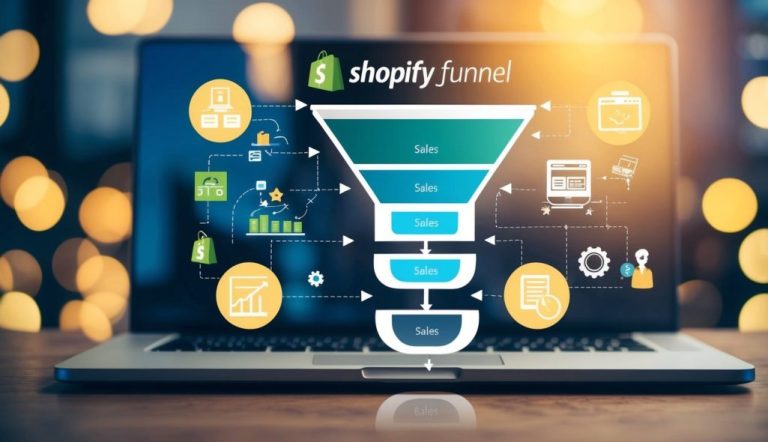
A sales funnel is a crucial tool for guiding potential customers from the initial stage of awareness to the point of making a purchase. Whether you’re a small business owner or part of a large enterprise, understanding how to effectively craft and manage a sales funnel can significantly impact your success. A well-designed sales funnel can help increase your conversion rate and maximize revenue. By clearly defining each stage, you can ensure that prospects receive the right message at the right time.
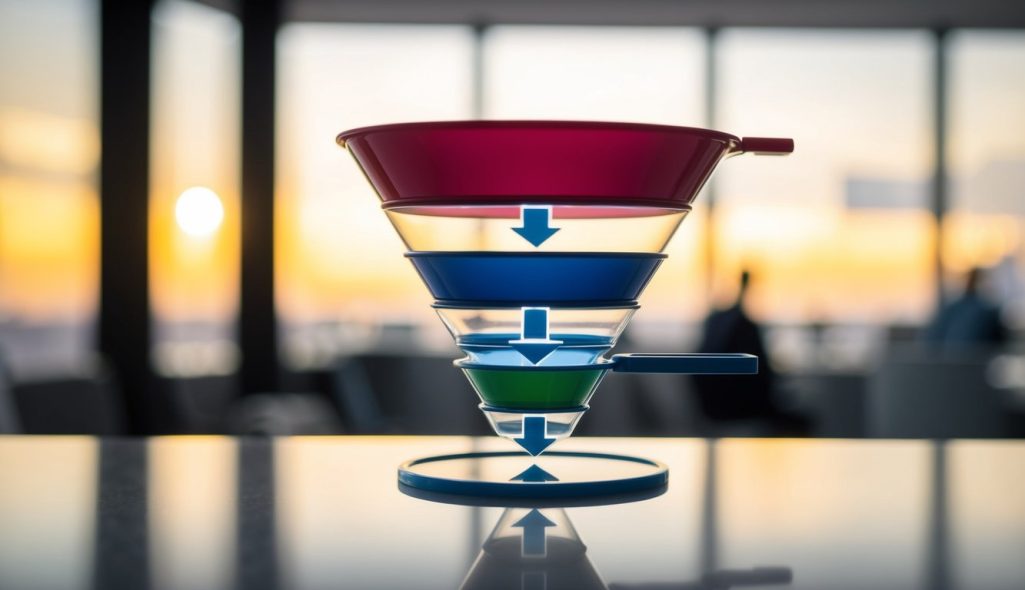
Creating a blank sales funnel template is a strategic way to visualize and plan your customer journey. It allows you to outline the steps a lead takes from the first interaction to becoming a customer. This framework can be adjusted to fit your unique business needs and optimize the conversion process.
By leveraging technology and analytics, you can continuously monitor funnel performance and make necessary adjustments. Understanding these metrics is essential for making informed decisions that support business growth. Fine-tuning your approach can drive higher conversions and, ultimately, greater revenue.
Key Takeaways
- A sales funnel guides prospects from awareness to purchase.
- Customizing your funnel can lead to improved conversion rates.
- Technology and analytics are key to funnel optimization.
Understanding the Sales Funnel Concept
In a sales funnel, potential customers travel through different stages that lead to a purchase. Each stage is designed to guide prospects from initial interest to the final action of buying. This structured approach can significantly impact the success of your sales process.
Defining the Sales Funnel
A sales funnel represents the journey customers take from first learning about a product to making a purchase. This journey is broken down into stages: awareness, interest, desire, and action. At the top, potential customers become aware of your product. As they move down, they show interest and develop a desire for it. Finally, they take action and complete the purchase. The funnel helps you understand where each prospect is in their buying journey.
Components of a Sales Funnel
Awareness: The first stage, where potential customers discover your product or service.
Interest: Here, prospects seek more information. They might visit your website or contact you for details.
Desire: At this stage, prospects feel a need or want for your product.

Action: The final phase where prospects make the decision to purchase.
Each component is crucial in converting a lead into a customer. Proper management of these stages can improve conversion rates.
Importance in the Sales Process
A sales funnel is vital for understanding and managing your sales process. By identifying which stage a prospect is in, you can tailor your approach to meet their needs. This helps in addressing their interests and desires effectively. It also provides insights into potential bottlenecks that may hinder progress. Ultimately, a well-defined sales funnel streamlines the transition from interest to action, increasing your chances of closing a deal.
Stages of a Sales Funnel
In a successful sales funnel, each stage plays a critical role in converting prospects into customers. These stages guide potential customers from just learning about your product to making a purchase decision.
Top of the Funnel: Lead Generation
At the top of the funnel, your primary goal is to capture attention. This is where lead generation occurs. Here, you engage with a broad audience to create awareness about your product or service. Utilizing social media, blog posts, and advertisements can be effective.
Focus on delivering valuable content that addresses common problems your audience faces. This encourages them to learn more about your offerings. Providing free resources like e-books or webinars can also be a great way to capture leads. The aim is to attract and retain interest, transforming visitors into potential leads.
Middle of the Funnel: Nurturing Leads
In the middle of the funnel, you turn interest into desire by nurturing leads. This stage involves building relationships and providing deeper insights into what you offer. Email marketing campaigns, newsletters, and educational content are vital here.
Your goal is to show potential customers how your solution addresses their needs. Personalized communication helps build trust and keeps your brand at the forefront of their minds. Encouraging feedback and interaction can further enhance this stage. Highlight success stories, case studies, and testimonials to reinforce the value of your product.
Bottom of the Funnel: Closing the Sale
The bottom of the funnel is where you focus on converting leads into actual customers. This stage requires addressing any remaining objections and clearly communicating the benefits of your product or service. Offering demonstrations, free trials, or personalized consultations can be persuasive.
It’s important to provide detailed information on pricing, features, and benefits, ensuring prospects understand what sets your offer apart. Emphasize any unique selling points and limited-time offers to create urgency. Effective follow-up strategies and attentive customer support can make the difference in closing the sale and ensuring a positive buying experience.
Designing Effective Sales Funnels
Designing effective sales funnels involves customizing the process to suit your business needs and leveraging templates for efficiency. Both strategies can help you convert potential customers into loyal clients.
Custom Sales Funnel Creation
Creating a custom sales funnel means tailoring your approach to meet the specific goals of your business. Start by identifying your target audience and understanding their purchasing journey. It’s crucial to analyze customer behavior to decide the steps they will go through, from awareness to decision-making.
Use tools to track progress and adjust the funnel based on results. You might begin with a simple squeeze page funnel to capture leads, following up with personalized content to nurture these leads. Custom funnels offer flexibility, allowing you to add features like upsell opportunities or tailored follow-ups.
Implementing a custom design can give you a competitive edge by addressing unique market needs and optimizing conversion rates. The key is to continuously test and refine your approach as you gather more data.
Leveraging Sales Funnel Templates
Sales funnel templates are a practical solution for businesses looking to save time while ensuring a professional setup. Templates can be found online, with options including free sales funnel templates that streamline the setup process.
Popular choices like the webinar funnel template guide participants through sign-up, engagement, and post-event communication stages. Templates come ready with proven strategies that have worked for other businesses, which reduces the trial-and-error period.
These templates often provide pre-designed structures like landing pages and follow-up sequences that integrate seamlessly with your marketing platforms. Utilizing templates allows you to focus on customizing the content to match your brand voice while benefiting from a system that’s already been tested for effectiveness.
Optimizing the Conversion Process
To optimize the conversion process, focus on improving conversion rates at each stage of your sales funnel and employing effective conversion optimization techniques. Pay attention to key areas such as email marketing and calls-to-action.
Improving Conversion Rates at Each Stage
Improving conversion rates involves making adjustments to each stage of the sales funnel. In the awareness stage, capture attention through diverse channels like SEO, social media, and paid ads. Make sure your messaging is clear and engaging to create a strong first impression. Use a mix of traffic sources to broaden your reach and attract potential customers.
During the interest stage, craft content that speaks directly to potential customers’ needs and interests. Use personalized email marketing to keep communication relevant, increasing the likelihood that leads will move forward. Incorporate well-designed, strategic calls-to-action to motivate prospects to engage further, whether by subscribing to a newsletter or scheduling a demo.
Conversion Optimization Techniques
To optimize conversions, employ a variety of techniques. Personalize your messaging by using data-driven insights to tailor offers specific to your audience. This approach builds trust and connects with customers on a deeper level.
Focus on creating compelling calls-to-action by ensuring they’re clear, visible, and prompt the desired action. Use A/B testing to refine these elements and find which variations lead to better results. Email marketing offers a direct line to your customers; make it effective by segmenting your list, crafting compelling subject lines, and ensuring emails are mobile-friendly.
Streamline your landing pages. Keep them simple and focused on one goal, with minimal distractions and a clear path to conversion. Make the conversion process seamless by removing barriers that might discourage users, such as overly lengthy forms or complicated navigation.
Leveraging Technology in Sales Funnels
Technology enhances sales funnels by integrating tools like CRM systems and automating processes, such as email campaigns. Together, these advancements optimize customer data management and streamline communication, leading to improved conversion rates.
CRM and Sales Funnel Integration
Integrating a Customer Relationship Management (CRM) system with your sales funnel can greatly improve efficiency. It helps you track and manage customer interactions. By combining CRM with your sales funnel, you can keep all customer data in one place. This makes it easier to personalize your communication with each prospect.
A CRM helps you analyze customer behaviors and identify trends. This can inform your sales strategies. It provides insights on which parts of your funnel are most effective. You can also see where customers drop off, helping to refine your approach. Having access to detailed customer data is key to boosting your sales performance.
Automating the Funnel with Email Campaigns
Automating email campaigns transforms how you communicate with customers. Email marketing tools allow you to send targeted messages based on where customers are in the sales funnel. Personalization is important. Tailor your emails to match customer interests and needs, increasing engagement.
Setting up automated triggers helps you stay in touch without manual effort. For example, welcome emails can be sent when a potential customer signs up for more information. These campaigns nurture leads and guide them further down the funnel. By responding to customer interactions quickly, you keep their attention and improve the chances of conversion.
Analytics and Performance Measurement
Understanding sales funnel analytics is crucial for optimizing revenue and efficiency. By tracking key metrics and forecasting potential sales, you can enhance your sales strategy and achieve higher performance.
Tracking Sales Funnel Metrics
To effectively analyze your sales funnel, focus on key metrics like conversion rate, average order value, and sales pipeline status. Track the conversion rate to see how many leads become paying customers.
Average order value gives insights into customer buying behavior and can help in upselling strategies. Monitoring your sales pipeline is important to understand where deals stand and to identify bottlenecks. Keeping an eye on these metrics provides a clear picture of sales performance, enabling more informed decision-making.
Forecasting and Revenue Predictions
Accurate forecasting is essential for setting realistic sales goals and managing resources. Start by analyzing historical data and current sales pipeline to predict future sales. Consider factors like market trends and potential customer behaviors that might impact revenue.
Using metrics such as win rate and time to close, you can refine your predictions. Forecasting allows you to set budget expectations and resource allocation, ensuring your team is prepared for upcoming demands. By focusing on these areas, you strengthen your ability to forecast revenue and make smarter business decisions regarding sales strategies.
Advanced Techniques and Strategies
To enhance your sales funnel performance, it’s essential to understand how strategies differ between B2B and B2C models. Employing content marketing effectively and using up-sells and cross-sells strategically can significantly improve your sales potential.
B2B Versus B2C Sales Funnels
B2B and B2C sales funnels require different strategies to address unique customer journeys. In a B2B sales funnel, the focus is often on building relationships over time through multiple touchpoints. Decisions usually involve more stakeholders and take longer. It’s crucial to offer detailed product information and personalized demos to satisfy informed buyers.
In contrast, a B2C sales funnel emphasizes appealing to individual emotions and immediate needs. Buyers might make quicker decisions, often influenced by price or promotions. Social proof, like customer reviews, can significantly impact their choices. Understanding these differences allows you to tailor your approach to each audience effectively, ensuring you provide the right information for decision-making.
Employing Content Marketing
Content marketing plays a vital role in nurturing leads through your sales funnel. You can keep potential customers engaged and informed by providing value at every stage. Use blog posts, eBooks, and webinars to address common pain points and showcase your expertise. These efforts build trust and establish your brand as a thought leader.
For an ecommerce funnel, well-crafted product descriptions and engaging visuals can capture attention and encourage exploration. Regularly updating content ensures it remains relevant and engaging for your audience. By strategically placing content where your customers spend time, you increase the likelihood of converting leads into purchases.
Strategic Use of Up-Sells and Cross-Sells
Up-selling and cross-selling are effective tactics to maximize revenue from existing customers. Up-selling involves encouraging customers to purchase a more expensive item or add premium features. You should emphasize the added value or benefits to entice buyers. Cross-selling, on the other hand, suggests complementary products.
For instance, suggesting accessories to go with a purchased item can enhance the shopping experience. Timely and relevant suggestions show a deeper understanding of customer needs. Use data insights to predict what items may appeal based on previous purchases. By executing these strategies thoughtfully, you boost customer satisfaction while increasing the average transaction value.
Sales Funnel and Business Growth
A sales funnel plays a crucial role in driving business growth by boosting customer relations and enhancing productivity. Through effective funnel strategies, you can build lasting connections with customers and efficiently manage sales leads.
Building Customer Relations and Retention
Creating strong customer relations is key to business success. By understanding the needs and wants of your customers, you can better tailor your sales approach. Personalized communication increases engagement, making customers feel valued.
Using a sales funnel template helps track customer interactions effectively. This lets you identify when to re-engage clients. For example, connecting with customers at different stages of the funnel can foster trust, leading to higher retention rates.
Maintaining relationships is not just about making sales. It involves nurturing trust, listening to feedback, and consistently meeting expectations. These efforts build loyalty, ensuring customers return.
Scaling Funnels for Productivity
Optimizing your sales funnel can significantly enhance productivity. An effective funnel streamlines the process of converting sales leads into active customers. By monitoring and refining each stage, you can identify bottlenecks and minimize delays.
Using advanced funnel strategies, like leveraging CRM tools, allows for real-time tracking of prospects. This means acting on opportunities quickly and efficiently.
Scaling your funnels means adjusting to accommodate more leads without compromising quality. Automated workflows can help manage higher volumes, allowing you to focus on strategic growth. Implement these tools to improve response times and enhance customer satisfaction, boosting your business productivity.
Frequently Asked Questions
Exploring the essential elements of sales funnels can simplify the creation process. You can use tools like Excel and various free resources to build and customize templates. Understanding simple structures and optimizing your sales process with funnels may significantly improve lead conversion.
What are the essential components of an effective sales funnel template?
An effective sales funnel template includes multiple stages, such as awareness, consideration, and decision. Each stage should guide potential customers through their buying journey and can include tools like email campaigns and landing pages to maximize engagement.
How can I create a sales funnel in Excel?
To create a sales funnel in Excel, start by listing each funnel stage in separate columns. Record relevant metrics like prospective leads, conversion rates, and revenue generated at each stage. Utilize Excel’s chart features to visualize and analyze the funnel’s performance.
Are there any free resources available for editable sales funnel templates?
Yes, several online platforms offer free, editable sales funnel templates. Sites like UpLead provide templates that allow customization to fit your business needs, helping you to create a tailored funnel process without extra cost.
What is the simplest structure for a sales funnel?
The simplest sales funnel structure typically includes three main stages: awareness, consideration, and decision. At each stage, your focus should be on transitioning prospects into loyal customers by providing relevant content and engagement strategies.
How does a sales funnel contribute to sales process optimization?
Sales funnels streamline the sales process by clearly defining each step of the buyer’s journey. This helps in identifying bottlenecks and optimizing strategies to increase conversions. By having a structured approach, you can allocate resources effectively and improve overall efficiency.
Do sales funnels provide a significant advantage in converting leads?
Sales funnels are crucial for converting leads because they create a guided path for potential customers. They nurture leads through targeted content and engagement efforts. As a result, sales funnels increase the chances of successfully converting prospects into paying customers. This structured approach can boost conversion rates significantly.