Creating a seamless shopping experience is essential for any online store. Using a Shopify sales funnel app can dramatically improve your store’s conversion rates. These apps guide potential customers through their buying journey, making each step as easy as possible. A well-implemented funnel can transform curious visitors into loyal buyers. By streamlining the process, you keep customers engaged from the moment they discover your store until they complete their purchase.
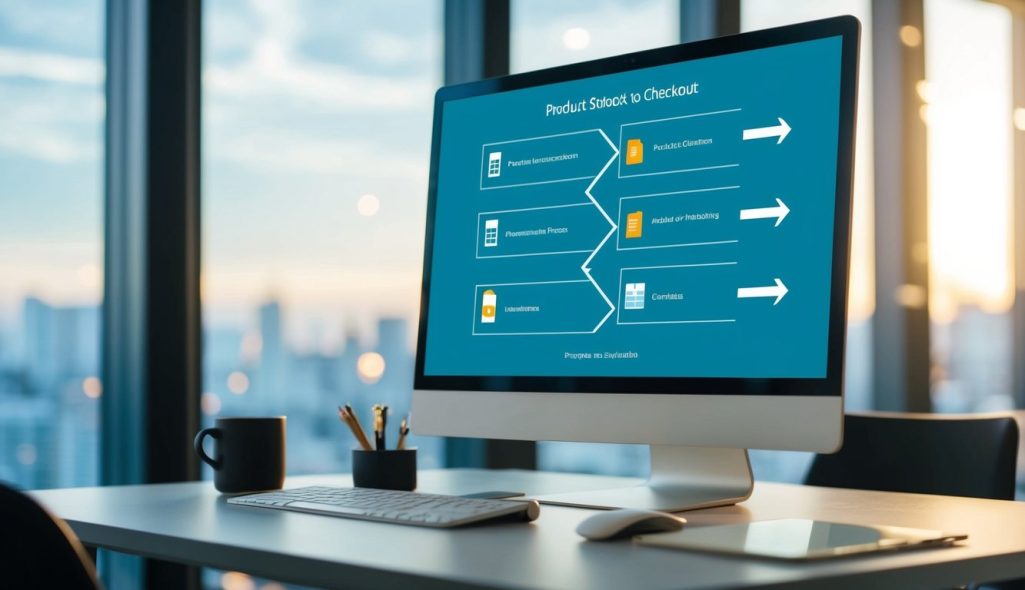
With a variety of apps available, you can customize your sales funnel to perfectly fit your business needs. Some apps offer features like upselling and cross-selling, helping you increase the average order value on your site. Successfully leveraging these tools requires understanding each app’s unique capabilities and how they integrate with your store. This knowledge allows you to make the best choice for boosting your sales and enhancing customer satisfaction.
To make the most of a Shopify sales funnel app, consider the overall strategy behind your sales approach. Setting clear goals and regularly evaluating your funnel’s performance will help you adapt and optimize over time. This careful attention ensures that you maximize every opportunity to convert a visitor into a customer, and eventually, into a repeat buyer.
Key Takeaways
- Use a Shopify sales funnel app to boost conversions.
- Customize features to fit your business needs.
- Regularly assess and refine your sales strategy.
Understanding Shopify Sales Funnels
Understanding how a sales funnel works is crucial for guiding potential customers from awareness all the way to purchase. By applying the AIDA framework, examining the customer journey, and focusing on conversion optimization, you can improve your Shopify store’s success.
The AIDA Framework in E-commerce
The AIDA Framework stands for Awareness, Interest, Desire, and Action. This model helps illustrate the stages customers go through in their buying journey. In e-commerce, it starts with awareness, where potential customers first learn about your brand or products. Next, in the interest stage, they consider your offerings more closely.
In the desire stage, customers begin to feel a strong preference for your products. Finally, the action stage is where they make a purchase or perform a desired action. By structuring your Shopify sales funnel around the AIDA framework, you can guide your customers through these stages effectively.
Stages of the Customer Journey
The customer journey in a Shopify sales funnel generally consists of three main stages: Awareness, Consideration, and Decision. Initially, during the awareness stage, your task is to attract attention and introduce your brand to potential customers. This can be done through ads, social media, or content marketing.
In the consideration stage, build trust and provide detailed information about your products. This might involve email marketing or targeted promotions. The decision stage involves presenting attractive offers or discounts to encourage the final purchase, ensuring that every step aligns with customer needs.
Importance of Conversion Optimization
Conversion optimization aims to increase the percentage of website visitors who complete a desired action. For a Shopify sales funnel, this involves tweaking elements at each stage to improve sales. Start by ensuring that the awareness stage pulls in high-quality traffic.
During consideration, focus on clear product information and strong calls-to-action. Finally, during the decision stage, optimize the checkout process to reduce friction and cart abandonment. By refining the customer journey this way, you enhance the likelihood of turning visitors into paying customers and boosting your Shopify store’s profitability.
Leveraging Shopify for Your Online Store
Shopify offers powerful tools that can transform your online store, enhancing its appearance and improving your decision-making through data. Themes and customization options allow you to tailor your store’s look, while Shopify Admin and analytics provide insights to help optimize sales and manage operations.
Themes and Customization
Shopify provides a variety of themes that let you create a visually appealing and user-friendly online store. You can choose from free and paid themes, each designed to support different types of businesses. Utilizing these themes allows you to present products effectively and enhance the shopping experience.
Customization is another key feature. It enables you to tweak theme settings such as colors, fonts, and layout to match your brand identity. With an easy-to-use editor, you can even add custom code if needed. This flexibility allows your store to stand out and better engage customers.
Shopify Admin and Analytics
The Shopify Admin panel is your command center for managing your online store. It offers tools for adding products, setting prices, and managing inventory. This makes it easy to keep track of what you have in stock and what needs to be reordered.
Analytics in Shopify is a valuable resource that offers insights into sales, customer behavior, and traffic sources. You can view important metrics like conversion rates and average order value. This data helps you make informed decisions, refine marketing strategies, and focus on areas that boost your store’s performance.
Maximizing Sales with Sales Funnel Apps
Sales funnel apps can significantly boost your Shopify store’s revenue by guiding potential buyers through a well-defined path. These tools enhance the customer journey, increase conversion rates, and offer upsell opportunities, making them essential for maximizing sales.
Top Shopify Sales Funnel Apps
Choosing the right sales funnel app can improve your store’s performance. Honeycomb Upsell is known for its user-friendly interface that facilitates upselling and cross-selling. ReConvert focuses on post-purchase customization to increase the average order value. Zipify provides powerful templates for creating compelling landing pages. Meanwhile, Selleasy offers flexible options for creating targeted offers at checkout, and Upsell Wizard is ideal for personalizing customer experiences. Each of these apps supports various strategies to increase sales through funnel optimization.
Features and Benefits of Sales Funnel Apps
Sales funnel apps come with a range of features that help you optimize the buying process. They often include tools for creating personalized offers and automated follow-ups. Features like countdown timers can increase urgency and prompt purchases.
Apps such as Zipify and ReConvert offer easy-to-use templates to customize every step of the funnel. By integrating these features, you can effectively guide customers towards completing their purchases, increasing both conversion rates and overall revenue. Using apps like Selleasy ensures you make the most of every customer interaction.
Strategizing for Sales Funnel Success
To optimize your Shopify sales funnel, focus on creating landing pages that convert, crafting effective marketing campaigns, and enhancing customer experience through personalization. These elements work together to drive engagement and increase sales.
Creating High-Converting Landing Pages
A high-converting landing page is crucial for any successful sales funnel. Your landing pages should have clear and engaging calls to action (CTAs). Use persuasive language and eye-catching design to guide customers towards taking action.
Include compelling headlines and concise content that communicates the benefits of your product. Integrating testimonials or reviews can build trust and credibility. To further boost conversion rates, consider adding upsell offers that encourage additional purchases.
Ensure that your landing pages are mobile-friendly to reach more potential customers. Mobile optimization can significantly impact conversion rates, as many users shop from their phones. Test different elements, like CTAs and page layouts, regularly to find the most effective combinations.
Effective Marketing Campaigns
An effective marketing campaign is essential for driving traffic to your sales funnel. Focus on targeting the right audience by using data from prior engagements. Tools like Google Analytics can help you tailor your campaigns by providing insights into user behavior.
Consider using a mix of email marketing, social media ads, and influencer partnerships to reach diverse audiences. Segmenting your audience allows you to send more relevant and compelling messages to different groups.
Creating urgency with time-limited offers or exclusive discounts can also encourage quicker decision-making and boost sales. Analyze the performance of your campaigns regularly, adjusting strategies based on which channels and messages are most effective.
Personalization and Customer Experience
Providing a personalized shopping experience is a key strategy for improving customer satisfaction and loyalty. Utilize customer data to offer personalized offers and recommendations that meet individual preferences and needs. This can lead to higher conversion rates and repeat purchases.
Implementing personalized email campaigns can keep your brand top-of-mind and encourage engagement. For example, send tailored product suggestions based on past purchases. Make sure your site’s navigation is intuitive and user-friendly to enhance the overall customer experience.
Consider using chatbots or live support to assist customers in real time, addressing their queries and needs promptly. This proactive approach can differentiate you from competitors and foster a positive perception of your brand.
Driving Sales Through Offers and Promotions
Implementing effective promotions can significantly enhance your sales strategy by increasing average order value and customer engagement. By strategically using upsell and cross-sell tactics and crafting attractive discount offers, you can maximize the potential of your sales funnel.
Upsell and Cross-Sell Strategies
To boost sales, employing upsell and cross-sell strategies is crucial. These techniques encourage customers to purchase additional or more expensive products. With tools like Honeycomb Upsell & Cross Sell, you can display related or higher-end products on your Shopify store during the purchase journey.
Upselling involves suggesting a higher-priced item than the one initially chosen, which can increase average order value. For example, propose a premium version of a product. Cross-selling encourages customers to buy complementary items, like suggesting a phone case when someone is buying a smartphone. Implementing these tactics effectively can lead to better customer experiences and increased revenue.
Discounts and Limited-Time Offers
Discounts and limited-time offers are powerful tools for driving immediate sales. These promotions leverage the urgency principle, encouraging customers to act quickly. Offering discount codes or limited-time deals can attract customers to complete purchases sooner rather than later.
Common techniques include Buy One Get One (BOGO) offers or providing a free gift with purchase. These promotions not only boost sales but also enhance customer satisfaction by offering value. Timely emailed discount codes or flash sales can further incentivize buys. When crafted thoughtfully, discounts and limited-time offers not only drive sales but also build long-term customer relationships.
Advanced Tactics for E-commerce Growth
Harness advanced tactics to drive your e-commerce growth by focusing on optimization strategies like A/B split testing and integrating AI with interactive content. These tactics can significantly enhance your conversion rates and engage customers effectively.
A/B Split Testing for Optimization
A/B split testing is crucial for refining your e-commerce strategies. By comparing two versions of a web page or app, you determine which one performs better with your audience. This tactic helps you identify elements that increase conversions, such as button colors, headings, or layouts.
Utilize tools that automatically divide your audience to ensure accurate results. Regularly analyze each test and incorporate successful elements into your storefront. This process should be iterative, allowing you to continuously adapt and optimize your site. With A/B testing, your decisions become data-driven, reducing guesswork and improving customer experiences.
Integrating AI and Interactive Content
Integrating AI into your e-commerce strategy can transform how you engage with customers. AI-powered recommendations personalize shopping experiences by suggesting products based on browsing history and preferences. This boosts conversion rates by making shopping more relevant.
Interactive content like quizzes or videos further captivates users, encouraging longer site visits. This type of content not only entertains but also educates potential buyers about your products. Combining AI with interactive features creates a dynamic and responsive shopping environment. By using these tools together, you cater to individual needs and foster a more immersive and engaging user journey.
Enhancing Customer Retention
Keeping customers engaged and encouraging them to return to your store can significantly boost your revenue. Using the right tools and techniques, you can strengthen customer loyalty and engagement effectively.
Loyalty Programs and Customer Loyalty
A well-structured loyalty program can boost customer loyalty. These programs reward repeat purchases, encouraging customers to spend more and return often. By giving points or discounts on future purchases, you create a cycle of ongoing engagement.
Consider using apps that integrate with your store to automatically track customer behavior and reward points. You can personalize offers based on purchase history, making customers feel valued.
Furthermore, leveraging data analytics helps in understanding buying patterns, allowing you to tailor rewards effectively.
Using tools like Peel Insights provides deep insights into retention metrics, helping you refine your strategies.
Post-Purchase Customer Engagement
Reaching out to customers after a purchase keeps your brand top of mind and increases the chance of them returning. Implement email and SMS marketing campaigns to thank customers for their purchase and suggest related products. This shows appreciation and encourages additional sales.
Automated post-purchase emails with tips, user guides, or special offers enhance customer satisfaction.
Utilize Shopify Apps to streamline these communications. Segmenting your customer base for targeted messages can increase engagement, as personalized communication is more effective.
Feedback requests also help you understand customer satisfaction, allowing you to improve your service or product offerings. By fostering two-way communication, you build stronger relationships and ensure long-term loyalty.
Marketing and Ads for Shopify Stores
Setting up effective marketing and ad campaigns is vital for a successful Shopify store. Key strategies include using social media platforms and search engines to reach a wider audience. You should also leverage specific advertising tools like Facebook and Google Ads for targeted outreach.
Leveraging Social Media and Search Engines
Harnessing the power of social media and search engines is crucial. With platforms like Instagram, Facebook, and Pinterest, you can engage directly with your audience. Social media marketing lets you share content, promote products, and gather customer feedback.
Search Engine Optimization (SEO) boosts your store’s visibility on search engines like Google. Using relevant keywords and optimizing product pages increases your site traffic. This can lead to higher conversion rates. Including customer reviews and creating quality content also enhances SEO efforts.
Effective Use of Facebook and Google Ads
Facebook Ads allow you to target specific demographics based on interests and behaviors. You can use this platform to create engaging ad content that resonates with potential buyers. Facebook’s analytics tools help track ad performance and optimize campaigns for better results.
Google Ads, on the other hand, focuses on keyword targeting and search intent. By using targeted keywords, your store can appear in relevant search results, driving more qualified traffic to your site. This method works well with SEO strategies, fostering a comprehensive approach to online marketing.
Optimizing Post-Purchase Funnel
After a customer completes a purchase, there are still opportunities to boost sales and improve customer satisfaction. Using upselling and email strategies, you can effectively enhance your post-purchase funnel performance.
Thank You Page Upselling
Once a customer completes their purchase, displaying additional offers directly on the thank you page can lead to more sales. This technique, known as a Thank You Page Upsell, is an effective way to encourage customers to make another purchase immediately.
You might want to feature complementary products related to their order. For example, if they’ve just bought running shoes, consider suggesting a pair of socks or a shoe care kit. Using discount stacking, you can offer exclusive discounts for these add-ons: like 10% off if bought within 24 hours. This creates a sense of urgency and adds value for the customer.
Integrating customer support options on the thank you page can build trust. Display contact information or chat options, making it easy for customers to address any concerns about their recent purchase.
Post-Purchase Email Sequences
A well-planned post-purchase email sequence keeps customers engaged and encourages repeat business. Start by sending a confirmation email to reassure them their order is processed.
Following this, send a series of emails highlighting related products or special offers. You can include cart upsells to suggest items they might have considered earlier. Offer them deals or discounts for these items to increase the likelihood of conversion.
Don’t forget to include valuable content in your emails. This could be tips on using the product they bought or even maintenance advice. By combining email marketing with offers and useful information, you’re likely to build a stronger relationship with your customers.
Technical Considerations for Shopify Sales Funnels
When building effective Shopify sales funnels, technical aspects are crucial for success. Key elements include optimizing page load speed, ensuring mobile readiness, and improving the efficiency of payment processing during checkout.
Page Load Speed and Mobile Optimization
Page load speed is critical for keeping potential customers engaged. A delay of even a few seconds can lead to increased bounce rates.
To enhance speed, ensure that images and files on your site are compressed without losing quality. Using web-friendly formats like JPEG for photos and SVG for graphics helps in reducing size and load time.
Mobile optimization is equally important. With many users shopping on smartphones, having a responsive design means potential buyers can easily navigate your funnel on any device.
Use tools like Google’s Mobile-Friendly Test to ensure your site performs well on mobile. Incorporating elements like sticky call-to-action buttons can also improve user experience by keeping key buttons accessible as users scroll through pages.
Payment Processing and Checkout Efficiency
Efficient payment processing is vital to avoid losing customers at the final step.
Multiple payment options should be available to accommodate diverse preferences. Platforms like Shopify Payments can provide a seamless experience by supporting many payment methods without transferring users to third-party sites.
Checkout must be quick and straightforward. Use a guest checkout option to simplify the process for new users, and ensure that your checkout page is clear and uncluttered to guide users through payment smoothly.
Implementing enhanced security features such as SSL certificates can reassure customers about the safety of their personal information, thus building trust and encouraging sales completion. A streamlined checkout can significantly improve conversion rates and reduce abandoned carts.
Frequently Asked Questions
Understanding sales funnels in Shopify can be vital for your online store’s success. This section breaks down popular apps, integration tips, cost-effective options, examples, analytics tools, and benefits of Shopify 2.0 compatibility.
What are the top rated sales funnel apps on the Shopify App Store?
Some of the most popular choices include ReConvert and Zipify. These apps are noted for their ease of use and robust features that cater to different stages of a sales funnel, from upselling to post-purchase offers.
How can I integrate a sales funnel into my Shopify store?
To integrate a sales funnel, start by choosing a funnel-specific app like Clickfunnels, which can create custom landing pages and automate upsells. After installing the app, follow the provided setup instructions to tailor the funnel to your store’s specific needs.
Are there any free sales funnel builders available for Shopify?
Some sales funnel builders offer free plans or trial periods. Look for apps in the Shopify App Store that provide a basic free tier. While they may have limited features compared to paid options, they can be a good starting point to test the effectiveness of sales funnels in your store.
What are some examples of effective sales funnels for e-commerce websites?
Effective funnels often include stages like awareness, consideration, and conversion. An example would be using a landing page to attract visitors, offering a small discount to capture emails, and then nudging toward purchasing with targeted upsells, as seen in the strategies of many successful online stores.
What analytics tools can I use to track my Shopify sales funnel performance?
Analytics tools such as Google Analytics and built-in Shopify reports can track your funnel’s performance. They provide insights into metrics like visitor behavior, conversion rates, and the effectiveness of each funnel stage. This data helps you make informed adjustments to improve sales outcomes.
How do Shopify 2.0 compatible apps improve the sales funnel process?
Shopify 2.0 apps enhance sales funnels by offering improved performance, more customization options, and a better user interface. These features allow you to build more efficient and engaging funnels that attract and convert customers. Ultimately, this improves the shopping experience on your Shopify store.