In the world of business, understanding the stages of a business development funnel is crucial for success. These stages guide potential customers from the first moment they learn about a product to making a purchase. Identifying and managing each stage of the funnel ensures you can convert leads into loyal customers.
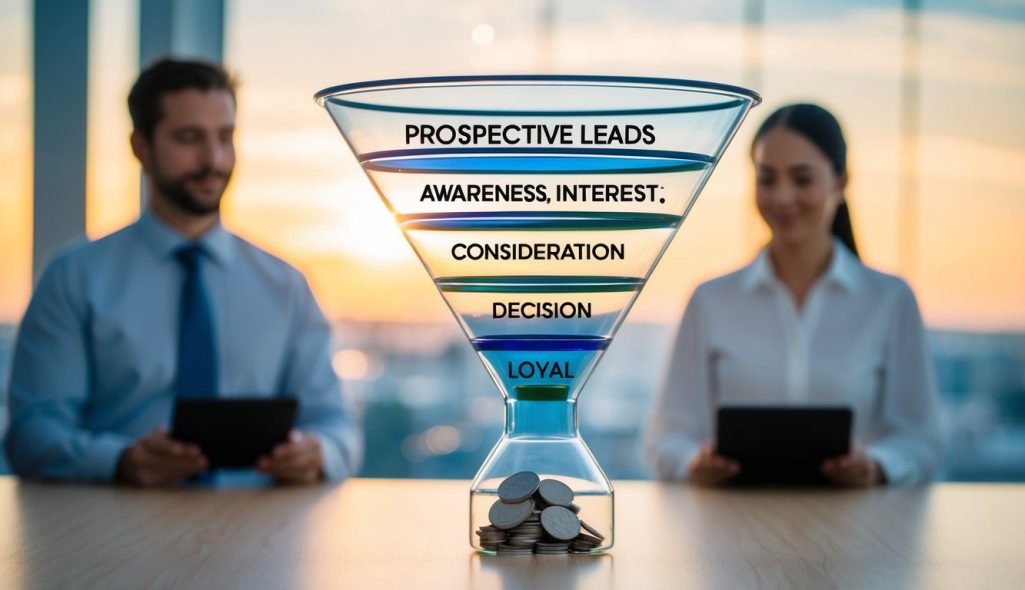
The funnel typically begins with raising awareness, where customers first encounter your brand. As prospects move through the funnel, they enter the interest and consideration stages, evaluating their options. Finally, in the decision stage, a prospect decides whether to purchase from your business.
Tracking each stage’s performance helps in refining your techniques and ensuring a successful conversion rate. Emphasizing improvements can lead to sustained growth and better customer relationships, making the funnel a powerful tool in marketing and sales.
Key Takeaways
- Each stage of the funnel needs targeted strategies.
- Managing the funnel is key to converting leads.
- Optimization leads to sustained growth.
Understanding the Business Development Funnel
You will learn about the business development funnel, highlighting its significance and the key stages involved. This funnel is crucial for guiding potential customers from initial awareness to making a final purchase.
Definition and Importance
The business development funnel outlines the pathway that potential customers follow. It starts with their first encounter with your brand and guides them until they make a purchase. In each stage, you will find different touchpoints where you can engage with prospects effectively.
Understanding this funnel is crucial for tailoring your marketing efforts. This ensures you address the needs and behaviors of potential customers as they move through the process. By doing so, you increase the chances of turning leads into loyal customers.
Overview of the Stages
The funnel typically involves several stages. Awareness Stage is where prospects first learn about your brand. Interest Stage captures their attention, prompting them to explore more about your offerings.
Consideration Stage involves prospects weighing the benefits against alternatives. In the Intent Stage, they show readiness to buy, followed by the Evaluation Stage where they assess their options closely. The final Purchase Stage marks the decision to buy.

Focusing on these stages helps you better manage and navigate the entire process, ensuring each potential customer is nurtured correctly along the way.
Initial Stages of the Funnel
In the early stages of a business development funnel, the focus is on capturing attention and interest. These steps are vital for attracting new prospects and setting the foundation for later conversion.
Creating Awareness
The first step is to make potential customers aware of your business. This involves increasing brand awareness and reaching your target audience effectively. A strong content strategy can help here.
Use social media platforms, SEO, and Google Search to make your presence known. Post engaging content that resonates with your audience’s interests and needs. Understanding your buyer persona is crucial to developing content that speaks to them.
Blog posts, case studies, and videos are effective for drawing initial attention. Leverage content marketing tactics to showcase your expertise and offer value.
Through consistent visibility, you can build recognition and start the customer journey.
Generating Interest
Once you’ve captured attention, focus on developing interest. This involves offering information that addresses your prospect’s pain points.
Providing targeted content through landing pages and offering a compelling lead magnet can encourage further engagement.
Use email campaigns and newsletters to share more in-depth content that highlights how your product or service meets customer needs.
Highlight the benefits and solutions you offer through webinars and case studies. Tracking customer behavior allows you to adjust your strategy and refine your messaging.
Encourage interaction with tailored content to deepen their interest and prepare them for the next stage of the funnel.
Middle of the Funnel
In the Middle of the Funnel, you aim to engage prospects who show interest in your offerings. During this phase, your goal is to guide them through their exploration of different solutions and help them evaluate options effectively.
Consideration and Intent
At this stage, your target audience is actively looking for solutions to their needs. It’s crucial to provide robust content marketing that highlights your product’s benefits.
Utilize product guides and case studies to illustrate real-life applications and successes of your product. This helps in forming a strong customer avatar for potential buyers.
You can leverage CRM tools to understand customer behavior and preferences better. By analyzing demographics and buyer personas, you tailor messages to resonate with what your audience values most.
Content such as comparison charts and infographics can clearly display how your product stands out from competitors’ offerings.
Evaluating Options
Your audience is comparing solutions with an intent to purchase. Google Analytics can provide insights into which content pieces are effective in capturing interest.
Develop marketing strategies that position your product as the best choice for their needs. Present customer testimonials and in-depth case studies to build trust and credibility.
Creating targeted emails can remind prospects of the value your product offers. Also, offering free trials or demos allows potential customers to experience the product first-hand.
This tangible interaction can significantly influence their purchasing decision, swaying them towards choosing your solution.
Final Stages of the Funnel
In the final stages of the business development funnel, the focus is on ensuring a successful purchase and maintaining a strong relationship with your customers. This involves guiding the customer through their buying decision and nurturing the relationship after they have completed their purchase.
Making the Purchase
The final step in the sales process is crucial for conversion. Your sales team should engage prospects with targeted calls to action that prompt them to make a purchase.
Encourage decision-making by offering insights into product benefits and addressing any lingering concerns. Upselling opportunities arise here, where you can introduce complementary products or services.
This not only boosts sales but enhances customer satisfaction by offering valuable solutions. Including testimonials can provide reassurance and increase confidence in your offerings.
Post-Purchase Actions
After a purchase, customer retention and loyalty become your primary goals. Lead nurturing doesn’t stop; it transforms into maintaining engagement through personalized follow-ups and support.
This could include thank-you emails, onboarding materials, or exclusive offers. Encourage feedback to gauge customer satisfaction and pinpoint areas for improvement.
Calls to action for reviews or referrals can further enhance your brand’s credibility. Regularly engaging with customers through newsletters or loyalty programs fosters deeper connections, ensuring they will consider your business for future needs.
Optimizing the Funnel
Optimizing the business development funnel is crucial for improving conversion rates and customer satisfaction. This involves using effective tools like Google Analytics to track performance and implementing strategies such as search engine optimization (SEO) for better visibility.
Measuring Success
To optimize your funnel, start by measuring success with clear metrics. Focus on conversion rates at each funnel stage. Identify which steps see the most drop-offs and target improvements there.
Use Google Analytics to track these metrics. It provides insights into user behavior and helps you understand what works. Monitor bounce rates, page views, and time spent on pages. This data shows where users lose interest.
Customer satisfaction is another key metric. Gather feedback through surveys and reviews. Analyze this feedback to spot areas for enhancing your funnel experience. When customers are satisfied, they are more likely to convert and remain loyal.
Continual Improvement
For ongoing success, your funnel requires continual improvement. Start by regularly revisiting and refining your SEO strategies to ensure your brand remains visible and competitive.
Update keywords and content to match changing customer search trends. Test different marketing approaches using A/B testing.
Experiment with variations in messages, visuals, and calls-to-action. Quickly identify what resonates best with your audience and make the necessary changes.
Stay adaptable by leveraging insights from data analysis. Track the effectiveness of different stages over time. This approach will allow you to fine-tune strategies continuously, enhancing user experience and boosting conversion rates.
Frequently Asked Questions
Understanding the stages of a business development funnel can greatly enhance your marketing and sales efforts. Different funnel stages influence growth, and measuring their effectiveness helps improve business strategies.
What are the typical stages in a business development funnel?
A typical business development funnel includes stages such as awareness, interest, decision, and action. Each stage focuses on guiding prospects from first becoming aware of your business to ultimately making a purchase or committing to a partnership.
How do different stages of the sales funnel impact business growth?
Each stage of the sales funnel contributes to business growth by nurturing potential customers. The awareness stage brings in new leads, interest builds relationships, decision converts leads into clients, and action ensures customer satisfaction and loyalty.
Can you provide examples of the sales funnel stages in action?
An example might include a customer seeing an ad (awareness), signing up for a newsletter (interest), requesting a demo (decision), and finally making a purchase (action). These stages help map out the customer’s journey and optimize sales tactics.
What is the structure of a B2B sales funnel?
A B2B sales funnel often starts with lead generation and moves through qualification, proposal, negotiation, and closure. This structure is essential for aligning marketing and sales efforts, ensuring efficient lead conversion, and enhancing lead nurturing.
How many levels are commonly found in a business development funnel?
Business development funnels typically have four to six levels. These levels can be customized depending on the complexity of the business model and the specific sales process requirements for different industries.
In what ways can the effectiveness of each funnel stage be measured?
You can measure effectiveness using metrics like conversion rates, lead engagement scores, and customer satisfaction levels. Analyzing these metrics helps identify bottlenecks and opportunities for improvement. This ensures each stage contributes to the business’s growth and sustainability.