

Understanding a sales funnel is crucial for anyone aiming to improve their online store’s performance on Shopify. A sales funnel outlines the stages a customer goes through, from learning about your product to making a purchase. By optimizing your Shopify sales funnel, you increase your chances of turning potential visitors into loyal customers. This process not only enhances customer engagement but can also boost your store’s revenue significantly.
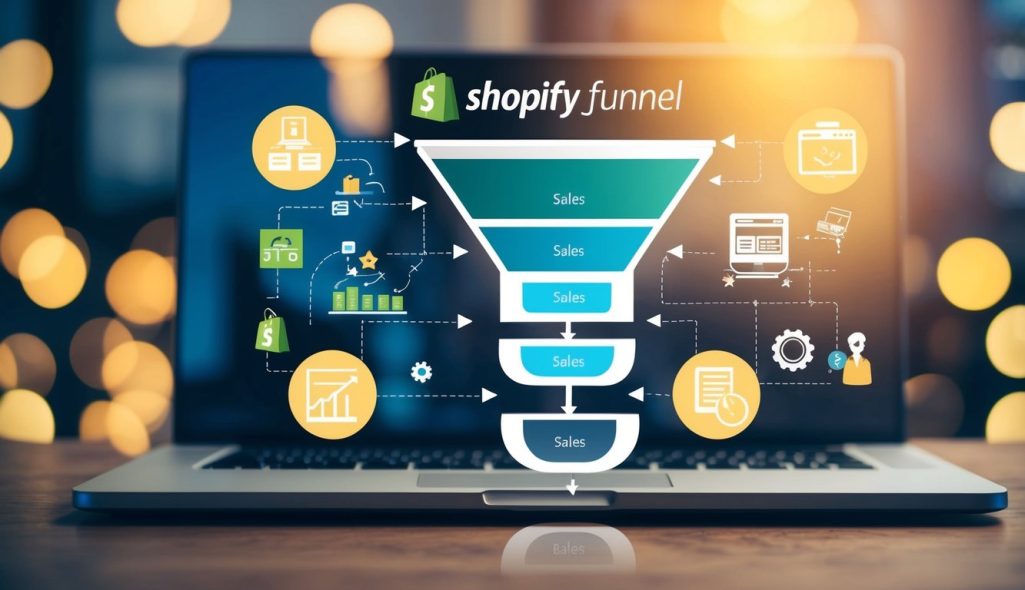
Building an effective sales funnel on Shopify involves understanding the needs and behaviors of your audience. Whether you’re new to ecommerce or looking to refine your approach, connecting various sales strategies and tools can support every part of your funnel.
Using the right apps and features available on Shopify, store owners can make their processes smoother and more efficient.
One of the main benefits of a well-structured sales funnel is its impact on your conversion rates and customer retention. Leveraging data analytics helps you track and understand your funnel’s performance, allowing you to adjust strategies as needed. Engaging your customers even after a purchase can also improve their overall experience, encouraging repeat business and fostering brand loyalty.
Understanding Sales Funnels in Ecommerce
In ecommerce, a sales funnel illustrates the journey customers take from learning about your products to making a purchase. It helps you track and guide them through each stage, maximizing sales opportunities.
The Awareness Stage is the first step. Here, potential customers learn about your online store. You attract them with content that grabs their attention and showcases what your store offers.
Next is the Interest Stage. At this point, customers show interest in your products. Providing detailed product descriptions, videos, and engaging images can help maintain their curiosity.
In the Consideration Stage, shoppers evaluate whether to buy from you. Comparisons, reviews, and price information become critical here. Offer them special deals or discounts to tip the scale in your favor.
The Conversion Stage is where the purchase happens. Ensure an easy checkout process to avoid losing customers. Use clear calls to action (CTAs) to guide them smoothly.
Finally, the Post-Purchase Stage focuses on customer retention. A follow-up email or an invitation to leave a review can help maintain engagement. Offering loyalty programs or asking for feedback enhances the shopping experience.
Creating an effective sales funnel on platforms like Shopify involves tailoring content to these stages. An optimized funnel can improve ecommerce sales by better guiding customers through each stage to increase the chance of conversion. Consider starting with a funnel for flagship products if resources are limited.
Building Your Shopify Sales Funnel
Building a successful Shopify sales funnel involves key elements like generating leads, optimizing pages, creating urgency, and ensuring a seamless checkout process. Each aspect is essential for converting visitors into customers and boosting your conversion rate.
Lead Acquisition and Traffic Generation
To start building your Shopify sales funnel, focus on attracting the right audience. You can do this by using targeted ads on platforms like Instagram or Facebook. People who click your ads become potential leads. Make sure your ads are engaging and direct them to a landing page that matches the ad’s message.
Email marketing and SEO are also vital. Use keywords related to your products so potential customers can find your site through search engines. Joining social media groups relevant to your niche can help increase awareness and drive more traffic to your Shopify store.
Optimizing Landing Pages for Conversion
Landing pages are a critical part of your funnel. Ensure these pages are simple, visually appealing, and feature a clear call to action (CTA) that encourages users to take the next step. Use visuals and brief text to convey your message quickly.
Including testimonials and reviews can increase trust and make visitors more likely to convert. Track user interactions with tools like Google Analytics to see what works and refine your pages for better results. Check this guide on creating an effective landing page for Shopify.
Product and Category Page Optimization
Product pages should highlight the benefits and features of your products. Use high-quality images and detailed descriptions to showcase what makes your products unique. Include upselling and cross-selling opportunities to boost the average purchase value.
Organize category pages for easy navigation, ensuring visitors can find what they need promptly. A well-structured product page can significantly improve your Shopify store’s conversion rate.
Using Urgency and Flash Sales to Drive Action
Urgency can be a powerful tool in sales funnel strategies. Consider using flash sales or limited-time offers to encourage quick decisions. Displaying countdown timers on product pages can remind users that they need to act fast.
Additionally, highlight stock limits, like “Only 5 left in stock,” to remind customers that waiting might mean missing out. These tactics can stimulate immediate purchases, increasing sales funnel effectiveness.
Customer Checkout and Payment Process
The checkout process must be streamlined and user-friendly. Simplify each step to reduce cart abandonment. Offer multiple payment methods, including credit cards, digital wallets, or services like PayPal, to accommodate diverse customer preferences.
Ensure the checkout pages have a clear layout, with the option to apply discounts or promo codes easily. Being transparent about shipping fees and delivery times helps build trust and reduces any last-minute hesitation before purchase.
Improving Conversion Rates
Enhancing your Shopify store’s conversion rates requires a strategic approach. By focusing on effective marketing campaigns, leveraging social proof, and using interactive content, you can create a better shopping experience that encourages more purchases.
Effective Marketing Campaigns
Effective marketing campaigns are crucial for boosting conversion rates. Email marketing can be particularly powerful since it allows you to directly reach potential customers. Segment your email list to tailor messages to specific audiences, which increases engagement. Use enticing subject lines and clear calls to action to capture interest.
Offers and discounts can also motivate buyers. Consider seasonal promotions or loyalty discounts to encourage repeat purchases. Running targeted ads on social media can drive traffic to your site, especially when combined with engaging visuals and precise audience targeting.
Leveraging Social Proof and Testimonials
Social proof and testimonials can greatly enhance your store’s credibility. Displaying positive reviews and ratings on product pages helps build trust with potential customers. Encourage satisfied customers to leave detailed feedback and showcase these on your site.
Using influencer endorsements can also strengthen social proof. Partner with influencers who resonate with your brand’s values to reach a broader audience. Authentic testimonials from recognized names can significantly impact buyer decisions.
You can create a special section on your website to feature these endorsements. This approach not only boosts trust but also increases the likelihood of conversions.
Engagement and Interactive Content
Interactive content is a great way to engage visitors on your site. Incorporate quizzes or polls that match your products. For instance, a quiz that suggests products based on user preferences can personalize the shopping experience and lead to higher conversions.
Live chats provide real-time assistance, helping customers make informed purchasing decisions. Ensure your team responds promptly to questions or concerns to maintain a smooth shopping experience.
Additionally, incorporating dynamic content like videos or 360-degree product views can grab attention and encourage interaction. These elements give potential buyers a closer look at your products, making them more likely to convert.
Maximizing Customer Value
To get the most from your customers, it’s important to find ways to increase what they spend, keep them coming back, and make them eager to promote your brand. These efforts help boost both sales and relationships with your audience.
Strategies for Increasing Average Order Value
Increasing the Average Order Value (AOV) means encouraging customers to spend more each time they shop. One way to achieve this is by offering product bundles or sets at a slightly discounted price. This encourages customers to buy more items together.
Another strategy is to implement upselling and cross-selling techniques. Suggesting complementary products during the checkout process can enhance the overall shopping experience. For example, offering a discount on related items when a customer adds a product to their cart is effective.
Free shipping thresholds also motivate customers to spend more. Setting a minimum purchase amount for free shipping nudges them to add more items to their cart.
Encouraging Repeat Purchases
Building long-term relationships with customers leads to repeat purchases, which are key for sustained business growth. Providing excellent customer service creates a positive experience that encourages customers to return.
Implement a loyalty program to reward recurring purchases. Points that translate into discounts or free products incentivize customers to keep shopping with you. Highlight how often customers return to compare with your initial conversion rate metrics.
Email marketing campaigns that offer exclusive deals or sneak peeks of new products engage past buyers and inspire them to shop again. Personalized emails that address the customer’s previous purchases can make them feel valued.
Creating Brand Advocates Through Satisfaction
Turning satisfied customers into brand advocates can amplify your marketing efforts. When customers are happy, they are more likely to recommend your store to others. Ensuring quality products and excellent service are fundamental.
Collecting feedback helps you understand how customers perceive their shopping experience. Listening to their suggestions and making improvements shows that you value their opinions. Positive changes driven by customer input can improve your conversion rate metrics.
Encourage satisfied customers to leave reviews or testimonials. Offer small incentives or recognition on social media to motivate them to speak positively about their experiences, enhancing your brand’s reputation.
Tracking and Analyzing Funnel Performance
In eCommerce, tracking and analyzing your sales funnel’s performance is essential. By examining key metrics and integrating tools like Google Analytics, you can better understand customer behavior and conversion attribution, ultimately improving marketing ROI.
Key Metrics and Google Analytics Integration
Accurate tracking is vital for eCommerce success. To start, focus on key metrics like conversion rate, bounce rate, and average order value. These will give you insights into how your funnel is performing at different stages.
Google Analytics is an essential tool. Integrating it with Shopify helps monitor your website traffic and sales data. To do this, add the Google tag to Shopify. This allows you to track user interactions, set up goals, and generate reports, helping you pinpoint where improvements are needed in your funnel.
Customer Behavior Analysis with Heatmaps
Analyzing customer behavior is key to optimizing your funnel. Heatmaps provide visual representations of where users click, scroll, and spend time on your site. Tools like Hotjar or Crazy Egg can display this data effectively.
With heatmaps, you can identify which parts of your page attract the most attention and which are ignored. This helps in understanding user preferences and pain points. For instance, if users rarely scroll down, essential information might be too low on the page. Adjusting based on these insights can enhance engagement and lead to higher conversion rates.
Conversion Attribution and Marketing ROI
Understanding where your sales originate is crucial. Conversion attribution helps determine which marketing channels are most effective. By tracking the customer journey across touchpoints, you can assign value to each interaction.
Several models exist, like last-click or multi-touch attribution. Choose the one that best reflects your business strategy. Measuring this lets you calculate marketing ROI more accurately. Focus on campaigns providing the best returns and allocate your budget accordingly. This strategic approach ensures that every marketing dollar contributes positively to your overall sales funnel performance.
Enhancing Post-Purchase Experience
Improving the post-purchase phase can create satisfied and loyal customers. This involves effective communication, gathering useful feedback, and understanding the customer journey after a sale.
Post-Purchase Communication and Nurturing Leads
Effective communication after a purchase can strengthen customer relationships. Sending thank-you emails helps show appreciation and keeps engagement high. Keeping customers informed about their order status builds trust and reduces anxiety.
Use follow-up emails to propose related products or services. This is an opportunity to nurture leads by introducing loyalty programs or special offers. Tailor messages to align with customer interests and previous purchases. Utilizing sales funnel strategies can help maintain interest and encourage future interactions.
Gathering and Utilizing Customer Reviews
Customer reviews are powerful for building credibility. Encourage customers to leave feedback after their purchase through reminder emails or simple review forms.
Highlighting reviews on your site can attract new buyers and confirm product quality.
Respond to reviews, addressing any concerns and showcasing your commitment to customer satisfaction. This shows you value customer input, potentially improving the overall experience.
Good reviews can be shared on social media or marketing campaigns, enhancing your brand reputation and fostering trust among potential leads.
Post-Sale Customer Journey
Mapping out the post-sale customer journey allows you to identify and enhance touchpoints. Start by analyzing customer interactions from purchase to delivery and beyond.
Provide resources, like guides, to assist with product use and ensure satisfaction.
Utilize post-purchase pages to improve user experience. These can include upsell opportunities, installation guides, or customer support details.
Aim to make the process smooth and informative, reinforcing the value of your product.
Understanding the customer journey helps to anticipate needs and proactively offer solutions, leading to higher customer retention and loyalty. Engaged customers are more likely to return and recommend your brand to others, creating a positive cycle of referrals and repeat business.
Advanced Tactics for Shopify Funnels
To supercharge your Shopify sales funnel, focus on strategies like personalization, segmentation, and using social media platforms. These tactics are vital in improving customer engagement, driving conversions, and boosting long-term retention.
Incorporating Personalization and Segmentation
Personalization lets you tailor your marketing efforts to individual preferences. Use customer data to create personalized product recommendations, targeted emails, or even custom discounts.
Segmentation breaks your audience into smaller groups based on behaviors, interests, or demographics.
This approach can significantly increase engagement by providing relevant content to each segment.
Shopify offers apps like Zipify to enhance personalization efforts. Leveraging these tools can result in higher conversion rates and improved customer satisfaction.
Remarketing and Retention Strategies
Remarketing targets users who have visited your store but didn’t make a purchase. Utilize Shopify’s integration with platforms like Google and Facebook for effective remarketing campaigns.
Displaying targeted ads with special offers or reminders can bring potential customers back to your store.
Retention strategies focus on keeping your existing customers engaged. Use email marketing to share updates, new product launches, or exclusive discounts.
Implementing a customer loyalty program can also encourage repeat purchases and foster brand loyalty.
Exploring Platforms: TikTok, Instagram Reels, and Google Ads
Expanding your reach means tapping into popular platforms like TikTok, Instagram Reels, and Google Ads.
TikTok’s video format makes it ideal for engaging younger audiences. Create catchy, short videos to showcase new products or special offers.
Instagram Reels offers similar benefits with its wide audience reach. Use it to create visually appealing content highlighting your products’ unique features.
Meanwhile, Google Ads allows you to target keywords related to your products, directing high-intent traffic to your Shopify store.
Designing ads geared towards your audience can help improve click-through rates and conversions.
Integrating with Shopify Apps and Tools
Integrating Shopify with various apps can streamline your sales funnel and boost your e-commerce performance. Utilizing tools like Zipify for optimized checkout pages, engaging customers through surveys, and leveraging user-generated content are key strategies that can enhance your store’s effectiveness.
Zipify for Optimized Checkout Pages
Zipify is a powerful tool that can help you create optimized checkout pages for your Shopify store. By using Zipify, you can easily build high-converting landing pages designed to guide your customers smoothly through the checkout process.
This app also offers features like pre-designed templates and drag-and-drop builders, making it user-friendly even for those with minimal technical skills.
With Zipify, you can also test different page layouts to see which performs best, ensuring that your Shopify sales funnel is always optimized for conversions. This is essential for reducing cart abandonment and maximizing your sales potential.
Enhancing Engagement with Surveys and Polls
Using surveys and polls in your Shopify store can significantly boost customer engagement. By asking your visitors for their opinions and feedback, you get valuable insights into their preferences and needs.
This data can then be used to tailor your marketing strategies and improve your product offerings.
Apps like Octane AI enhance your ability to engage with your customers by providing a platform to create quizzes, polls, and surveys.
This approach not only makes your store more interactive but also helps build a stronger connection with your audience.
Leveraging User-Generated Content
User-generated content (UGC) is a powerful way to build trust and credibility in your Shopify store. Encouraging customers to share reviews, photos, and testimonials can create a community feel around your brand.
UGC can be strategically displayed on product pages to provide social proof, which often leads to higher conversion rates.
Integrating apps that make it easy for customers to upload and share content can be beneficial. This approach not only boosts engagement but also helps you gather authentic and persuasive content that showcases real customer experiences.
Frequently Asked Questions
Understanding how to build a sales funnel on Shopify can lead to increased conversions and better customer experiences. Here are some common questions answered to help you make the most of your Shopify store.
What are the key components of a high-converting Shopify sales funnel?
A successful Shopify sales funnel includes attracting visitors, engaging them with relevant content, and guiding them toward making a purchase. Each stage should be designed to move potential customers seamlessly from one step to the next, enhancing their experience and increasing conversion rates.
How can I create a sales funnel using Shopify’s built-in tools?
Shopify provides tools like customizable themes, email marketing, and Shopify Flow to help create a cohesive sales funnel. Using Shopify’s app store, you can integrate additional features to enhance functionality and tailor the funnel to your business needs.
What are the best practices for optimizing an e-commerce sales funnel on Shopify?
To optimize your sales funnel, focus on clear calls to action, personalized offers, and streamlined checkout processes. Testing and analyzing different stages can help identify areas for improvement, ensuring that your funnel effectively converts leads into customers.
Which Shopify apps are most effective for building an efficient sales funnel?
Apps that can boost your sales funnel efficiency include OptiMonk for lead generation, Klaviyo for email marketing, and Bold Upsell for cross-selling opportunities. These apps help in targeting the right audience and nurturing leads effectively.
How do analytics and tracking within Shopify impact sales funnel performance?
Shopify’s analytics allow you to track customer behavior and measure the effectiveness of different funnel stages. By understanding where customers drop off, you can make data-driven decisions to enhance the overall performance of your sales funnel.
Can you integrate third-party tools like ClickFunnels with Shopify, and how?
Yes, you can integrate ClickFunnels with Shopify to enhance sales funnel capabilities. This combination allows for advanced features such as landing pages and upsell flows. You can connect them using Zapier or direct integration methods offered by ClickFunnels.


